Glacier Bay National Park and Preserve
Glacier Bay National Park and Preserve is home to an unusual variety of wildlife, supported by diverse habitats ranging from coastal rainforests to alpine…
What types of wildlife can be found in Glacier Bay National Park?
Glacier Bay National Park and Preserve is home to an unusual variety of wildlife, supported by diverse habitats ranging from coastal rainforests to alpine tundra.1
The park’s fauna includes a wide array of land and marine animals:
- Land Mammals: Wolves, brown and black bears, mountain goats, deer, and moose.1
- Marine Life: Seals and various species of whales.1
- Birds: Eagles and trumpeter swans.1
The park also plays a critical role in protecting several species that are endangered or threatened, including:
- Humpback whales (endangered)1
- American peregrine falcons (formerly endangered)1
- Steller sea lions (threatened)1
- Spectacled eiders (threatened)1
Additionally, the bay features numerous islands that serve as vital rookeries for thousands of seabirds.2
What are some of the most notable glaciers in the park, and how can visitors see them?
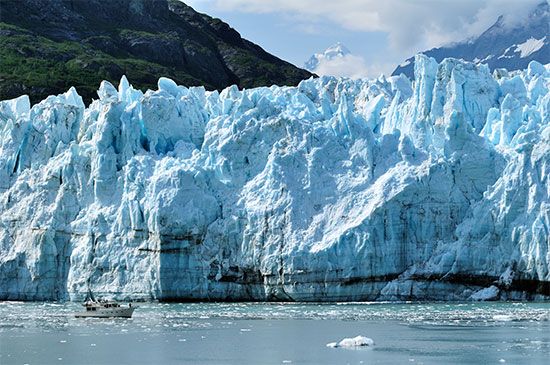
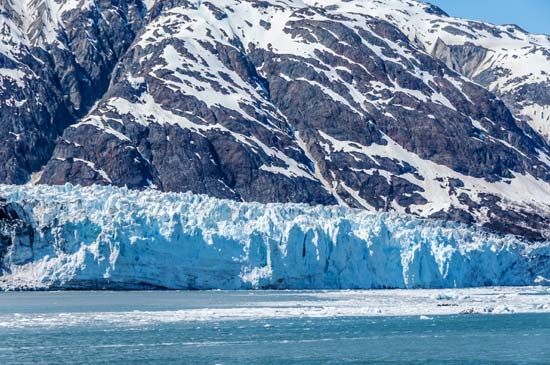
Glacier Bay National Park is renowned for its spectacular glaciers, which descend from the St. Elias and Fairweather ranges to form a dramatic fjord landscape.21
Notable Glaciers
- Johns Hopkins Glacier: Currently the largest tidewater glacier in the region, it is highly active and frequently calves large blocks of ice into the water.21
- Muir Glacier: Historically the most famous tidewater glacier in the park, it has receded significantly over time and no longer reaches the sea.2
- Grand Pacific Glacier: Once a massive ice sheet covering the entire bay, its retreat over the last 200 years is responsible for the current formation of the bay and its 11 active tidewater glaciers.1
How to View Them
Most visitors experience these glaciers by cruise ship, which allows for viewing the ice cliffs and calving events from the water. Due to the intense activity of glaciers like the Johns Hopkins, vessels must maintain a safe distance—often at least 2 miles—to avoid the dangerous ice blocks that break off during the calving process.1
What is the geographical location and size of Glacier Bay National Park and Preserve?
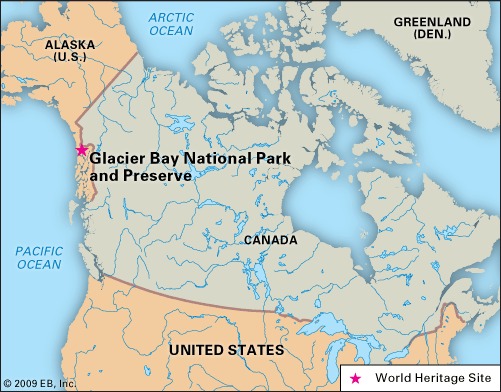
Glacier Bay National Park and Preserve is located in southeastern Alaska, United States, along the Gulf of Alaska. The park and preserve encompass a total area of 5,129 square miles (13,287 square km).1
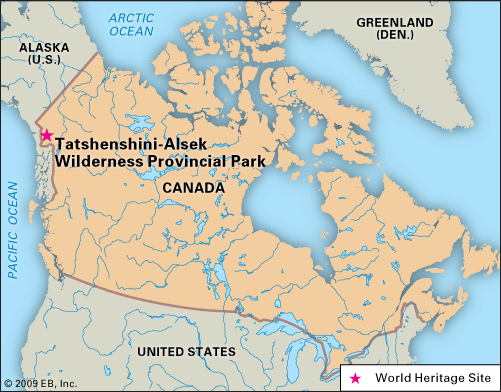
Its geography includes the Glacier Bay fjord, the U.S. portion of the Alsek River, and the northern, southern, and western slopes of Mount Fairweather. To the north, the area is bordered by the Tatshenshini-Alsek Wilderness Provincial Park in British Columbia, Canada.1
When was Glacier Bay National Park and Preserve established, and how has it evolved over time?
Glacier Bay National Park and Preserve was first proclaimed a national monument in 1925. It was later established as a national park and preserve in 1980 and was designated a UNESCO World Heritage site in 1992.1
The area has undergone significant geological evolution over the last 200 years. Previously, the entire Glacier Bay fjord was covered by the massive Grand Pacific Glacier, which measured over 4,000 feet thick. As this ice retreated, the bay took its current form, stretching 65 miles long and leaving behind 20 separate glaciers, 11 of which are active tidewater glaciers.1
This retreat has also driven ecological succession, as vegetation has returned to landscapes previously buried under ice. The park now supports a diverse range of habitats, from moss-covered moraines and coastal rainforests to alpine tundra, providing a sanctuary for various wildlife species, including humpback whales and Steller sea lions.1
Sources
- Glacier Bay National Park and Preserve — Encyclopædia Britannica
- Glacier Bay — Encyclopædia Britannica
Published on · 3 min read