Goosefish
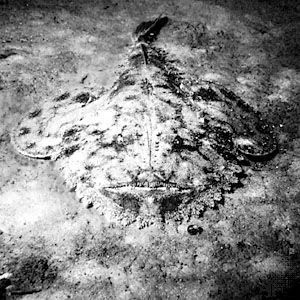
Goosefishes, which belong to the family Lophiidae, function primarily as bottom-dwelling predators within their marine ecosystems.
What role do goosefish play in their ecosystem?
Goosefishes, which belong to the family Lophiidae, function primarily as bottom-dwelling predators within their marine ecosystems.12
By utilizing a specialized dorsal fin spine that acts as a fishing rod tipped with a fleshy lure, they attract prey directly to them. This predatory strategy allows them to consume a variety of organisms, including other fishes, various invertebrates, and occasionally even seabirds. Because they possess large mouths and sharp teeth, they are highly effective at capturing and swallowing their prey with a sudden, rapid movement. In addition to their role as predators, some species of goosefish are harvested and sold as food for human consumption in various regions around the world.12
How do goosefish hunt and what is their typical diet?
Goosefishes, which are members of the Lophiidae family, are specialized bottom-dwelling predators that employ a unique “fishing” technique to capture prey.
Hunting Strategy
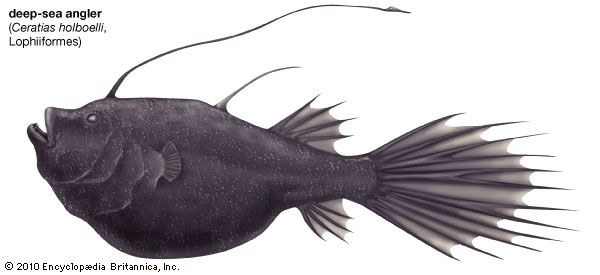
These fish possess a row of three isolated dorsal fin spines located on their heads. The first spine is modified into a structure that functions like a fishing pole, tipped with a fleshy lure. By lying quietly on the ocean floor or moving slowly, the goosefish uses this lure to attract unsuspecting prey. Once the target is close enough, the goosefish captures it with a sudden, rapid snap of its large mouth, which is equipped with sharp teeth.12
Typical Diet
Goosefishes are carnivorous and maintain a varied diet consisting primarily of other fishes. In addition to fish, they also consume a range of invertebrates and have been known to eat seabirds.1
What are some of the different species of goosefish and how do they differ?
There are approximately 25 species within the family Lophiidae, commonly known as goosefishes. While they share fundamental characteristics—such as soft, flabby bodies, wide flattened heads, and the signature “fishing pole” dorsal spine used to lure prey—they are distributed across warm and temperate seas globally and exhibit regional variations.1
Notable species include:
- American Atlantic goosefish (Lophius americanus): Found in the waters of the western Atlantic, this species is a prominent representative of the family in North American regions.1
- European angler (Lophius piscatorius): Widely known as the monkfish, this species is common in European waters and is frequently harvested for human consumption.1
- Oriental goosefish (Lophiomus setigerus): Known as the ankō in Japan, this species represents the family in Asian waters.1
These species are generally distinguished by their geographic range and specific regional naming conventions, though they all maintain the predatory, bottom-dwelling lifestyle characteristic of the Lophiidae family.12
How do goosefish reproduce and what is unique about their reproduction process?
Sources
- goosefish — Encyclopædia Britannica
- goosefish — Merriam-Webster
- anglerfish — Encyclopædia Britannica
- Lophius — Merriam-Webster
- Lophiidae — Merriam-Webster
Published on · 2 min read