Grande-Terre
Grande-Terre and Basse-Terre, the two main islands that form the core of the French overseas department of Guadeloupe, are separated by a narrow channel…
How is Grande-Terre connected to Basse-Terre, and what role does this connection play in the region?
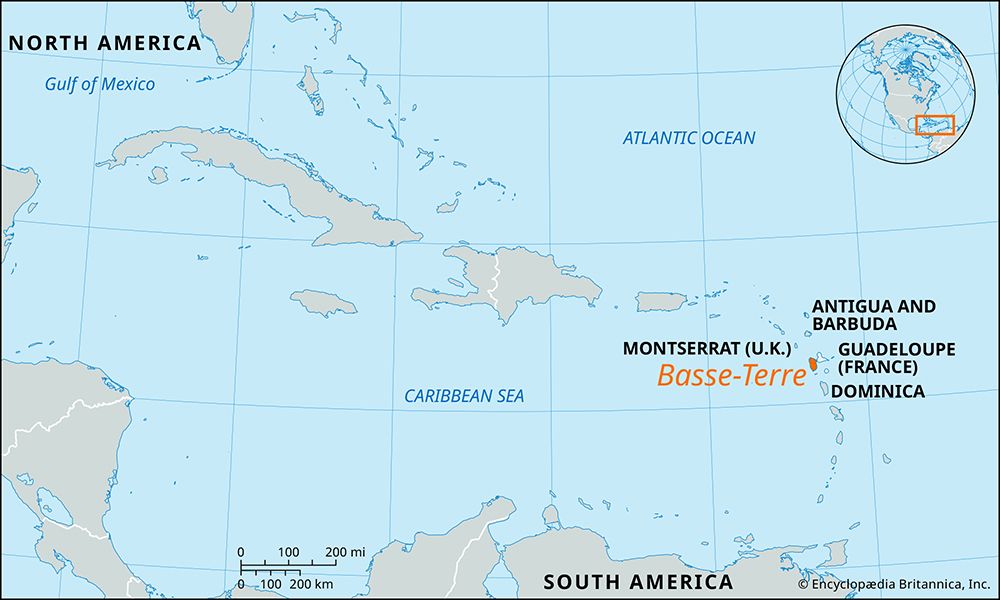
Grande-Terre and Basse-Terre, the two main islands that form the core of the French overseas department of Guadeloupe, are separated by a narrow channel known as the Salée River.1
While the islands are distinct—Grande-Terre is a low-lying limestone island, whereas Basse-Terre is mountainous and volcanic—they function as a unified economic and administrative entity. The connection between them is facilitated by an excellent road system that allows for integrated travel across the main islands.12
This proximity is central to the region’s infrastructure, as it links the administrative capital of Basse-Terre with Pointe-à-Pitre, the chief town and economic hub located on the southwestern coast of Grande-Terre. Together, these islands maintain essential transportation links, including ports that handle the region’s diverse agricultural exports, such as sugar from Grande-Terre and bananas from Basse-Terre, supporting the broader economy of the archipelago.132
What are the main economic activities on Grande-Terre island?
The economy of Grande-Terre is diverse, anchored by its role as the commercial hub of Guadeloupe. Key economic activities include:
- Agriculture and Livestock: The island’s landscape supports the cultivation of sugarcane and the raising of livestock.2
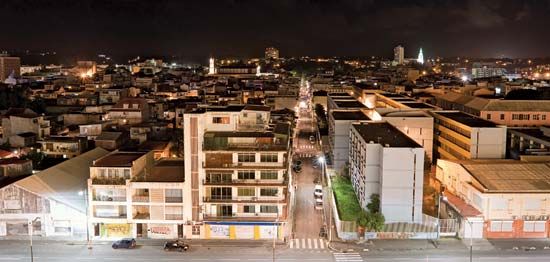
- Commerce and Trade: Pointe-à-Pitre, located on the island’s southwestern coast, serves as the chief commercial town. Its port facilities handle the majority of the region’s imports, including minerals, sugar, and cereals.45
- Manufacturing: An industrial zone and free port at Jarry produce goods such as cement, sugar, rum, clothing, furniture, and metalware.51
- Services: The service sector, encompassing public administration, education, and health and social services, is the largest source of employment and the primary contributor to the gross domestic product.1
- Tourism: This industry remains a vital component of the island’s economic activity.1
What are some popular tourist attractions or natural landmarks on Grande-Terre?
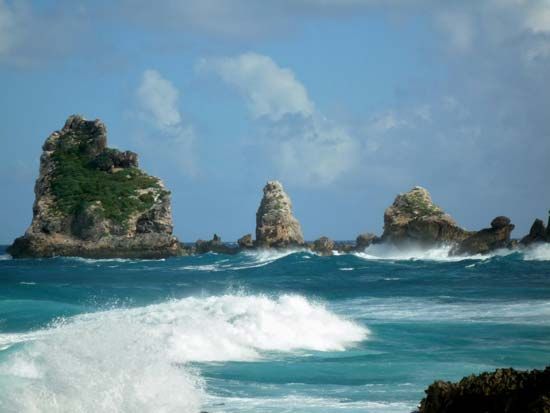
The provided search results do not contain specific information regarding popular tourist attractions or natural landmarks located on the island of Grande-Terre. While the sources describe the island as a low-lying, limestone-based region characterized by sandy soils and scrub forest vegetation, they do not list or detail specific sites for tourism.16
What is the geographical location of Grande-Terre island in Guadeloupe?
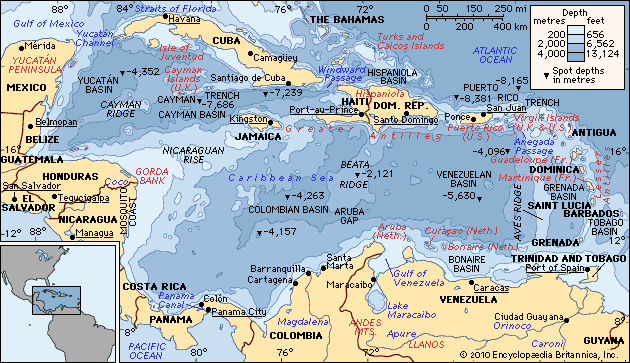
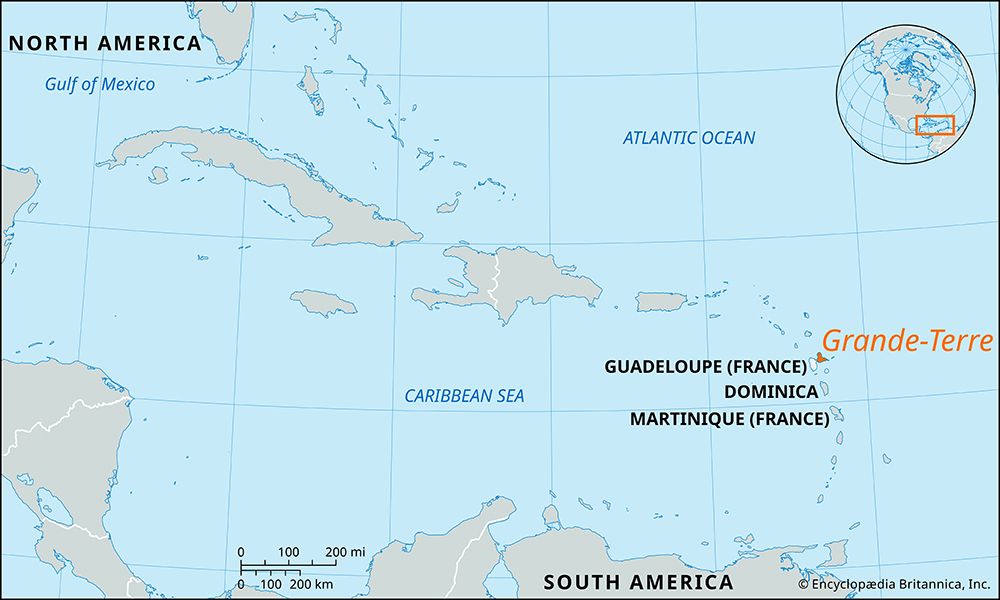
Grande-Terre is an island located in the Lesser Antilles within the Caribbean Sea. Together with its twin island, Basse-Terre, it forms the core of the French overseas département of Guadeloupe.17
The two islands are situated adjacent to one another, separated only by a narrow channel known as the Salée River. While Basse-Terre lies to the west, Grande-Terre is positioned to the east. Geologically, Grande-Terre is part of the outer limestone arc of the Lesser Antilles, distinguishing it from the mountainous, volcanic nature of its neighbor.17
Sources
- Grande-Terre — Encyclopædia Britannica
- Guadeloupe - Transportation — Encyclopædia Britannica
- Basse-Terre — Encyclopædia Britannica
- Pointe-à-Pitre — Encyclopædia Britannica
- Guadeloupe - Manufacturing and services — Encyclopædia Britannica
- Guadeloupe — Encyclopædia Britannica
- Guadeloupe - Relief and drainage — Encyclopædia Britannica
- Basse-Terre — Encyclopædia Britannica
Published on · 2 min read