Guantánamo Bay
Efforts to close the Guantánamo Bay detention camp have primarily centered on executive action and legal challenges regarding the rights of detainees.
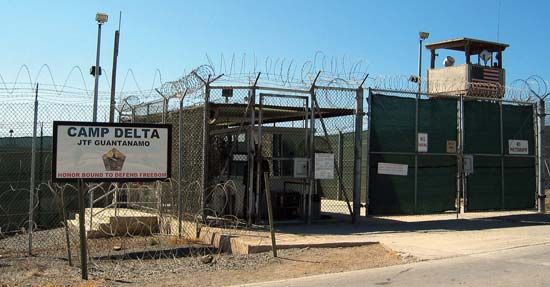
What efforts have been made to close the Guantánamo Bay detention camp?
Efforts to close the Guantánamo Bay detention camp have primarily centered on executive action and legal challenges regarding the rights of detainees.
In January 2009, President Barack Obama issued an order to close the facility within one year and mandated that interrogations adhere to the U.S. Army’s field manual, which prohibits torture. However, this closure was delayed by significant opposition from members of Congress, who expressed concerns that transferring detainees to the U.S. mainland would threaten national security.12
Legal efforts have also played a critical role in shaping the facility’s status. In the landmark case Boumediene v. Bush (2008), the U.S. Supreme Court ruled that foreign detainees possess the right to challenge their imprisonment through habeas corpus petitions in federal courts, overturning previous legislative attempts to deny them this access. Despite these developments, the facility has remained operational, with some detainees cleared for release or transfer continuing to be held due to diplomatic or security-related challenges in finding host countries.1
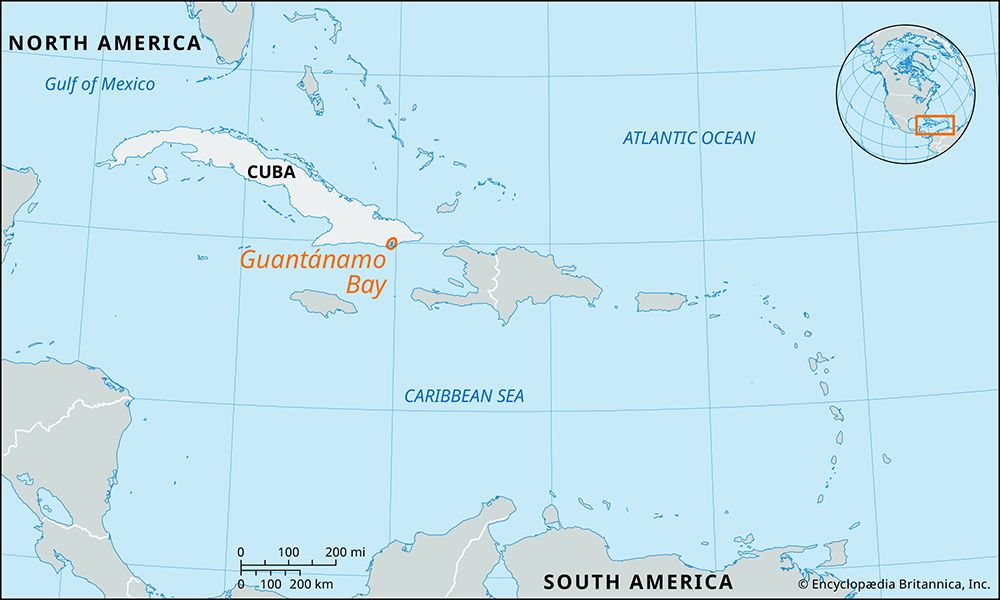
How has the Guantánamo Bay detention camp affected international relations?
The Guantánamo Bay detention camp has been a significant source of international controversy, frequently drawing condemnation from global human rights organizations and international bodies. Groups such as Amnesty International, Human Rights Watch, and the International Committee of the Red Cross, as well as the European Union and the Organization of American States, have criticized the facility for alleged human rights violations.1
These concerns primarily stem from the detention of individuals without charge and accusations of torture or abusive interrogation techniques. The U.S. government’s initial position—that the Geneva Conventions did not apply to “unlawful enemy combatants” held outside U.S. territory—faced intense scrutiny and legal challenges, including rulings by the U.S. Supreme Court regarding the rights of foreign detainees. Furthermore, the ongoing operation of the camp has complicated diplomatic efforts, as the transfer of cleared detainees has been hindered by the difficulty of finding host countries willing to accept them or by concerns regarding the stability of detainees’ home nations.1
What are some of the controversies surrounding the Guantánamo Bay detention facility?
The Guantánamo Bay detention camp has been the subject of intense global controversy since its establishment in 2002. The primary concerns involve the fundamental rights of detainees and the methods used by U.S. authorities during interrogations.
Key controversies include:
- Legal Status and Rights: The U.S. government initially argued that detainees were “unlawful enemy combatants” to whom the Geneva Conventions did not apply. Many individuals were held for years without charge or access to habeas corpus to challenge their detention.1
- Allegations of Abuse: The facility has faced widespread condemnation from organizations like Amnesty International and the International Committee of the Red Cross for alleged torture and abusive interrogation techniques. While officials previously defended these methods as necessary for gathering intelligence, some cases were later deemed unprosecutable due to the use of torture.1
- Indefinite Detention: Even after being cleared for release, many detainees remained imprisoned because of diplomatic challenges in finding host countries or concerns regarding the stability of their home nations.1
We could dive deeper into the specific legal rulings, such as Boumediene v. Bush, that addressed these issues.
How has Guantánamo Bay impacted Cuban-American relations over the years?
The presence of the U.S. naval base at Guantánamo Bay has been a persistent point of friction in Cuban-American relations since the early 20th century. Established by treaty in 1903 following the Spanish-American War, the base was authorized under the Platt Amendment, which granted the United States the right to intervene in Cuban affairs and maintain a permanent military presence on the island.245
Since the Cuban Revolution in 1959, the relationship between the two nations has been characterized by hostile confrontation. The Cuban government has consistently protested the U.S. presence at the base, viewing it as an infringement on its sovereignty, and has periodically threatened to seize the facility.26
While the base serves as a strategic U.S. fleet training site, its role expanded in 2002 when the Guantánamo Bay detention camp was established to house detainees from conflicts in Afghanistan and Iraq. This development further complicated the diplomatic landscape, as the facility became a global focal point for human rights controversies.21
Sources
- Guantánamo Bay detention camp — Encyclopædia Britannica
- Guantánamo Bay — Encyclopædia Britannica
- George W. Bush - Treatment of detainees — Encyclopædia Britannica
- Cuba - Security — Encyclopædia Britannica
- A History of U.S. Intervention in Latin America and the Caribbean - Cuba: From protectorate to adversary — Encyclopædia Britannica
- Cuba - Occupation by the United States — Encyclopædia Britannica
Published on · 3 min read