Gumal River
The Gumal River is a 150-mile (240-km) river that originates in eastern Afghanistan near the Khumbur Khūlē Range. It flows into western Pakistan, where it is…
What is Gumal River?
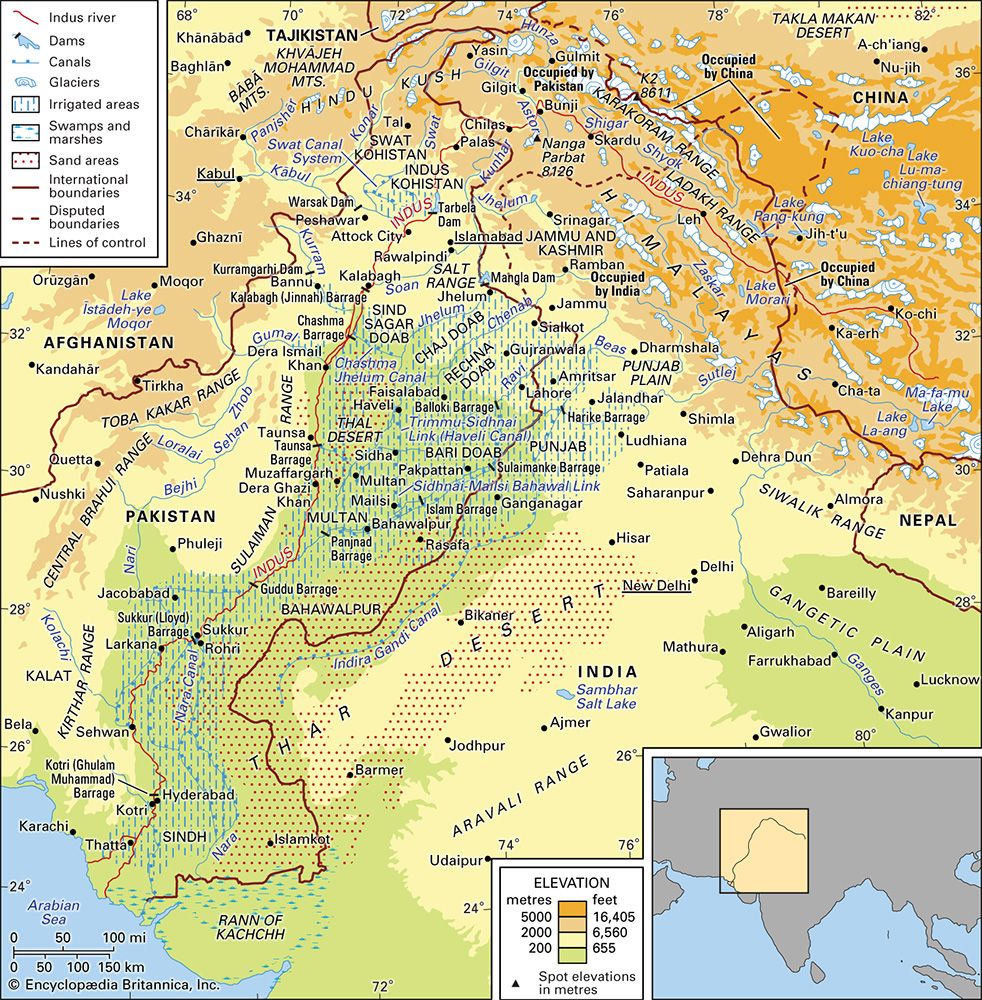
The Gumal River is a 150-mile (240-km) river that originates in eastern Afghanistan near the Khumbur Khūlē Range. It flows into western Pakistan, where it is joined by the Kundar, Wāna Toi, and Zhob rivers before emptying into the Indus River south of Dera Ismāīl Khān.1
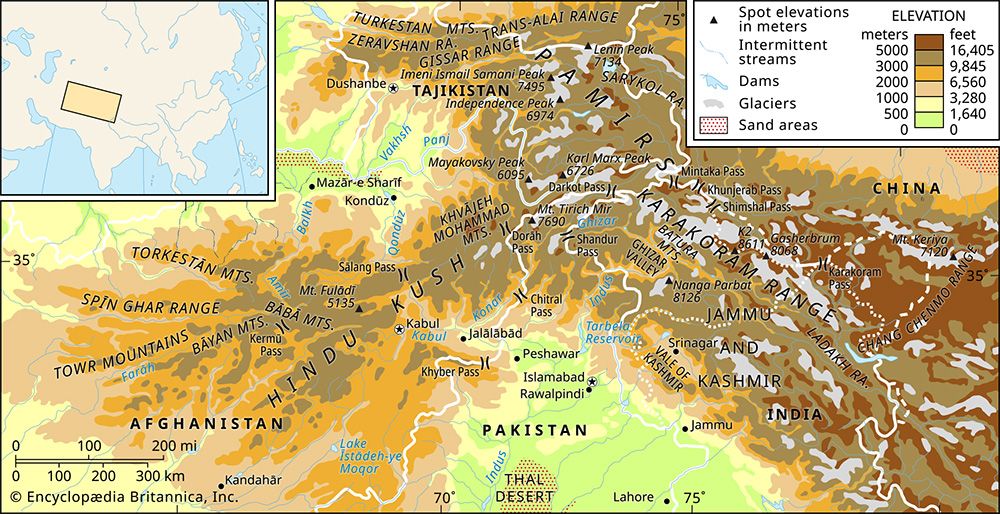
The river valley serves as the route for the Gumal Pass, a historically significant trade route connecting Ghaznī, Afghanistan, with Tank and Dera Ismāīl Khān in Pakistan. While the pass is technically a 4-mile gorge, the name is often used to describe the river’s entire course. Development projects along the river have included multipurpose schemes for flood control, irrigation, and the generation of hydroelectric power.21
What is the historical importance of the Gumal Pass?
The Gumal Pass holds significant historical importance as the oldest trade route in its region, serving as a vital link between Ghaznī in eastern Afghanistan and the areas of Tank and Dera Ismail Khan in Pakistan.2
Its historical prominence is defined by several key factors:
- Strategic Connectivity: It is considered the most important pass situated between the Khyber Pass and the Bolān Pass, facilitating movement through the Gumal River valley.2
- Nomadic Trade: The route was traditionally utilized by nomadic Afghan traders known as Powindahs. These groups historically engaged in long-distance commerce, transporting goods via camel caravans between Afghanistan and India.23
- British Administration: During the era of the British raj, the pass became a focus of colonial security interests. In 1889, the British reached a treaty agreement with the local Maḥsūd Wazīrī inhabitants to formally open the pass for controlled use.2
How does the Indus River influence the region?
The Indus River is fundamental to the region, serving as a primary driver of its history, economy, and physical landscape.
Agricultural and Economic Significance
The river is the backbone of agriculture in Pakistan, providing the essential water supply for irrigation across the Indus River plain. Since the mid-19th century, extensive canal systems have been developed to transform arid lands into productive agricultural zones. Major infrastructure projects, including the Tarbela Dam and Mangla Dam, provide critical hydroelectric power and water storage. However, intensive irrigation has also introduced environmental challenges, such as soil salinization and waterlogging, which require careful management.678
Historical and Cultural Foundation
The river valley was the cradle of the Indus civilization, one of the world’s earliest urban societies, which flourished by mastering the river’s fertile floodplains. Throughout history, the river has been a focal point for human settlement, trade, and political development.910
Hydrology and Climate
The river system is largely snow-fed, relying on glaciers in the Hindu Kush and Himalayan ranges, supplemented by monsoon rains. Its flow is highly seasonal, with significant variations that have historically shaped the landscape through shifting river courses and periodic flooding.1110
Who are the Powindah people?
The term Powindah refers to nomadic merchant groups, primarily composed of Pashto-speaking tribes such as the Ghilzay. Historically, these nomads maintained a seasonal migration pattern, wintering in India to purchase goods and transporting them via camel caravan to Afghanistan during the summer months for sale or barter.5
Over time, the economic activities of these groups evolved. While many remained stockbreeding nomads who relied on trade with villagers along their routes, others shifted their focus as circumstances changed. By the late 19th century, some nomads began establishing summer trading camps in the mountains of Afghanistan, while others transitioned into settled life by acquiring land and becoming cultivators. The Ghilzay, who are among the largest tribes associated with these historical trade practices, have deep roots in the region, with some branches historically establishing significant political dynasties, such as the Lodi dynasty in Delhi.5
Sources
- Gumal River — Encyclopædia Britannica
- Gumal Pass — Encyclopædia Britannica
- Hindu Kush - Physiography — Encyclopædia Britannica
- Hindu Kush — Encyclopædia Britannica
- Ghilzay — Encyclopædia Britannica
- Pakistan: Top Questions — Encyclopædia Britannica
- Indus civilization - The recovery and study of the Indus civilization — Encyclopædia Britannica
- Indus River - Irrigation of the Indus River — Encyclopædia Britannica
- Indus River - Climate — Encyclopædia Britannica
- Indus River - Hydrology of the Indus River — Encyclopædia Britannica
- Indus River - Plant and animal life — Encyclopædia Britannica
Published on · 3 min read