Monsoon
A monsoon is a major wind system that reverses direction seasonally, driven primarily by differential heating between land and sea. These systems…
How do monsoons affect climate patterns in different regions?
A monsoon is a major wind system that reverses direction seasonally, driven primarily by differential heating between land and sea. These systems fundamentally dictate climate patterns by creating distinct wet and dry seasons.12
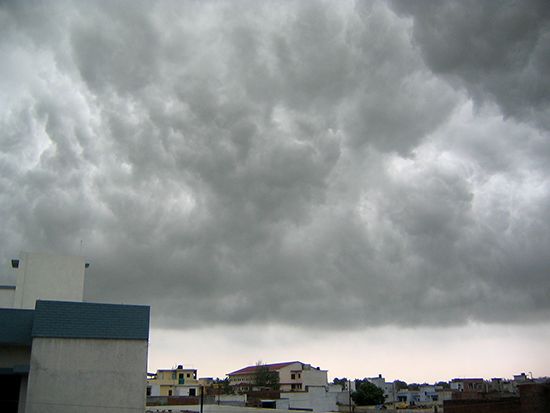
In summer, landmasses heat up, creating low-pressure zones that draw in moisture-laden air from the oceans, resulting in rising air, cloud formation, and heavy precipitation. Conversely, in winter, the land cools, creating high-pressure systems that push dry air toward the sea, often leading to drought conditions.134
The impact of these patterns varies by region:
- South Asia: The monsoon provides the majority of annual rainfall, which is essential for agriculture and water supplies. Its intensity is influenced by factors like El Niño and snow cover on the Plateau of Tibet.567
- West Africa: The climate alternates between the humid, southwesterly monsoon and the dry, dusty harmattan wind from the Sahara.4
- Western Pacific: Seasonal pressure changes replace standard trade wind patterns, creating sharp contrasts between continental and maritime influences.3
What role do monsoons play in the global climate system?
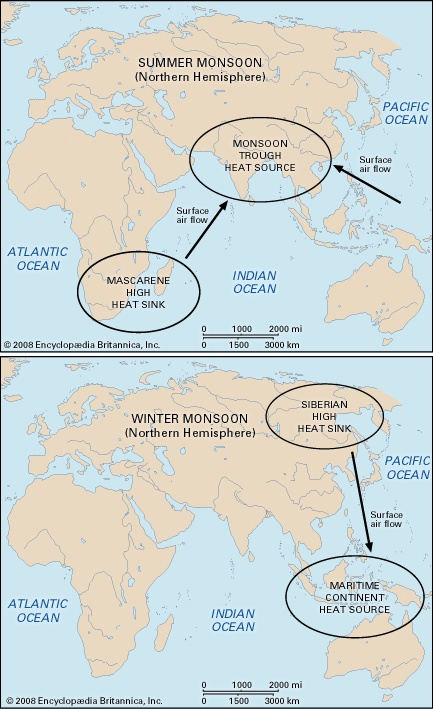
Monsoons are major wind systems characterized by a seasonal reversal in direction, driven by differential heating between landmasses and oceans. They play a critical role in the global climate system by redistributing heat and moisture, effectively acting as a mechanism that moves air from atmospheric heat sinks (high-pressure, cold regions) toward heat sources (low-pressure, warm regions).1
The global impact of monsoons is defined by two distinct phases:
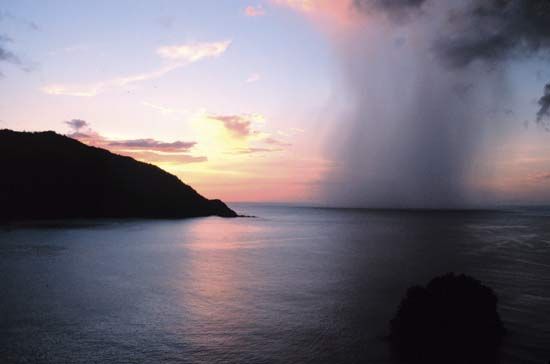
- Summer Monsoons: As continents heat up more rapidly than adjacent oceans, they become regions of low pressure. This draws moisture-laden air from the sea onto land, resulting in rising air, cloud formation, and significant precipitation. This process is vital for regional water cycles and agriculture.12
- Winter Monsoons: As land cools, high-pressure systems develop, pushing dry air toward the sea. This phase is typically associated with subsidence and drought conditions.1
Monsoon intensity is not uniform and is influenced by broader climate phenomena, such as El Niño, which can disrupt typical rainfall patterns, and surface conditions like snow cover on the Plateau of Tibet, which can affect subsequent summer rainfall.9
What are the differences between summer and winter monsoons?
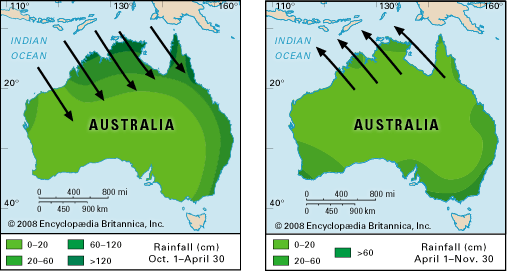
Monsoons are seasonal wind systems driven by the differential heating of land and sea, which creates distinct climatic phases. The primary differences between summer and winter monsoons are summarized below:
Feature
Summer Monsoon
Winter Monsoon
Wind Direction
Typically blows from sea to land
Typically blows from land to sea
Dominant Component
Westerly
Easterly
Atmospheric Behavior
Air tends to converge and ascend
Air tends to diverge and subside
Precipitation
Produces copious rainfall
Associated with dry conditions and drought
Pressure Systems
Low pressure over land; high pressure over sea
High pressure over land; low pressure over sea
These seasonal fluctuations occur because land surfaces warm and cool more rapidly than water bodies, modifying the density and pressure of the air above them. While summer monsoons are vital for agriculture due to their heavy rains, winter monsoons are characterized by their lack of moisture. The intensity and onset of these patterns can be influenced by broader climate phenomena, such as the Southern Oscillation and El Niño.11011
What are the main characteristics of the Asian monsoon system?
The Asian monsoon system is a complex, large-scale atmospheric phenomenon characterized by a seasonal reversal of wind direction, driven primarily by the differential heating of the vast Asian landmass and the surrounding oceans.136
Key Characteristics
- Seasonal Wind Reversal: During the summer, the heating of the Asian continent creates a low-pressure system that draws moist, maritime air inland, typically from the southwest. In winter, the continent cools significantly, forming a high-pressure system that pushes dry, continental air toward the sea.14613
- Pressure Systems: The summer monsoon is anchored by the development of a low-pressure zone over the continental interior—such as the South Asian (Iranian) low—while the winter monsoon is strengthened by the Siberian anticyclone.144
- Precipitation Patterns: The summer monsoon is responsible for the majority of annual rainfall in many regions, which is vital for agriculture and water supplies. Conversely, winter monsoons are generally dry, though they can bring orographic rain to windward slopes.1211446
- Topographic Influence: Mountain ranges, such as the Himalayas, act as barriers that dictate rainfall distribution, creating wet windward slopes and dry leeward rain shadows.15
- Atmospheric Circulation: The onset of the summer monsoon is linked to major shifts in circulation, including the disintegration of the southern jet stream and the movement of the intertropical convergence zone13.16
Sources
- Monsoon — Encyclopædia Britannica
- Climate - Interannual variability — Encyclopædia Britannica
- West African monsoon — Encyclopædia Britannica
- South Asia: Top Questions — Encyclopædia Britannica
- Climate change - Amplification of the Indian Ocean monsoon — Encyclopædia Britannica
- Pacific Ocean - The monsoon regime — Encyclopædia Britannica
- India - Importance to agriculture — Encyclopædia Britannica
- The Sahara Was Once Green: Top Questions — Encyclopædia Britannica
- Atmosphere - Effect of continents on air movement — Encyclopædia Britannica
- Climate - Monsoons — Encyclopædia Britannica
- Indian Ocean - Monsoon zone — Encyclopædia Britannica
- Intertropical convergence zone — Encyclopædia Britannica
- Asia - The polar front — Encyclopædia Britannica
- Malaysian-Australian monsoon — Encyclopædia Britannica
- Asia - Monsoons and typhoons — Encyclopædia Britannica
- Asia - The influence of topography — Encyclopædia Britannica
Published on · 4 min read