Indus River
The Indus River system features several major dams and hydroelectric projects, primarily developed under the Indus Basin Project following the 1960 Indus…
Are there any significant dams or hydroelectric projects along the Indus River, and what are their impacts?
The Indus River system features several major dams and hydroelectric projects, primarily developed under the Indus Basin Project following the 1960 Indus Waters Treaty.123
Major Projects
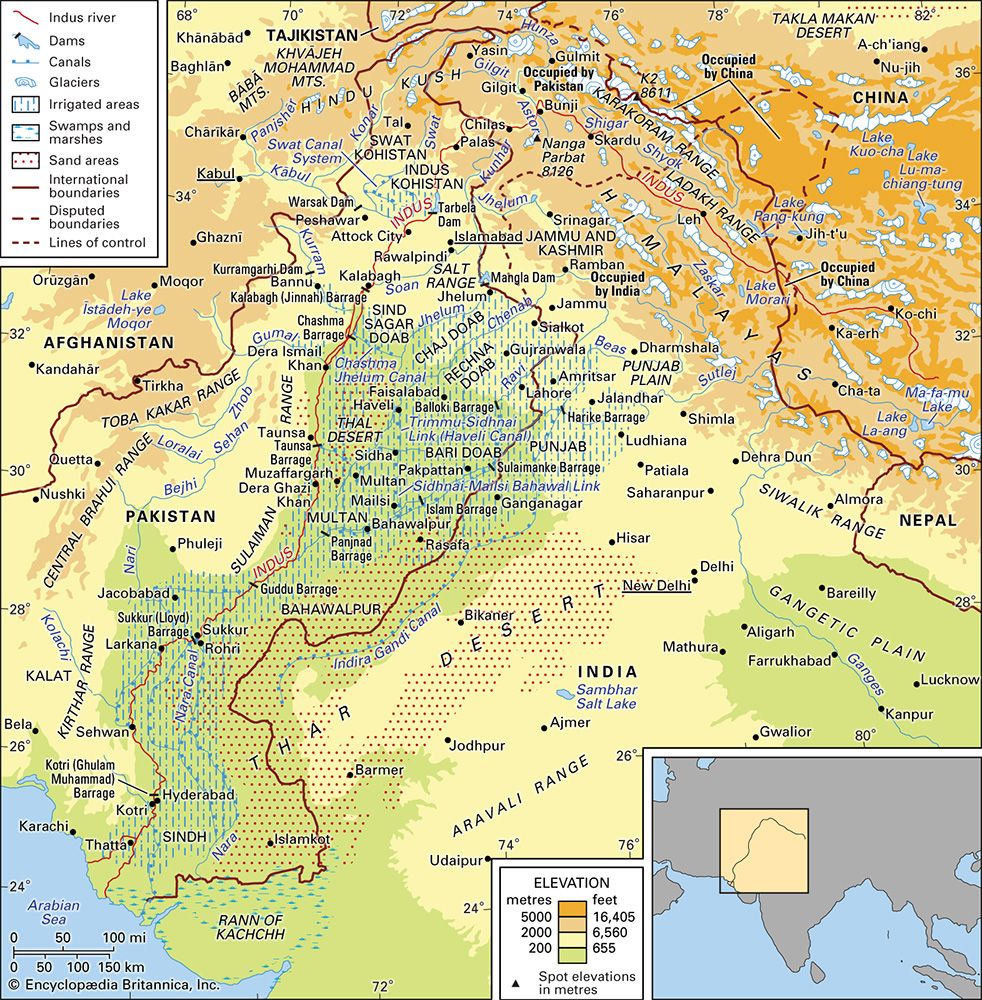
- Tarbela Dam: Located on the Indus River, this is one of the world’s largest earth-and-rock-fill dams. It is a critical facility for Pakistan, providing significant hydroelectric power and water storage for irrigation.12
- Mangla Dam: Situated on the Jhelum River, this major embankment dam serves as a vital source of hydroelectricity and irrigation water.13
- Ghazi Barotha: A hydroelectric project located downstream of Tarbela that utilizes a partial diversion of the Indus to generate power.1
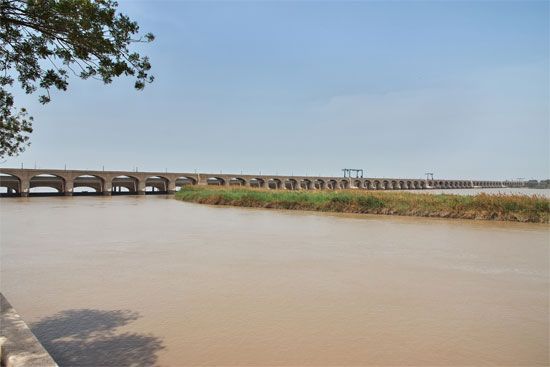
- Barrages: Various structures, such as the Sukkur Barrage, Guddu Barrage, and Kotri Barrage, regulate water flow for extensive canal irrigation systems.1
Impacts
These projects have been transformative for agriculture, enabling the irrigation of vast desert regions and supporting food production. However, they have also caused significant human displacement, with over 100,000 people relocated for the Mangla Dam and nearly 100,000 for the Tarbela Dam. Environmentally, improper irrigation management has led to waterlogging and soil salinization, while sediment buildup has reduced the storage capacity of reservoirs.123
What ancient civilizations flourished along the Indus River, and what evidence remains of their presence?
The Indus civilization, also known as the Harappan civilization, flourished in the Indus River valley and surrounding regions from approximately 2600 to 1900 BCE. It was the most extensive of the world’s three earliest civilizations, with sites stretching from modern-day Pakistan into northwestern India.56
Key Archaeological Evidence
The civilization is best known for its two major urban centers, Harappa and Mohenjo-daro, which exhibit sophisticated urban planning. Evidence of their presence includes:65
- Urban Infrastructure: Cities were laid out in organized grids with fortified citadels, drainage systems, and standardized brick construction.57
- Architecture: Remains include large granaries, assembly halls, and private houses with bathrooms and wells.57
- Art and Artifacts: Excavations have yielded bronze sculptures, such as the famous “dancing girl,” as well as terra-cotta figurines of animals and humans.5
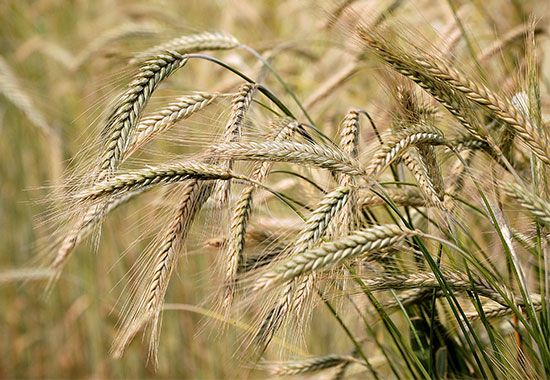
- Economic Activity: Evidence of craft workshops (potters, metalworkers, and bead makers) and agricultural practices, including the cultivation of wheat, barley, and cotton, confirms a complex, settled society.67
The decline of this society remains a subject of study, with theories ranging from environmental shifts and flooding to potential social or economic disruptions.85
What cultural and religious significance does the Indus River hold for the people living along its banks?
The Indus River holds profound historical and cultural significance, primarily as the namesake and lifeblood of the region. Its name, derived from the Sanskrit Sindhu, is deeply embedded in the identity of South Asia, as it is the source of the country’s name.10
The river’s cultural importance is rooted in its ancient legacy. It was the cradle of the Indus civilization, which flourished approximately 4,500 years ago. The river is mentioned in the Rigveda, one of the earliest known religious texts, composed around 1500 BCE, which highlights its long-standing presence in the cultural consciousness of the region.111210
Beyond its historical and religious mentions, the river is vital to the people living along its banks for its essential role in sustaining life. It provides the fertile land and water necessary for agriculture, serving as the backbone of the region’s economy and food security. While other rivers in India, such as the Ganges, are explicitly personified as goddesses in religious mythology, the Indus is primarily revered for its foundational role in human civilization and its ongoing contribution to the prosperity of the Indus River plain.51013
What role did the Indus River play in the partition of India and Pakistan in 1947?
The partition of India in 1947 significantly disrupted the region’s agricultural stability by bifurcating the elaborate irrigation system of the Indus River basin. The new international boundary placed the system’s headworks in India, while the extensive network of canals ran through Pakistan, creating a critical dependency and immediate conflict over water distribution.14115
Following the expiration of a short-term Standstill Agreement, India halted the flow of canal waters to Pakistan on April 1, 1948. This action led to the signing of an Inter-Dominion Accord in May 1948, which served as a temporary measure requiring India to provide water in exchange for annual payments while further negotiations were sought.1415
This impasse eventually led to the Indus Waters Treaty in 1960, brokered by the World Bank. The treaty established a permanent resolution by assigning the waters of the western rivers (Indus, Jhelum, and Chenab) to Pakistan and the eastern rivers (Ravi, Beas, and Sutlej) to India, providing a framework that has governed water-sharing despite ongoing regional tensions.14115
Sources
- Indus River - Irrigation of the Indus River — Encyclopædia Britannica
- Tarbela Dam — Encyclopædia Britannica
- Mangla Dam — Encyclopædia Britannica
- water infrastructure in India - Dams — Encyclopædia Britannica
- Indus civilization - The recovery and study of the Indus civilization — Encyclopædia Britannica
- India - The end of the Indus civilization — Encyclopædia Britannica
- Mohenjo-daro — Encyclopædia Britannica
- India - Planning and architecture — Encyclopædia Britannica
- Indus civilization: Top Questions — Encyclopædia Britannica
- Indus River — Encyclopædia Britannica
- Pakistan: Top Questions — Encyclopædia Britannica
- Indus River - Hydrology of the Indus River — Encyclopædia Britannica
- Hinduism - Myths of holy rivers and holy places — Encyclopædia Britannica
- Radcliffe Line - Indus waters dispute — Encyclopædia Britannica
- Indus Waters Treaty — Encyclopædia Britannica
Published on · 4 min read