Holy Island
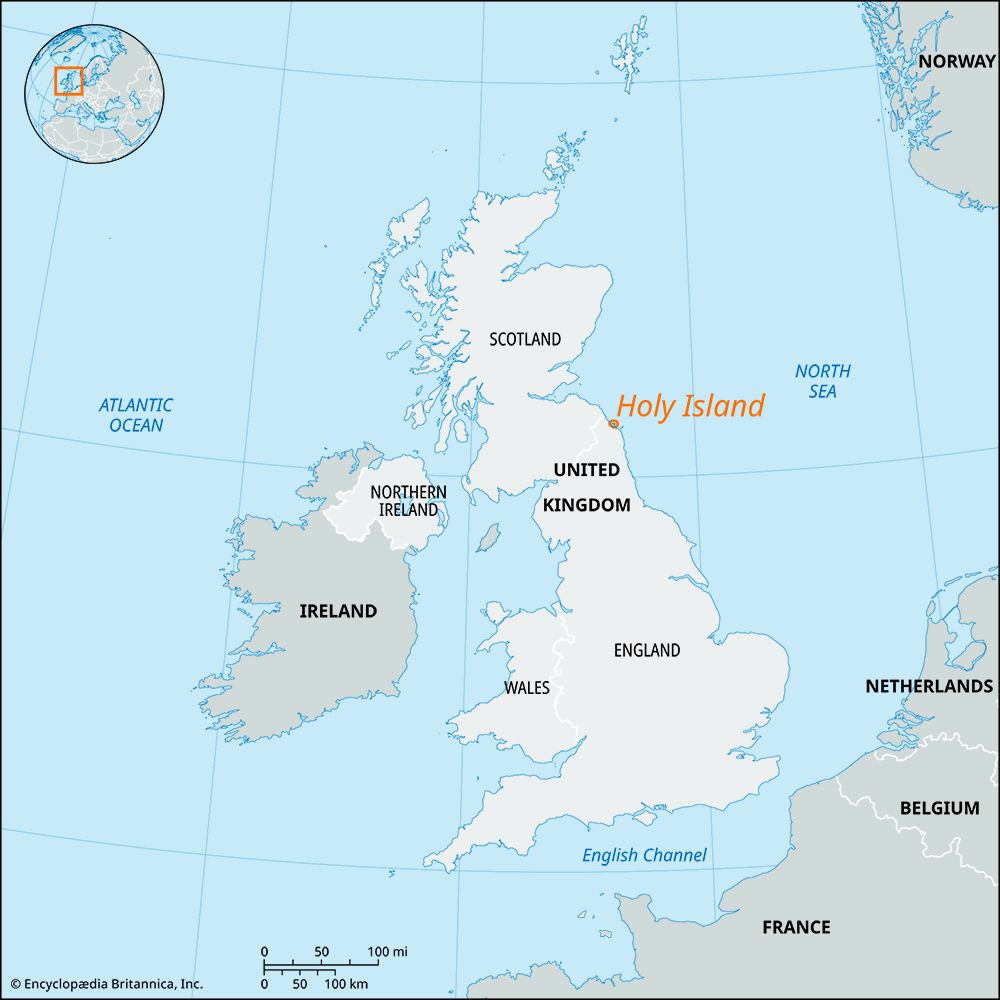
Holy Island, also known as Lindisfarne, is a small island located in the North Sea, situated approximately 2 miles (3 km) off the coast of Northumberland…
What is the geographic location of Holy Island, and why is it called ‘Holy’?
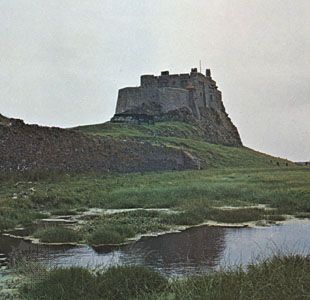
Holy Island, also known as Lindisfarne, is a small island located in the North Sea, situated approximately 2 miles (3 km) off the coast of Northumberland, England1. It is a tidal island, linked to the mainland by a causeway that is accessible only at low tide.12
The island earned its name due to its profound religious significance in early Christianity. In 635 ce, St. Aidan established a monastery there to serve as a base for missionary work in the kingdom of Northumbria work in the kingdom of Northumbria. The site grew in spiritual importance as a place of pilgrimage, particularly because it held the relics of St. Cuthbert, a bishop renowned for his healing and prophetic abilities. The island’s status as a sacred sanctuary was further cemented by the production of the Lindisfarne Gospels, a celebrated example of 7th-century illuminated manuscripts.31
How did Holy Island play a role in the spread of Christianity in England?
Holy Island, or Lindisfarne, served as a pivotal hub for the expansion of Christianity in northern England during the 7th century. In 635 ce, the Irish monk Saint Aidan established a monastery there at the request of King Oswald of Northumbria. This site functioned as the primary ecclesiastical center for the region, providing a base from which Aidan and his successors evangelized the local population.421
The island’s influence was multifaceted:
- Missionary Training: Aidan founded a school on the island to train ministers, including notable figures such as Chad, the first bishop of Lichfield, and his brother Cedd, who converted the East Saxons.4
- Ecclesiastical Infrastructure: From this base, missionaries traveled to the mainland to establish new churches and monasteries, effectively spreading the Christian faith throughout Northumbria.42
- Cultural and Spiritual Legacy: The monastery became a center for artistic and religious production, most famously creating the Lindisfarne Gospels. Additionally, the presence of the relics of St. Cuthbert transformed the island into a major destination for pilgrims, further solidifying its role as the heart of Anglo-Saxon Christianity.21
What is the historical significance of Lindisfarne Priory on Holy Island?
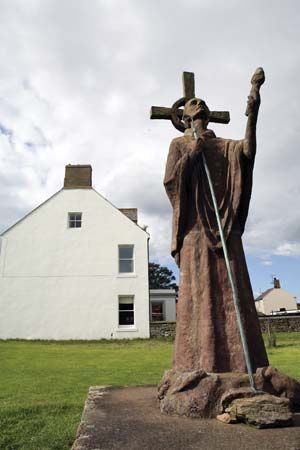
Lindisfarne Priory, located on Holy Island, holds immense historical significance as the heart of Anglo-Saxon Christianity and a center of cultural achievement in the 7th and 8th centuries.4
A Center for Evangelism and Culture
Founded in 635 CE by the Irish monk Saint Aidan at the request of King Oswald of Northumbria, the monastery served as a base for missionary work across northern England. It became a leading ecclesiastical center, housing a school for training ministers and producing the Lindisfarne Gospels, a masterpiece of Hiberno-Saxon illuminated manuscripts.526
Spiritual Significance
The site gained further prominence as a place of pilgrimage due to the presence of the relics of Saint Cuthbert, a bishop and renowned wonder-worker.47
The Viking Impact
The 793 Viking raid on the monastery is historically landmarked as the beginning of the Viking Age in Europe. The event was viewed as a profound desecration of a sacred sanctuary. Following continued threats, the monks abandoned the site in 875, eventually carrying St. Cuthbert’s remains to what would become Durham Cathedral](https://www.britannica.com/topic/Durham-Cathedral/Introduction#ref1)**. The priory was later refounded in 1082 by the monks of Durham.472
How did Holy Island get its alternative name ‘Lindisfarne’?
The provided search results do not contain information regarding the etymological origin or the specific historical process by which the island came to be known as “Lindisfarne.” The sources confirm that the island is historically referred to as both Holy Island and Lindisfarne, but they do not explain the derivation of the latter name.
Sources
- Holy Island — Encyclopædia Britannica
- Lindisfarne raid — Encyclopædia Britannica
- Holy Island — Merriam-Webster
- Saint Aidan — Encyclopædia Britannica
- Lindisfarne Gospels — Encyclopædia Britannica
- Saint Cuthbert — Encyclopædia Britannica
- Durham Cathedral — Encyclopædia Britannica
- Northumbria — Encyclopædia Britannica
Published on · 3 min read