Indiana Dunes
It is a common misconception that the Indiana Dunes transitioned directly from a state park to a national park. In reality, the area has long featured both…
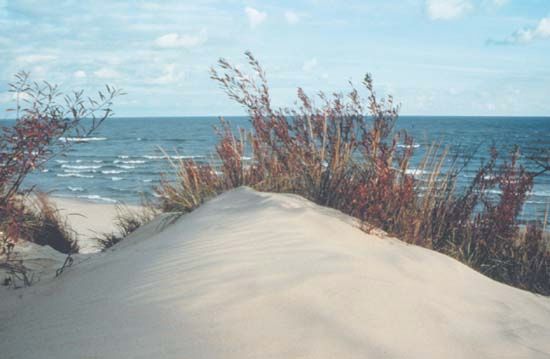
How has the Indiana Dunes area changed from a state park to a national park, and when did this occur?
It is a common misconception that the Indiana Dunes transitioned directly from a state park to a national park. In reality, the area has long featured both designations, and the national park status was preceded by a national lakeshore designation.1
The Indiana Dunes State Park was established in 1923 and opened in 1926 to protect a specific portion of the shoreline near Chesterton. Decades later, following a 50-year conservation effort to protect the region from industrialization, the federal government authorized the Indiana Dunes National Lakeshore in 1966.1
This national lakeshore eventually became Indiana Dunes National Park in 2019. Today, the national park encompasses the state park on its three land sides, creating a combined protected area of 24 square miles that preserves diverse ecosystems, including dunes, wetlands, and prairies.1
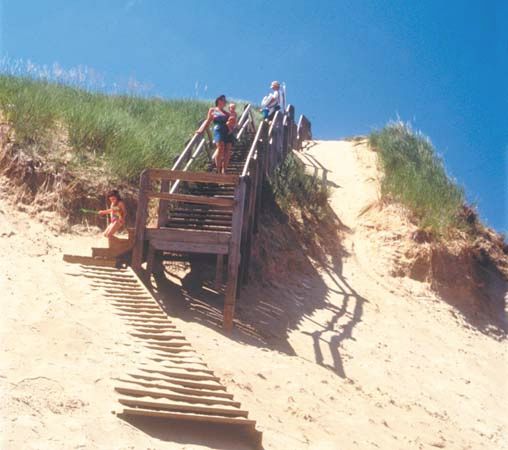
What recreational activities are available for visitors at Indiana Dunes?
Visitors to the Indiana Dunes area can enjoy a variety of outdoor recreational activities across the combined national and state park lands. The region offers diverse environments, including sandy beaches, woodlands, and wetlands, which support the following activities:
- Hiking: The park features extensive trails that wind through dunes, forests, and prairie remnants, allowing visitors to explore the unique landscape.1
- Beach Activities: With long stretches of sandy shoreline along Lake Michigan, the area is a popular destination for swimming and relaxing by the water.1
- Camping: Facilities are available for those looking to stay overnight and immerse themselves in the natural surroundings.1
- Fishing: Anglers can utilize designated areas for fishing within the park.1
- Picnicking: There are dedicated spaces provided for visitors to enjoy meals outdoors.1
- Nature Observation: The park is situated on a major bird migration route, making it an excellent location for birdwatching and studying diverse flora, ranging from Arctic species to desert cacti.1
- Historical Exploration: Visitors can tour preserved historical sites, such as the Bailly Homestead (1822) and the Chellberg Farm (1872).1
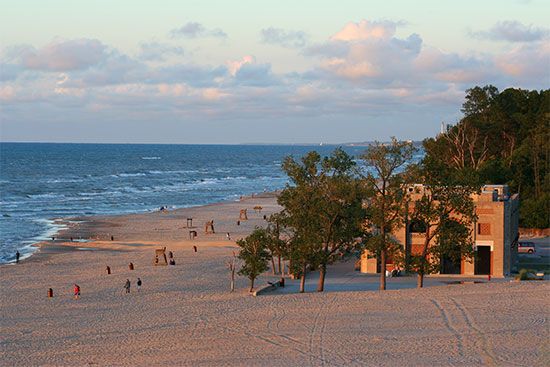
What are some of the rare or endangered species found in the Indiana Dunes ecosystem?
The Indiana Dunes ecosystem is recognized for its remarkable biological diversity, which includes a wide range of flora and fauna. While the provided search results highlight the area’s high diversity—ranging from Arctic bearberry to tropical orchids and desert cacti—they do not provide a specific list of rare or endangered species unique to the dunes themselves.
However, the broader Indiana region, which includes the wetlands and waterways associated with the dunes, is known to support several species of conservation interest. For instance, the sandhill crane is noted as an endangered species that inhabits the state’s wetlands, and the lake sturgeon is identified as a rare fish species found in Indiana’s waters.1
The park’s unique environment, featuring fens, bogs, and prairie remnants, serves as a critical refuge for various species, though detailed inventories of currently listed endangered species within the park boundaries are not explicitly detailed in the provided data.2
What is the history of human settlement in the Indiana Dunes area?
The history of human settlement in the Indiana Dunes area is characterized by a long-standing tension between preservation and industrial development. While the region’s natural landscape has been inhabited and utilized for centuries, the 19th and 20th centuries saw significant shifts in land use.
Historical sites preserved within the park provide a glimpse into early settlement patterns, most notably the Bailly Homestead, established in 1822, and the Chellberg Farm, dating to 1872. These sites reflect the agricultural and homesteading activities that defined the area’s early development.
By the 20th century, the region faced intense pressure from industrialization, with large portions of the dunes being claimed for steel mills, power plants, and private residential development. This encroachment sparked a 50-year conservation movement, ultimately leading to the authorization of the national lakeshore in 1966 to protect the remaining natural landscape. Today, the area remains a mosaic of protected parkland interspersed with industrial and community infrastructure.12
Sources
- Indiana Dunes — Encyclopædia Britannica
- Indiana - Relief, drainage, and soils — Encyclopædia Britannica
- Indiana - Plant and animal life — Encyclopædia Britannica
Published on · 3 min read