Iwo Jima
The Battle of Iwo Jima is primarily commemorated in the United States through the iconic imagery of the flag-raising on Mount Suribachi. This event, captured…
How is the Battle of Iwo Jima commemorated in both American and Japanese cultures?
The Battle of Iwo Jima is primarily commemorated in the United States through the iconic imagery of the flag-raising on Mount Suribachi. This event, captured by photographer Joe Rosenthal, became a defining symbol of the Pacific War and was immortalized in the Marine Corps War Memorial in Arlington, Virginia. The memorial features a massive bronze sculpture of the flag-raising, inscribed with Fleet Adm. Chester W. Nimitz’s tribute to the troops: “Uncommon valor was a common virtue.”123
While the provided search results detail the intense combat and the strategic significance of the island for the United States, they do not contain specific information regarding how the battle is commemorated within Japanese culture. The historical record notes that the island, now known as Iō-tō, was returned to Japan in 1968, but the specific cultural practices or memorials established by Japan to honor the 18,500 Japanese troops killed during the conflict are not addressed in the available data.1
What were the major events and outcomes of the Battle of Iwo Jima?
The Battle of Iwo Jima (February 19–March 16, 1945) was a pivotal and exceptionally bloody World War II conflict between the United States and the Empire of Japan.
Strategic Objectives
Allied planners targeted Iwo Jima to eliminate a Japanese base that threatened B-29 bombing missions and to secure the island for three primary purposes:
- A base for fighter planes to escort heavy bombers.
- An emergency landing site for damaged B-29s.
- A base for reconnaissance aircraft.4
Major Events
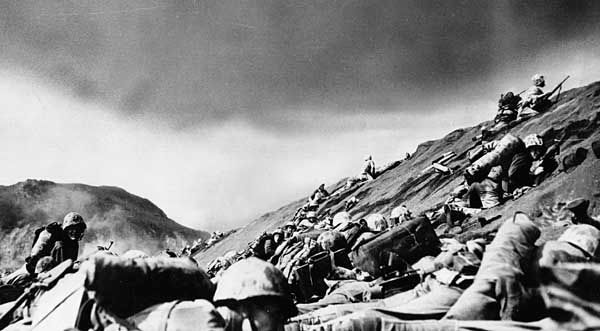
Under the command of Lieut. Gen. Kuribayashi Tadamichi, Japanese forces utilized a sophisticated network of tunnels and caves to create a formidable defensive position. Despite intense pre-invasion bombardment, the Japanese remained largely protected.43
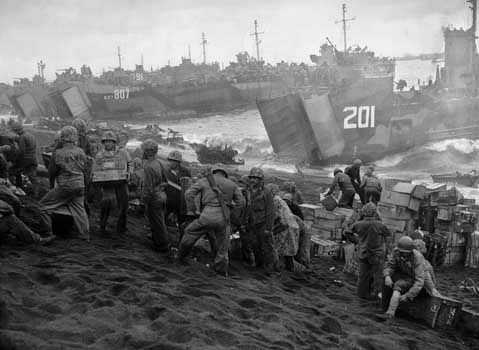
Following the landing on February 19, 1945, U.S. Marines faced grueling combat over rugged terrain. A defining moment occurred on February 23, when Marines secured Mount Suribachi and raised the American flag—an event immortalized in a famous photograph by Joe Rosenthal.43
Outcomes
The battle was a costly victory for the U.S., resulting in approximately 6,800 American deaths and 19,200 wounded. Japanese casualties were severe, with nearly 18,500 soldiers killed. While the island provided airfields for the remainder of the war, the operation has faced historical criticism regarding whether the strategic benefits justified the high loss of life.5
What is the volcanic history of Iwo Jima and how does it affect the island’s landscape?
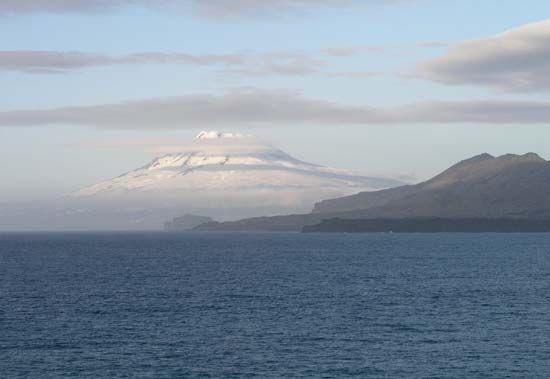
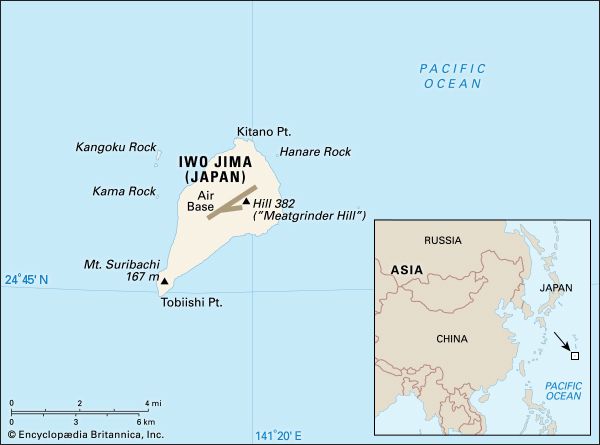
Iwo Jima, officially known as Iō-tō, is part of the Volcano Islands archipelago, a chain of islands in the western Pacific that reflects the region’s active geological nature.17
The island’s landscape is defined by its volcanic origins. A prominent feature is Mount Suribachi, which is identified as an extinct volcano located in the southern part of the island. While the island is recognized as a volcanic landform, the provided search results do not detail the specific timeline of its eruptions or the ongoing geological processes that shape its current topography beyond its classification within the Volcano Islands.17
Historically, the island’s terrain—characterized by its volcanic composition—was significant enough to influence military operations during World War II, as the Japanese defenders utilized the island’s natural caves and rugged volcanic features to establish extensive defensive positions.1
How did the iconic flag-raising photograph on Mount Suribachi become a symbol of the battle?
The iconic photograph taken by Joe Rosenthal on February 23, 1945, became a powerful symbol of the Battle of Iwo Jima due to its widespread dissemination and its representation of the intense struggle for the island. The image captures six men—five United States Marine Corps members and a U.S. Navy hospital corpsman—raising an American flag atop Mount Suribachi.21
The photograph’s status as a cultural icon was cemented by its extensive reproduction in media, art, and even a U.S. postage stamp. It served as the primary inspiration for the Marine Corps War Memorial in Arlington, Virginia, a massive bronze sculpture that honors those who served and died for the Corps since 1775.21
Interestingly, the image depicts the second flag-raising of the day; the first flag, raised earlier, was deemed too small to be clearly visible to troops across the island. This moment of triumph amidst the brutal conflict remains one of the most recognizable images of the Pacific War.1
Sources
- Iwo Jima — Encyclopædia Britannica
- Marine Corps War Memorial — Encyclopædia Britannica
- Pacific War - Iwo Jima — Encyclopædia Britannica
- Battle of Iwo Jima — Encyclopædia Britannica
- Battle of Iwo Jima - Battle — Encyclopædia Britannica
- Battle of Iwo Jima - Aftermath and criticism — Encyclopædia Britannica
- Iwo Jima — Merriam-Webster
- Volcano Islands — Encyclopædia Britannica
Published on · 3 min read