Isle of Wight
The economy of the Isle of Wight is diverse, supported by a mix of traditional sectors and modern manufacturing.
What are the main industries and economic activities on the Isle of Wight?
The economy of the Isle of Wight is diverse, supported by a mix of traditional sectors and modern manufacturing.
Key Economic Sectors
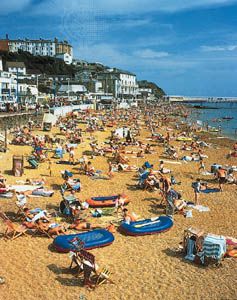
- Tourism: Due to the island’s mild climate and numerous holiday resorts—such as Ryde, Sandown-Shanklin, and Ventnor—tourism serves as a primary economic pillar.1
- Marine and Manufacturing: The island has a strong industrial base, particularly in boatbuilding and marine engineering. Cowes is internationally recognized as a major yachting center.1
- Advanced Technology: The aerospace, electronics, and plastics industries are significant contributors to the local economy.1
- Agriculture: The southern part of the island is utilized for the cultivation of fruits and vegetables.1
Additionally, the island hosts a major British maximum-security prison at Parkhurst, which functions as a notable local institution.1
How does the Isle of Wight’s status as a unitary authority affect its governance and relationship with mainland England?
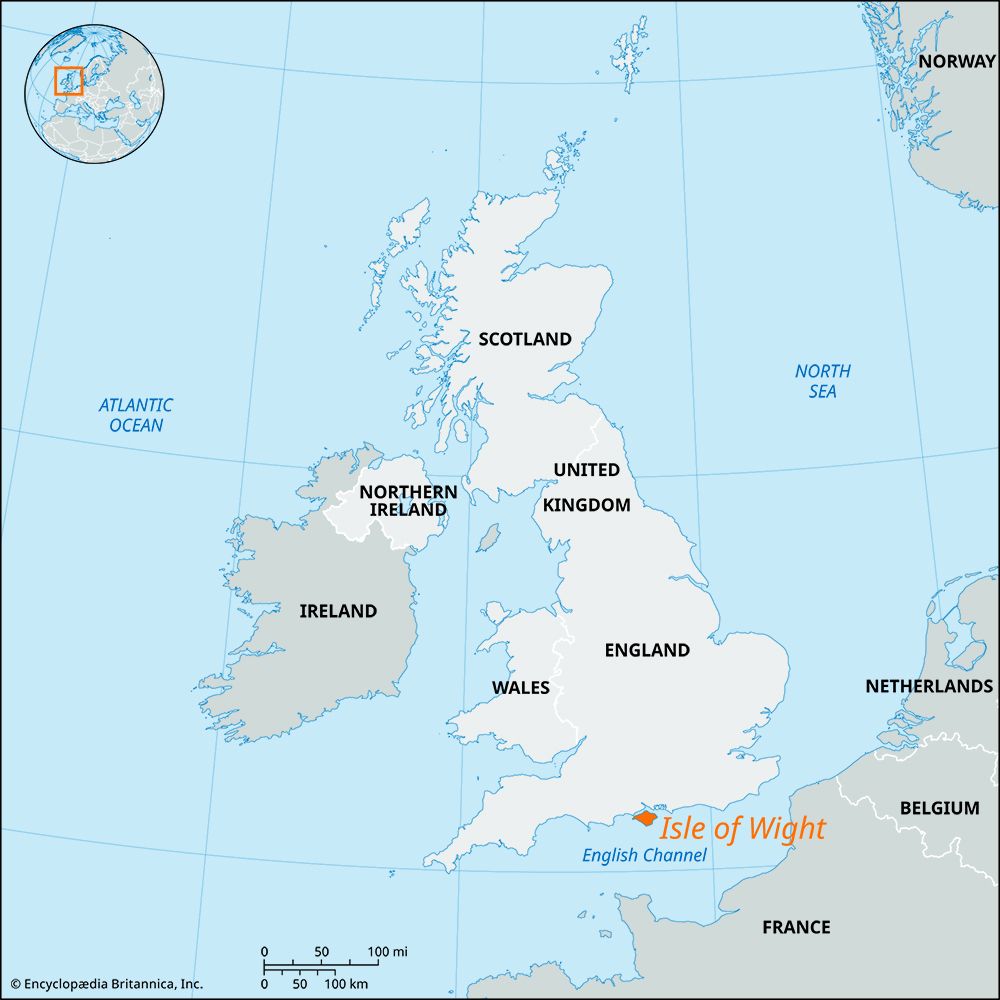
The Isle of Wight functions as a unitary authority, meaning it is a single tier of local government responsible for all local services, rather than being divided between a county council and smaller district councils. While it remains a geographic county, its status as a unitary authority grants it administrative independence from the Hampshire county council, allowing it to manage its own affairs directly from its administrative centre in Newport.
This governance structure simplifies local decision-making for the island’s population, as the unitary authority oversees all essential public services. Despite this administrative autonomy, the island maintains its historical and geographic ties to mainland England, separated only by the strait known as The Solent. Its status ensures that the island can address its unique needs—such as those related to its island economy and infrastructure—without being subject to the broader administrative priorities of the mainland county.
What is the history of the Isle of Wight, including its earliest settlements and significant events?
The history of the Isle of Wight spans from prehistoric occupation to its modern status as a popular destination. While human activity dates back to the earliest times, the Early Bronze Age represents the period of most-intense prehistoric settlement.1
Significant historical events include:
- Roman Annexation: Emperor Vespasian annexed the island in 43 ce, leaving behind various Roman remains.1
- Medieval Period: The island was annexed to Wessex in 661 and later granted to the king of Sussex. By 998, it served as a headquarters for marauding Danes.1
- Conflict: In 1377, the town of Newport was devastated by the French, remaining uninhabited for two years. During the English Civil Wars, Charles I was imprisoned at Carisbrooke Castle (1647–48).1
- Royal Connection: Queen Victoria established Osborne House as her residence in 1845, where she eventually died in 1901.13
How does the Needles, a row of chalk stacks off the western extremity of the island, impact tourism and local culture?
The Needles are three iconic, detached masses of chalk rising approximately 100 feet (30 metres) above the sea off the westernmost point of the Isle of Wight. As the western terminus of the island’s central chalk ridge, they serve as a prominent natural landmark that defines the island’s dramatic coastal scenery.
While the provided information confirms that tourism is a primary economic pillar for the island, supporting numerous holiday resorts and attracting visitors to its varied landscape, the specific cultural impact or tourism statistics directly attributed to The Needles are not detailed in the available records. The site remains a significant geological feature that underscores the island’s unique physical geography, which is central to its identity as a destination.
We could dive deeper into the broader tourism industry on the island or explore the geological processes that formed these chalk formations.
Sources
- Isle of Wight — Encyclopædia Britannica
- Cabo Verde - Services — Encyclopædia Britannica
- Cowes — Encyclopædia Britannica
Published on · 3 min read