Jan Mayen
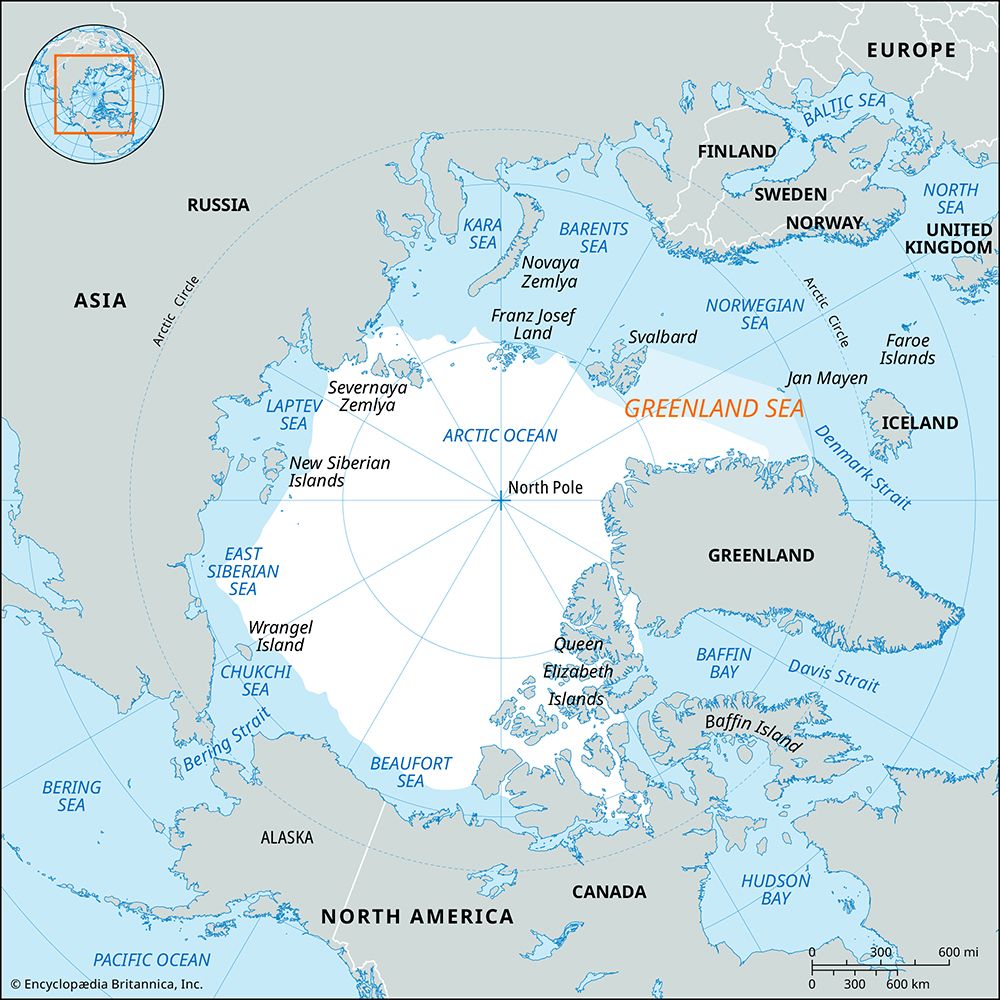
Jan Mayen is an island belonging to the Kingdom of Norway, located in the Greenland Sea of the Arctic Ocean, approximately 300 miles (500 km) east of…
What is the geographical location and physical characteristics of Jan Mayen island?
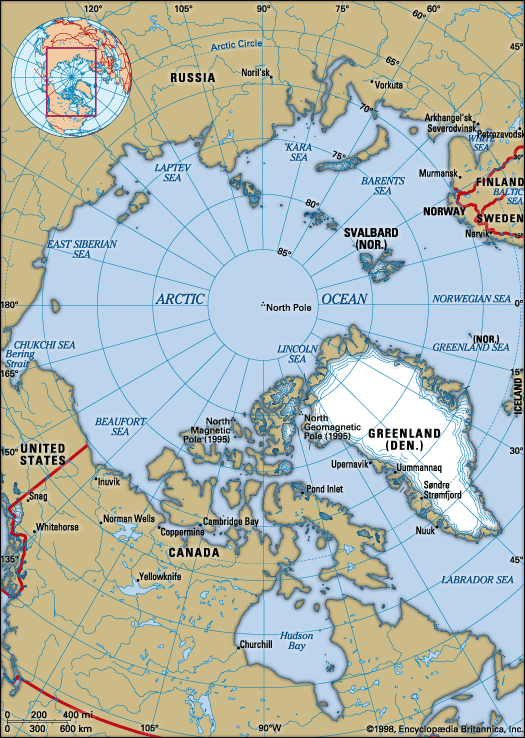
Jan Mayen is an island belonging to the Kingdom of Norway, located in the Greenland Sea of the Arctic Ocean, approximately 300 miles (500 km) east of Greenland.1
Physical Characteristics
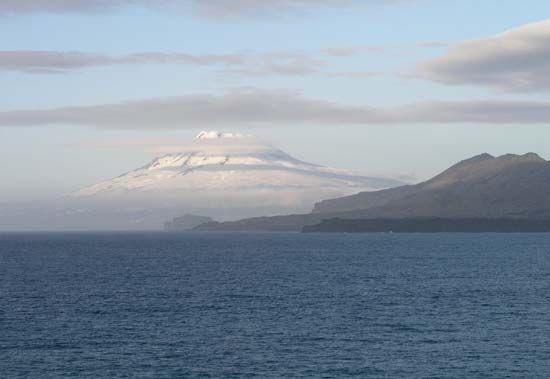
The island spans roughly 35 miles in length and 9 miles at its widest point, covering an area of approximately 144 square miles. It serves as the exposed peak of a submarine volcanic ridge. The terrain is divided into two distinct regions:1
- Nord-Jan: The northeastern section, dominated by the Beerenberg volcano, which reaches an elevation of 7,470 feet (2,277 meters).1
- Sør-Jan: The southern region, characterized by low, hilly terrain.1
The island is described as bleak and desolate, featuring a foggy, stormy climate with temperatures fluctuating between -25° F (-32° C) in winter and 50° F (10° C) in summer. It lacks natural harbors and supports only sparse tundra vegetation. Aside from personnel operating meteorological and navigation stations, the island remains uninhabited.1
How has Jan Mayen been used for scientific research, particularly in meteorology and geology?
Jan Mayen has served as a strategic site for scientific observation and monitoring due to its isolated Arctic location.
Meteorological Research
The island’s role in meteorology began during the First International Polar Year (1882–1883), when an Austrian expedition established the first weather station and became the first group to winter on the island. In 1921, a permanent Norwegian meteorological observatory was constructed, solidifying the island’s importance in tracking Arctic weather patterns. During World War II, the United States military maintained a weather station on the island to support strategic operations.1
Geological and Navigational Significance
Geologically, Jan Mayen is significant as the exposed peak of a submarine volcanic ridge, dominated by the Beerenberg volcano. While the island is primarily used today for its meteorological and radio facilities, its infrastructure has been expanded over time to support broader scientific and navigational needs. In 1958–1959, NATO allies constructed an airstrip and a radio and navigation station, which was further enhanced in 1970 with the addition of a console navigation system.1
How did Jan Mayen get its name, and what is its historical significance?
Jan Mayen derives its name from the Dutch sea captain Jan May, who claimed the island for his company and Holland in 1614. While it may have been sighted earlier in 1607 by Henry Hudson, who referred to it as Hudson’s Tutches, the name Jan Mayen became the enduring designation for the territory.1
Historical Significance
The island’s history is defined by its strategic value and resource exploitation:
- Whaling: In the early 17th century, the island served as a vital whaling base. However, this activity was short-lived, as the local whale population was effectively exterminated by 1642.1
- Scientific Exploration: The island became a focal point for international science during the First International Polar Year (1882–1883), when an Austrian expedition conducted the first successful wintering there.1
- Strategic Sovereignty: Norway formally annexed the island on May 8, 1929, following the establishment of a permanent meteorological observatory and radio station in 1921.1
- Military Utility: During World War II, the U.S. military operated a weather station on the island. Later, NATO allies utilized the site for navigation and radio infrastructure, including a console navigation system added in 1970.1
What role did Jan Mayen play during World War II?
During World War II, Jan Mayen served as a strategic location for meteorological monitoring. The United States armed forces maintained a weather station on the island to support their operations in the Arctic region.1
Sources
- Jan Mayen — Encyclopædia Britannica
- Jan Mayen Island — Merriam-Webster
Published on · 3 min read