Izu Islands
The Izu Islands are a volcanic archipelago located in the Pacific Ocean, stretching southward for approximately 190 miles (300 km) from Tokyo Bay off the…
Where are the Izu Islands located, and how many islands make up this archipelago?
The Izu Islands are a volcanic archipelago located in the Pacific Ocean, stretching southward for approximately 190 miles (300 km) from Tokyo Bay off the coast of Honshu, Japan.1
While historically referred to as the “Seven Islands of Izu,” the broader Izu Archipelago actually consists of more than seven islands. The primary group includes Ō, To, Nii, Shikine, Kōzu, Miyake, and Mikura, while the full archipelago also encompasses Hachijō, Aoga, and Tori islands. Administratively, these islands are part of the Tokyo metropolis and are included within the Fuji-Hakone-Izu National Park.1
What role do the Izu Islands play in Japan’s marine conservation efforts?
Sorry, the Britannica knowledge base does not contain information regarding the specific role of the Izu Islands in Japan’s marine conservation efforts. The available records focus on the islands’ geography, their history as convict settlements, their volcanic activity, and their inclusion in the Fuji-Hakone-Izu National Park.12
How do the Izu Islands fit into Japan’s administrative and political structure?
The Izu Islands are administratively integrated into the Tokyo metropolis, known as Tokyo to.1
Politically and historically, these islands have been under Japanese jurisdiction for centuries, serving as designated convict settlements following the 12th century. Today, they are managed as part of the broader administrative framework of the capital region while also being protected under the Fuji-Hakone-Izu National Park designation, which oversees their environmental and scenic preservation.1
How do the Izu Islands contribute to Japan’s tourism industry?
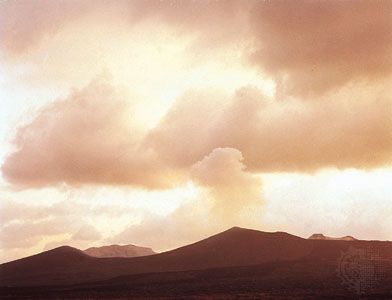
The Izu Islands contribute to Japan’s tourism industry primarily through their scenic beauty and unique natural features. As part of the Fuji-Hakone-Izu National Park, the archipelago attracts visitors interested in exploring its volcanic landscapes, most notably Mount Mihara on Ō Island, which is known for its periodic activity.1
Beyond their natural scenery, the islands are recognized for the production of camellia oil, which serves as a local cultural and economic draw. While the nearby Izu Peninsula is heavily frequented for its numerous hot springs and mild winter climate, the islands themselves offer a distinct destination within the same national park system, providing a remote volcanic experience for travelers.12
Sources
- Izu Islands — Encyclopædia Britannica
- Izu Peninsula — Encyclopædia Britannica
Published on · 2 min read