Japanese Spaniel
The Japanese spaniel, more commonly known today as the Japanese Chin, is a breed of toy dog that originated in China before being introduced to Japan, where…
What is Japanese spaniel?
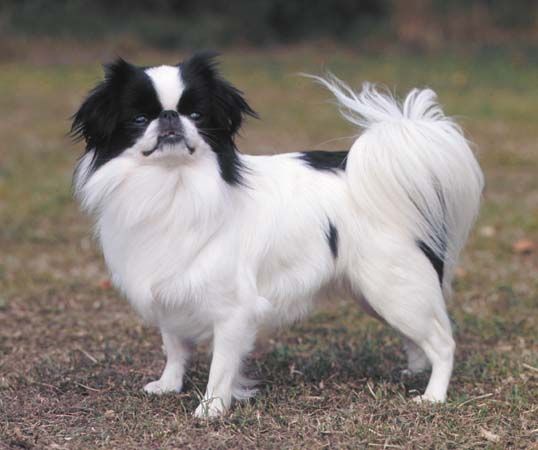
The Japanese spaniel, more commonly known today as the Japanese Chin, is a breed of toy dog that originated in China before being introduced to Japan, where it was historically kept by royalty1.
The breed gained prominence in the West after Commodore Matthew Perry brought several dogs back from Japan in 1853. Physically, the Japanese spaniel is a compact, dainty dog typically standing 8 to 11 inches (20 to 28 cm) tall and weighing approximately 7 pounds (3 kg). Key features include:1
- Appearance: Large, dark eyes, a short muzzle, and a heavily plumed tail that curls over the back.1
- Coat: A full, straight, silky coat that is either black and white or reddish brown and white.1
- Temperament: Valued as an alert and affectionate companion.1
How did the Japanese spaniel become popular in the West?
The Japanese spaniel, now widely known as the Japanese Chin, gained popularity in the West following the diplomatic missions of U.S. Commodore Matthew C. Perry to Japan in the mid-19th century.
During his expedition to force Japan to end its long-standing policy of isolation and enter into trade relations with the West, Perry successfully negotiated the Treaty of Kanagawa in 1854. As part of the cultural exchange during these interactions, several of these dogs—which had been historically favored by Japanese royalty—were presented to Perry as gifts. Upon his return to the West in 1853, he brought these dogs with him, introducing the breed to a new audience and establishing its presence outside of Asia.123
What are the common traits of toy dog breeds?
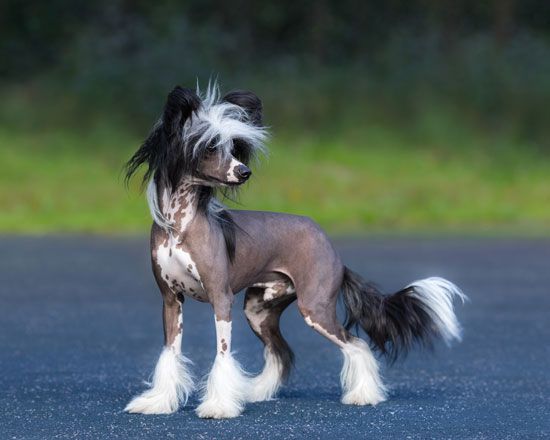
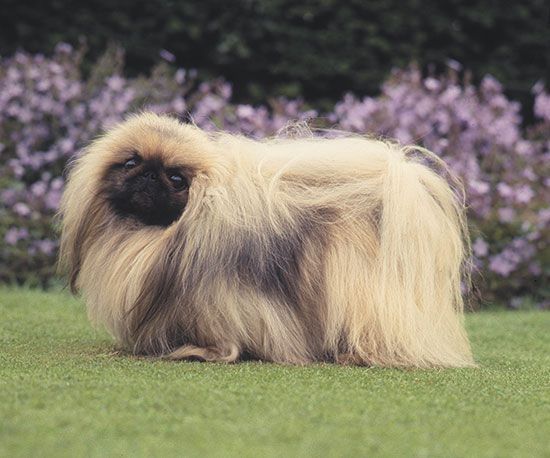
Toy dog breeds are a diverse group of canines specifically developed to serve as small, portable, and good-natured companions. While they vary significantly in appearance—ranging from hairless varieties like the Chinese Crested to profusely coated breeds like the Pekingese and Shih Tzu—they share several common traits and historical characteristics:45
Common Characteristics
- Size and Build: Toy dogs are bred to be small and lightweight, making them easily portable. They are generally fine-boned, well-balanced, and often described as graceful.5
- Temperament: In general, these dogs are alert, vigorous, and affectionate, having been selected over generations for their tractability and companionable nature.56
- Neoteny: Many toy breeds exhibit neoteny, the retention of juvenile physical and behavioral traits into adulthood. This includes features like foreshortened limbs and faces, which humans often perceive as “cute” or nurturing.6
- Suitability: Due to their size and temperament, they are widely considered ideal pets for apartment or small-house living.5
Historical and Ethical Context
Historically, these dogs were often pampered and treasured by aristocracy worldwide, with some breeds, such as the Japanese Chin, once restricted exclusively to royalty.45
However, the pursuit of extreme miniaturization—such as in the unofficial “teacup” category—has raised significant ethical concerns. Unethical breeding practices, including inbreeding to achieve smaller sizes, can lead to serious congenital disorders, such as respiratory issues, fragile bones, and heart conditions. It is essential to prioritize the health and welfare of these animals over aesthetic trends.67
How do different dog breeds get classified?
Dog breeds are classified primarily based on the original functions for which they were developed. This system, which emerged in the 1800s, categorizes breeds according to the work they were bred to perform, such as hunting, guarding, or herding.9
Classification Systems
National registries, such as the American Kennel Club (AKC) and the Kennel Club of England, maintain pedigrees and stud books to track purebred dogs. While many countries follow the standard established by the Kennel Club of England in 1873, terminology and group structures can vary:
- United States: Recognizes seven groups, distinguishing between Working dogs and Herding dogs.
- England and Canada: Recognize six groups, often using different terms (e.g., “Gundogs” in England are known as “Sporting dogs” in the U.S., and “Utility dogs” in England are “Non-Sporting dogs” in North America).9
Functional Groups and Behavior
Grouping dogs by their historical purpose provides insight into their temperament and instinctive behaviors. For example, Sporting dogs are typically adventurous, while Hounds are often more independent. Working and Herding breeds generally exhibit business-like, protective, or loyal dispositions, and Terriers are frequently characterized by high energy and feistiness.10
Sources
- Japanese spaniel — Encyclopædia Britannica
- Matthew C. Perry — Encyclopædia Britannica
- Treaty of Kanagawa — Encyclopædia Britannica
- toy dog — Encyclopædia Britannica
- dog - Toys — Encyclopædia Britannica
- Hell in a Handbag — Encyclopædia Britannica
- Yorkshire Terrier dog — Encyclopædia Britannica
- teacup dog — Encyclopædia Britannica
- dog - The breeds — Encyclopædia Britannica
- dog - Breed-specific behaviour — Encyclopædia Britannica
Published on · 3 min read