Kakadu National Park
The designation of Kakadu National Park as a UNESCO World Heritage site in 1981 serves as a formal recognition of its immense natural and cultural value.…
How has the park’s World Heritage status affected its management and preservation?
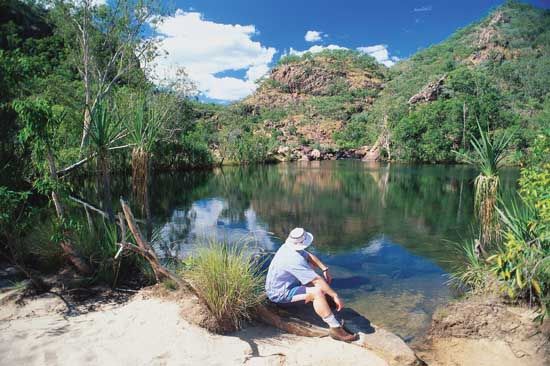
The designation of Kakadu National Park as a UNESCO World Heritage site in 1981 serves as a formal recognition of its immense natural and cultural value. While the provided information notes that the park is jointly administered by the Australian Department of the Environment and Heritage and the Aboriginal landowners, it does not explicitly detail specific management or preservation changes triggered solely by the World Heritage status itself.1
The park’s governance model reflects a commitment to honoring the rights and traditional knowledge of the Aboriginal people, who have inhabited the region for approximately 50,000 years. This collaborative management approach ensures that the protection of over 5,000 rock art sites and the diverse ecosystem remains deeply connected to the cultural heritage of the land’s traditional owners.1
What is the history behind Kakadu National Park’s establishment and naming?
Kakadu National Park is located in Australia’s Northern Territory and possesses a long history of human habitation, with Aboriginal peoples thought to have lived in the region for approximately 50,000 years.1
The formal protection of the area evolved through several stages:
- 1964: The region was first protected as an Aboriginal reserve.1
- 1972: It was designated as a wildlife sanctuary.1
- 1979: The area was officially redesignated as a national park.1
- 1981: It was named a UNESCO World Heritage site.1
The name “Kakadu” is derived from the Gagudju group of Aboriginal languages, which were spoken by people residing in the area during the early 20th century. Today, the park is jointly managed by the Australian Department of the Environment and Heritage and the local Aboriginal landowners, ensuring the preservation of its significant cultural and natural resources.1
What are the main ecosystems and landscapes found within Kakadu National Park?
Kakadu National Park features a diverse array of landscapes and ecosystems, shaped by geological history and complex drainage systems. The park’s primary landforms include:
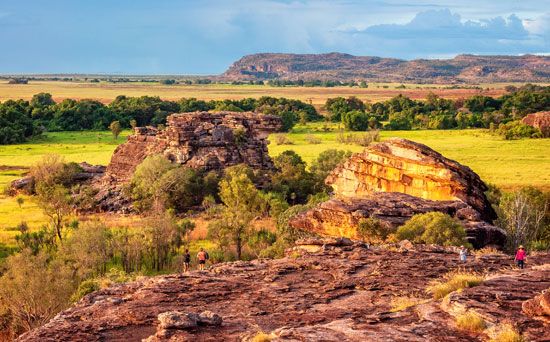
- Arnhem Land Plateau and Escarpment: Often referred to as “Stone Country,” this region features dramatic cliffs reaching heights of approximately 1,100 feet (330 meters).1
- Southern Hills and Basins: Located in the southern portion of the park, this area is characterized by volcanic rock and alluvial plains.1
- Lowlands: Known as the Koolpinyah surface, these undulating plains make up about four-fifths of the park and are primarily composed of laterite soils.1
- Floodplains: These serve as a vital drainage area for the South, West, and East Alligator rivers, supporting a wealth of plant life and wildlife.1
- Estuaries and Tidal Flats: These coastal areas are dominated by mangrove swamps.1
- Outliers: These are isolated remnants of the plateau that were once islands in an ancient sea.1
This varied terrain supports over 1,600 plant species and a vast array of fauna, including mammals, birds, reptiles, and fish.1
What are some of the most popular tourist activities and attractions in Kakadu National Park?
Visitors to Kakadu National Park are primarily drawn by the region’s spectacular natural landscapes and its profound cultural heritage. Key activities and attractions include:
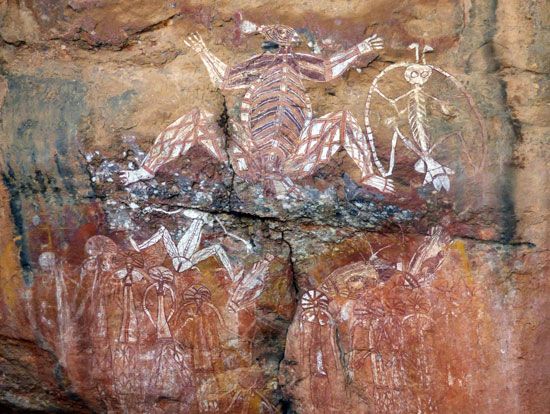
- Aboriginal Rock Art: The park is home to thousands of rock art sites, some dating back 20,000 years. These sites are particularly concentrated along the escarpment and within the gorges, offering a unique window into one of the world’s oldest continuous human cultures.1
- Outdoor Exploration: The rugged terrain is ideal for adventure-seekers. Popular activities include four-wheel drive expeditions, bush walking, and camping, which allow visitors to experience the diverse ecosystems ranging from the “Stone Country” plateau to the lush floodplains.12
- Fishing: The park is a well-known destination for barramundi fishing.2
- Sightseeing: The dramatic scenery—including the Arnhem Land escarpment, waterfalls, and vast floodplains—serves as a major draw for tourists interested in photography and nature observation.1
When visiting, it is essential to prioritize safety; swimming in coastal rivers and lakes is restricted at all times due to the presence of saltwater crocodiles.2
Sources
- Kakadu National Park — Encyclopædia Britannica
- Northern Territory - Sports and recreation — Encyclopædia Britannica
Published on · 3 min read