Kangaroo Island
Kangaroo Island is a low-cliffed plateau that serves as a structural continuation of the Mount Lofty–Flinders ranges on the Australian mainland.…
How was Kangaroo Island formed, and what is its geological history?
Kangaroo Island is a low-cliffed plateau that serves as a structural continuation of the Mount Lofty–Flinders ranges on the Australian mainland. Geologically, the island is characterized by this plateau formation, which rises to nearly 920 feet (280 metres) above sea level.1
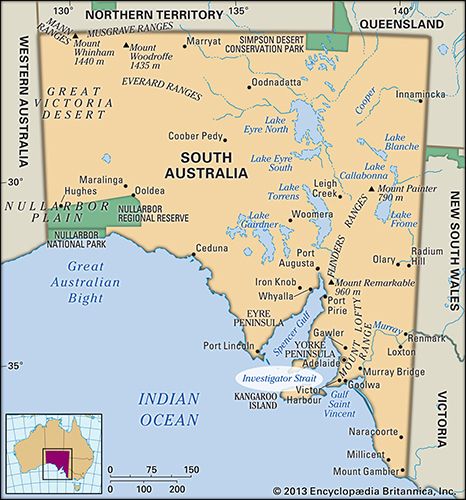
While the island is known for its distinct topography, it also contains significant geological deposits of gypsum. The island’s separation from the mainland is a key feature of its geography, situated 80 miles (130 km) southwest of Adelaide at the entrance to the Gulf St. Vincent. Archaeological evidence indicates that the island has been home to human settlement for approximately 16,000 years, providing a long history of habitation that predates European exploration.12
What is the indigenous history of Kangaroo Island?
Archaeological evidence indicates that Kangaroo Island has been home to human settlement for approximately 16,000 years. While the island was inhabited by Aboriginal peoples for millennia, the indigenous population across the broader region was likely in decline by the end of the 18th century due to the introduction of diseases like smallpox, which spread ahead of European arrival.1
By the time the island was visited by the English explorer Matthew Flinders in 1802, it was frequently visited by whalers and sealers. These groups established intermittent settlements on the island starting in 1803, eventually leading to the first temporary European settlement in 1836.21
What are some popular tourist attractions and activities on Kangaroo Island?
Kangaroo Island offers a variety of experiences for visitors, primarily centered around its unique natural environment and wildlife. Key attractions and activities include:
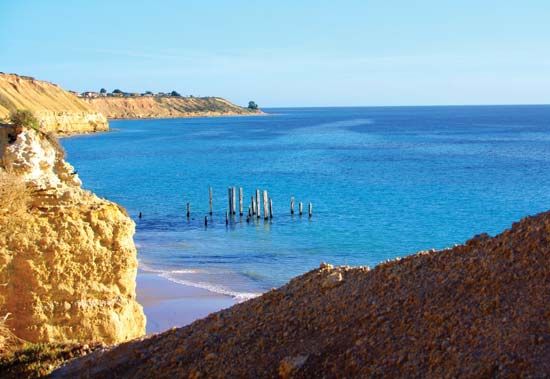
- Flinders Chase National Park: Located at the western end of the island, this expansive park covers 285 square miles (738 square km). It is a major draw for tourists, featuring diverse landscapes such as low wooded hills, rugged cliffs, and scenic beaches.1
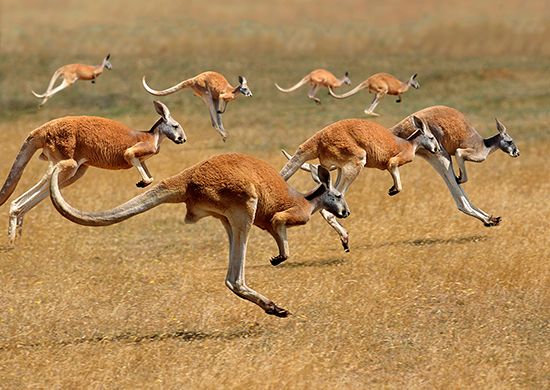
- Wildlife Observation: The island is a prime location for viewing native Australian fauna. Visitors can observe the echidna in its natural habitat and see various marsupials, including kangaroos.13
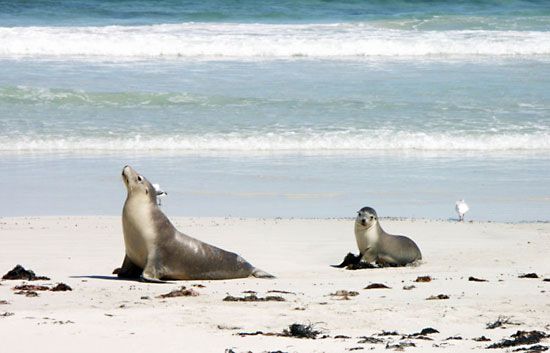
- Seal Bay: Situated on the southern coast, this site serves as a vital sanctuary and breeding ground for the Australian fur seal, offering a unique opportunity to see these animals up close.1
- Ocean Fishing: The surrounding waters provide excellent opportunities for recreational ocean fishing, which remains a popular activity for those visiting the island.1
Where is Kangaroo Island located, and how big is it?
Kangaroo Island is the third-largest offshore island in Australia. It is situated at the entrance to the Gulf St. Vincent in South Australia, approximately 80 miles (130 km) southwest of Adelaide.1
The island measures 90 by 34 miles (145 by 55 km) and covers a total area of 1,680 square miles (4,350 square km).1
Sources
- Kangaroo Island — Encyclopædia Britannica
- South Australia - The period before British colonization — Encyclopædia Britannica
- South Australia - Plant and animal life — Encyclopædia Britannica
Published on · 2 min read