Lampedusa Island
Lampedusa Island, the largest of the Pelagie Islands, features several significant historical and archaeological sites that reflect its long history of human…
What are some of the major cultural or historical landmarks on the island?
Lampedusa Island, the largest of the Pelagie Islands, features several significant historical and archaeological sites that reflect its long history of human habitation. While the island is known for its rugged landscape, it contains remnants of prehistoric hut foundations, Punic tombs, and various Roman buildings.1
Beyond these ancient structures, the island has served as a focal point for modern historical events. Its strategic location in the Mediterranean Sea made it a site of conflict during World War II, and it has gained international attention in the 21st century as a primary gateway for migrants traveling from North Africa to Europe. In July 2013, Pope Francis visited the island to highlight the humanitarian challenges faced by those attempting the dangerous sea crossing.1
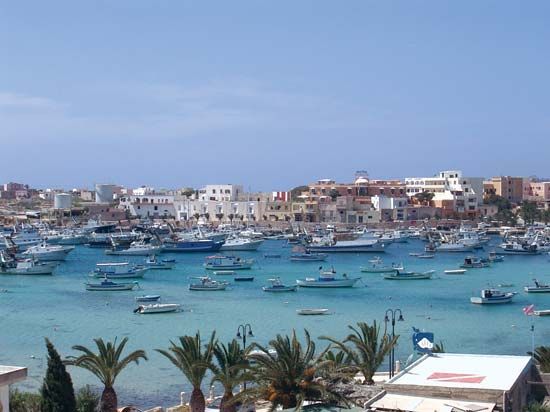
Where is Lampedusa Island located, and what country does it belong to?
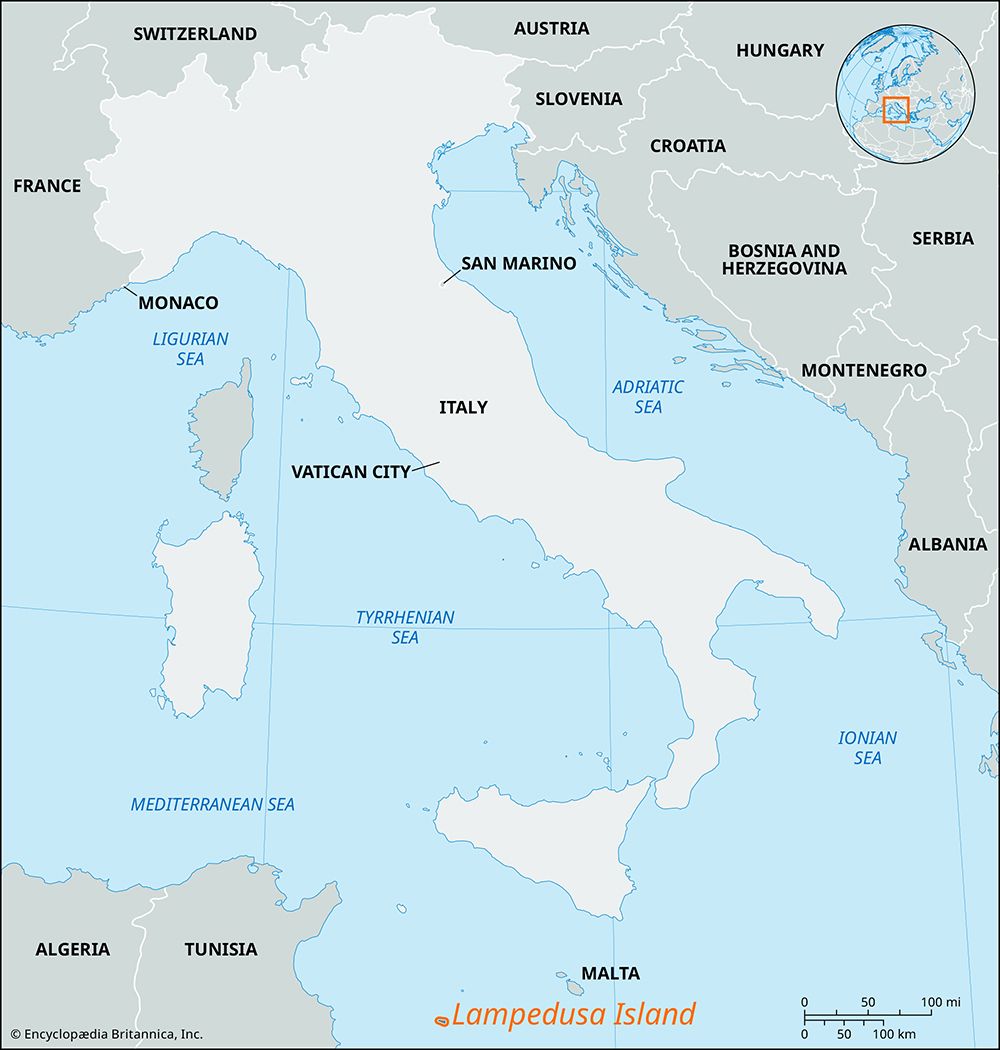
Lampedusa Island is located in the Mediterranean Sea between Malta and Tunisia, situated approximately 105 miles (170 km) southwest of Licata, Sicily.3
Administratively, the island belongs to Italy as part of the autonomous region of SicilyItaly](https://www.britannica.com/place/Italy) as part of the autonomous region of Sicily. It is the largest island within the Pelagie Islands group, which also includes the islands of Linosa and the islet of Lampione.13
What are the main economic activities on Lampedusa Island?
The economy of Lampedusa Island is primarily supported by traditional industries and a growing service sector. Key economic activities include:
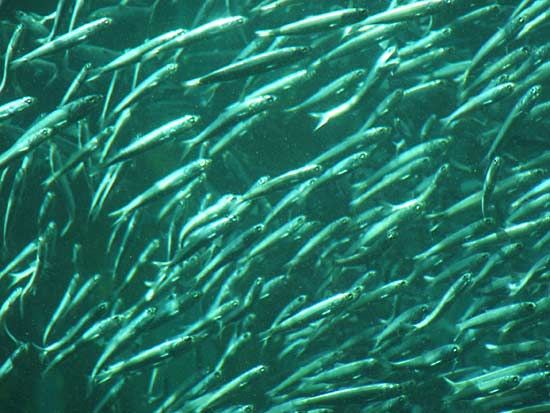
- Fishing: This has historically been a vital component of the island’s economy. Local operations focus on catching sardines and anchovies, which are then packed for export. Additionally, the collection of coral and sponges contributes to the maritime economy.
- Agriculture: While the island’s calcareous soil and lack of irrigation limit some farming, fertile valleys allow for the cultivation of grapes and wheat. There is also limited production of figs and olives.
- Tourism and Services: The expansion of tourism has significantly spurred growth in the island’s service-based economy, mirroring broader trends in Italy where the service sector employs a large portion of the workforce.14
How has Lampedusa been portrayed in literature, film, or other media?
Lampedusa has been referenced in literature since antiquity. The island appears as “Lopadusa” in the works of the Greek geographer Strabo and as “Lipadosa” in the epic poem Orlando furioso by Ludovico Ariosto.1
It is important to clarify that while the name “Lampedusa” is globally recognized through the author Giuseppe Tomasi di Lampedusa, his title refers to the island, but his most famous work, The Leopard (Il gattopardo), is a psychological study of the Sicilian aristocracy rather than a depiction of the island itself.5
In more recent times, the island has gained significant media attention as a focal point of the migration crisis. Its role as a gateway to Europe for migrants crossing the Mediterranean Sea has been a major subject of contemporary reporting and documentation, particularly following the Arab Spring. This humanitarian reality was highlighted globally when Pope Francis visited the island in 2013 to draw attention to the lives lost during these maritime crossings.1
Sources
- Lampedusa Island — Encyclopædia Britannica
- Lampedusa — Merriam-Webster
- Pelagie Islands — Encyclopædia Britannica
- Italy - Business services — Encyclopædia Britannica
- Giuseppe Tomasi di Lampedusa — Encyclopædia Britannica
Published on · 2 min read