Investigator Strait
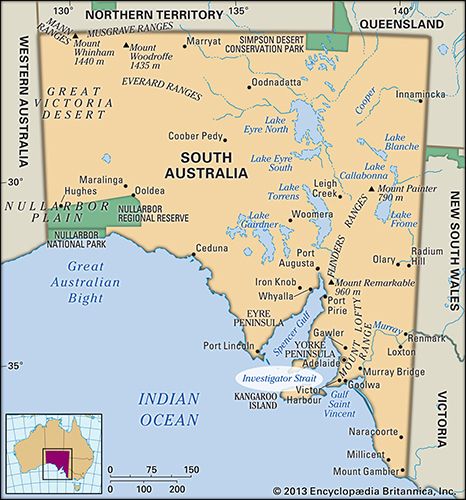
Investigator Strait is a channel located in South Australia that stretches approximately 60 miles (100 km) in length and nearly 30 miles (50 km) in width. It…
What is Investigator Strait?
Investigator Strait is a channel located in South Australia that stretches approximately 60 miles (100 km) in length and nearly 30 miles (50 km) in width. It sits between the Yorke Peninsula to the north and Kangaroo Island to the south, serving as a passage that leads eastward from the Indian Ocean into Gulf St. Vincent Ocean](https://www.britannica.com/place/Indian-Ocean) into Gulf St. Vincent.1
The strait is a significant maritime route used for approaching the city of Adelaide and is also popular for game fishing. Its western entrance is distinguished by the Althorpe Islands, while its eastern end merges with the Backstairs Passage. The channel was first navigated in 1802 by the English explorer Matthew Flinders, who named the strait after his ship, the Investigator.1
Who was Matthew Flinders and what were his major discoveries?
Matthew Flinders (1774–1814) was a distinguished English navigator and Royal Navy officer who played a pivotal role in mapping the Australian coastline.2
Major Discoveries and Achievements
Flinders is best known for his extensive surveying work, which fundamentally changed the European understanding of the continent:
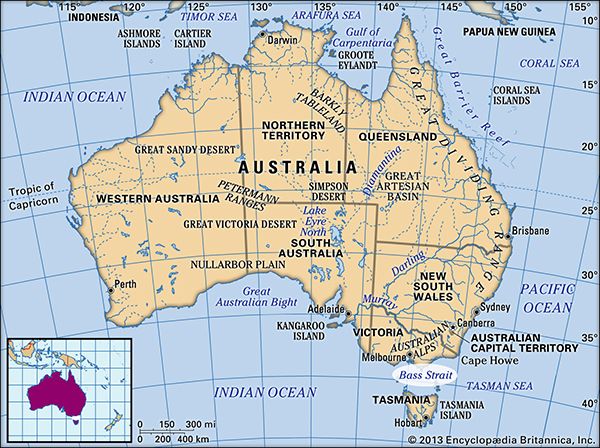
- Circumnavigation of Tasmania: In 1798, alongside George Bass, Flinders circumnavigated Tasmania in the Norfolk, proving it was an island separated from the mainland by what is now known as the Bass Strait.23
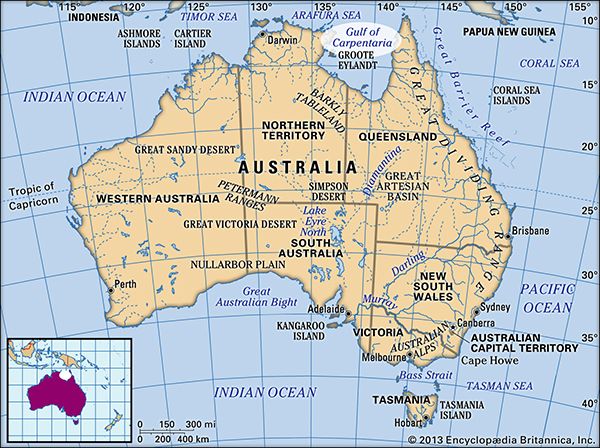
- Mapping the Australian Coast: As commander of the Investigator, he surveyed the entire southern coast of Australia between 1801 and 1803. He later charted the east coast and the Gulf of Carpentaria on the north coast.2
- Proving a Single Landmass: Through his comprehensive voyages, Flinders provided definitive evidence that Australia was a single, continuous landmass.3
- Naming the Continent: He was a strong advocate for using the name “Australia” to refer to the continent, a suggestion that received official backing in 1817.3
After his return journey was interrupted by internment on Mauritius by French authorities, he eventually returned to England, where he published his findings in Voyage to Terra Australis shortly before his death.2
What makes Kangaroo Island a unique ecosystem?
Kangaroo Island, located off the coast of South Australia, possesses a unique ecosystem shaped by its geographical isolation and diverse natural habitats. Structurally a continuation of the mainland’s Mount Lofty–Flinders ranges, the island features a landscape of low wooded hills, cliffs, and beaches that support a variety of native wildlife.5
Key aspects of its ecosystem include:
- Biodiversity and Wildlife: The island serves as a significant sanctuary for native fauna. It is home to populations of kangaroos, brush-tailed possums, and the echidna, an unusual egg-laying mammal.56
- Marine Sanctuaries: The southern coast, particularly at Seal Bay, provides a vital breeding ground and sanctuary for the Australian fur seal.5
- Conservation Areas: Flinders Chase National Park, established in 1919, protects 285 square miles of the island’s western end, preserving its natural wooded hills and coastal environments.5
While the island has faced challenges from agricultural development, ongoing efforts in conservation and land management remain essential to protecting its biodiversity and maintaining the health of its habitats.7
How do straits and passages differ in geography?
In geography, the terms “strait” and “passage” are often used to describe waterways, but they differ significantly in their definitions and scope.
A strait is specifically defined as a comparatively narrow waterway that connects two larger bodies of water. These features are often formed by tectonic activity, such as the fracturing of an isthmus, or by the flooding of eroded or subsided land. Because they serve as vital gateways for maritime trade, many straits—such as the Strait of Hormuz or the Strait of Malacca—are of immense global economic importance.1011
In contrast, a passage is a much broader term. While it can refer to a waterway or channel, it more generally denotes an established course or route for traveling from one place to another. In a maritime context, a passage often refers to the act of traveling or the journey itself—such as a voyage across an ocean—rather than being a specific geological feature. While a strait is a physical landform, a passage is often defined by its function as a path or a duration of travel.12
Sources
- Investigator Strait — Encyclopædia Britannica
- Matthew Flinders — Encyclopædia Britannica
- Australia - Later explorations — Encyclopædia Britannica
- Arctic - 19th-century attempts at the passage — Encyclopædia Britannica
- Kangaroo Island — Encyclopædia Britannica
- South Australia - Plant and animal life — Encyclopædia Britannica
- Papua New Guinea - Plant and animal life — Encyclopædia Britannica
- Australia - Agriculture, forestry, and fishing — Encyclopædia Britannica
- Why Are Kangaroos Only Found in Australia? — Encyclopædia Britannica
- List of Important Straits — Encyclopædia Britannica
- strait — Merriam-Webster
- passage — Merriam-Webster
- strait — Merriam-Webster
Published on · 3 min read