Katmai National Park and Preserve
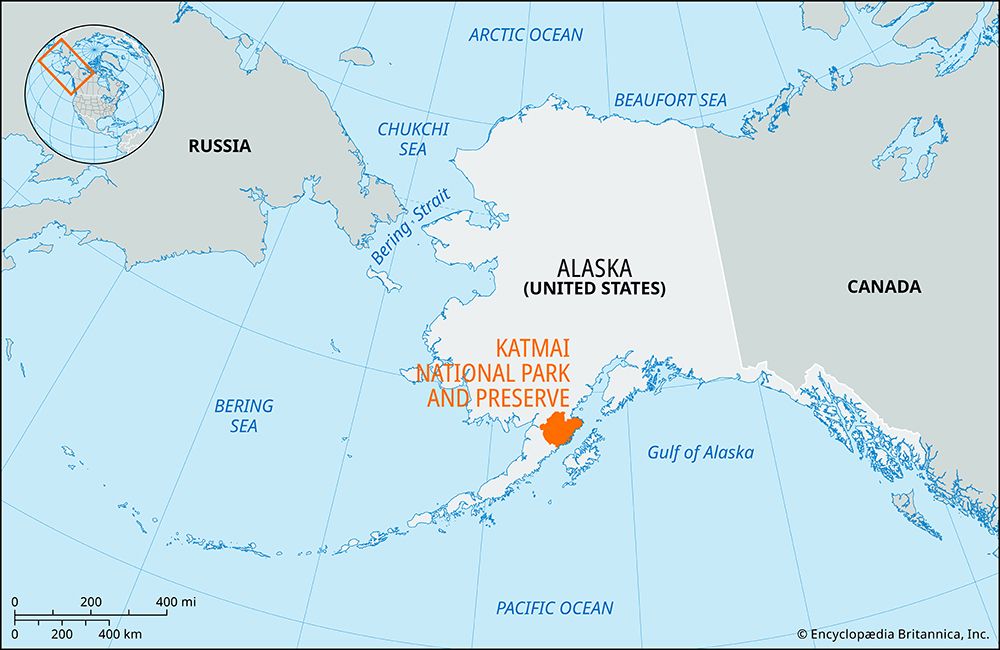
Katmai National Park and Preserve is located in southwestern Alaska, U.S., situated at the head of the Alaska Peninsula along the Shelikof Strait.
What is the geographical location and size of Katmai National Park and Preserve?
Katmai National Park and Preserve is located in southwestern Alaska, U.S., situated at the head of the Alaska Peninsula along the Shelikof Strait.1
The area is divided into two designations with the following sizes:
The region is renowned for its dramatic volcanic landscape, which includes the Valley of Ten Thousand Smokes and Mount Katmai, as well as its diverse ecosystems ranging from mountains and forests to coastal fjords.12
What are the main geological features and attractions of Katmai National Park?
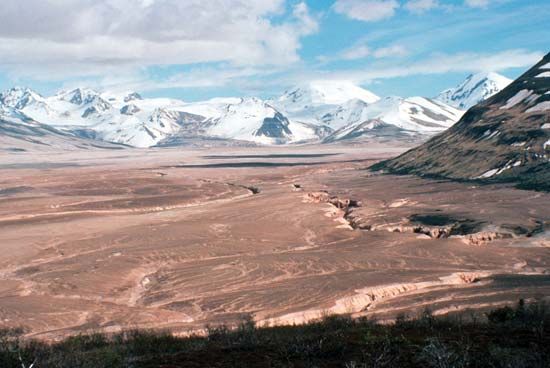
Katmai National Park and Preserve is defined by its dramatic volcanic history and diverse wilderness. The park’s landscape was fundamentally reshaped by the 1912 eruption of Novarupta, the largest volcanic event of the 20th century.1
Geological Features
- Valley of Ten Thousand Smokes: Created by the 1912 eruption, this vast, ash-filled wasteland was once covered in thousands of fumaroles. While most have subsided as the ash cooled, the area remains a significant geological site, even serving as a training ground for U.S. astronauts in the 1960s.34
- Mount Katmai: Following the eruption, the summit of this volcano collapsed as its underlying magma chamber drained, forming a deep caldera that now contains a lake.31
- Diverse Terrain: Beyond its volcanic core, the park features a rugged landscape of mountains, forests, marshlands, and a scenic coastline characterized by fjords, cliffs, and waterfalls.3
Attractions
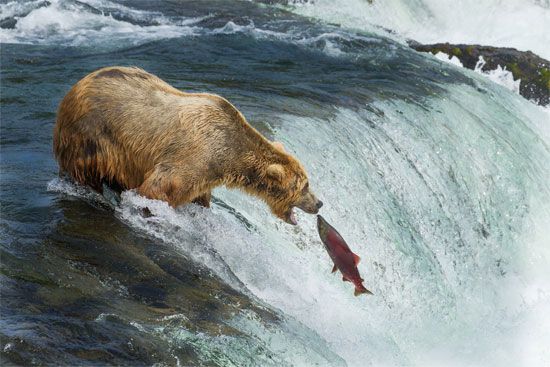
- Wildlife Viewing: The park is famous for its large population of grizzly bears, which are frequently observed feeding on sockeye salmon along the Brooks River during the summer.3
- Exploration: Visitors can access the park via float plane to reach the visitor center at Brooks Camp. The Valley of Ten Thousand Smokes is also a popular destination, accessible by bus and foot.34
How did the 1912 Novarupta eruption shape the landscape of Katmai National Park?
The 1912 eruption of Novarupta was the largest volcanic event of the 20th century and fundamentally transformed the landscape of what is now Katmai National Park and Preserve.
The eruption ejected approximately 28 cubic kilometers of tephra, burying a vast, green valley under hundreds of feet of ash and rock to create the Valley of Ten Thousand Smokes. This area was initially characterized by thousands of steam-emitting fumaroles as gases escaped from the cooling volcanic deposits.
Additionally, the massive withdrawal of magma from beneath the region caused the summit of nearby Mount Katmai to collapse, forming a deep caldera that now holds a lake. The eruption also devastated local ecosystems, carbonizing mountain vegetation and causing widespread mortality among animal populations due to respiratory distress and starvation. While the landscape was once so scarred that it served as a training site for moon landings in the 1960s, it remains a testament to the powerful geological forces that continue to shape the Alaskan wilderness.34
What types of wildlife can be found in Katmai National Park, especially regarding its famous brown bears?
Katmai National Park and Preserve is renowned for its abundant wildlife, which thrives across its diverse landscape of mountains, forests, and marshlands.
The Brown Bears of Katmai
The park is most famous for its large population of grizzly (Alaskan brown) bears. During the summer months, these bears congregate along the Brooks River to feed on migrating sockeye salmon, providing a world-famous spectacle for visitors.1
Other Wildlife
Beyond its iconic bear population, the park supports a wide array of terrestrial mammals and avian species:
- Mammals: The wilderness is home to moose, wolves, caribou, foxes, and wolverines.1
- Birdlife: The park hosts a great variety of bird species, which inhabit the diverse ecosystems ranging from the interior forests to the scenic coastline.1
The park’s coastal areas, featuring fjords and cliffs, further contribute to the rich biodiversity of the region.1
Sources
- Katmai National Park and Preserve — Encyclopædia Britannica
- Katmai National Park — Merriam-Webster
- Novarupta — Encyclopædia Britannica
- Valley of Ten Thousand Smokes — Encyclopædia Britannica
- volcano - Long-term environmental effects — Encyclopædia Britannica
Published on · 3 min read