Keweenawan System
The Keweenawan System is a geological division of late Precambrian rocks located in North America. It is most prominently associated with the Lake Superior…
Where is the Keweenawan System located geographically?
The Keweenawan System is a geological division of late Precambrian rocks located in North America. It is most prominently associated with the Lake Superior region, where the weight of massive lava flows caused the Earth’s crust to sag, eventually forming the basin that the lake occupies today.1
The system is named for significant exposures found at Keweenaw Point in Michigan. Geologically, these deposits are linked to the Midcontinent Rift, an 800-mile-long feature that arcs through the western Lake Superior area. While the system is defined by these central North American exposures, related rift-associated magmatism and sedimentary deposits from the same geological era are also found in other regions, including northern Baffin Island and parts of Greenland.12
How has the Keweenawan System contributed to our understanding of Earth’s geological history?
The Keweenawan System provides critical evidence for understanding continental rifting, a fundamental process in plate tectonics. By studying these late Precambrian rocks, geologists have gained insight into how upwelling magma can stretch and fracture the lithosphere, potentially leading to the separation of continents and the creation of new ocean basins.13
The system serves as a massive natural laboratory for observing the effects of rift volcanoes. The production of approximately 100,000 cubic kilometres of lava during the Middle Keweenawan Series demonstrates the immense scale of volcanic activity that can occur when tectonic plates diverge. Furthermore, the weight of these volcanic deposits caused the underlying crust to sag, creating the basin that now holds Lake Superior. This structural deformation illustrates the direct relationship between volcanic loading and the formation of large-scale geological features.1
What are the main rock types found in the Keweenawan System?
The Keweenawan System is composed of a diverse range of sedimentary and volcanic rock types, reflecting its complex geological history in the Lake Superior region.1
Sedimentary Rocks
The system contains significant deposits of sedimentary rock, which are particularly dominant in the Lower Keweenawan Series. These include:
- Sandstones (typically reddish in colour)
- Siltstones
- Shales
- Conglomerates1
Volcanic Rocks
The Middle Keweenawan Series is characterized by massive accumulations of lava flows, estimated at approximately 100,000 cubic kilometres in total volume. These volcanic deposits are primarily identified as:1
- Flood basalts: These are the most common form of volcanic occurrence in the region, often associated with rift-related magmatism.5
- Tholeiitic basalts: These are the most abundant chemical types, including both quartz-normative and olivine tholeiites.5
Additionally, the system features associated intrusive structures such as dike swarms and sills, which served as feeders for the extensive surface eruptions.5
What is the Keweenawan System and when was it formed?
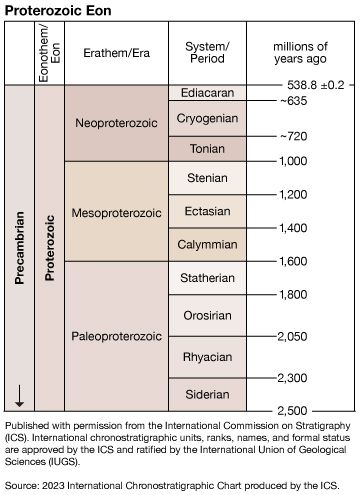
The Keweenawan System is a division of late Precambrian rocks and time in North America, named for prominent exposures at Keweenaw Point, Michigan. These rocks, which reach thicknesses of approximately 10,700 metres, are situated above the Huronian System and below the Cambrian System.1
The system is divided into three series:
- Lower: Primarily dominated by sedimentary rocks, such as reddish sandstones, siltstones, shales, and conglomerates.1
- Middle: Characterized by massive lava flows, with an estimated 100,000 cubic kilometres of material produced.1
- Upper: Represents the final stages of the sequence.1
Regarding its formation, the system is associated with the Midcontinent Rift, where mantle-derived lava flooded the region. This volcanic activity occurred episodically, with significant magmatism in the Lake Superior area occurring approximately 1.10 billion years ago. The immense weight of these volcanic deposits caused the crust to sag, creating the basin that now holds Lake Superior.21
Sources
- Keweenawan System — Encyclopædia Britannica
- North America - 1.3 billion to 950 million years ago — Encyclopædia Britannica
- plate tectonics - Continental rifting — Encyclopædia Britannica
- volcano - Rift volcanoes — Encyclopædia Britannica
- lava — Encyclopædia Britannica
- igneous rock - Flood basalts — Encyclopædia Britannica
Published on · 3 min read