Burgess Shale
The Burgess Shale has fundamentally transformed our understanding of the Cambrian Period by providing an exceptionally detailed record of soft-bodied…
How has the study of the Burgess Shale fossils influenced our understanding of early life and evolution?
The Burgess Shale has fundamentally transformed our understanding of the Cambrian Period by providing an exceptionally detailed record of soft-bodied organisms, which are typically absent from the fossil record.12
By preserving tens of thousands of specimens, the site demonstrates that ancient marine communities were as complex and diverse in structure and adaptation as modern ecosystems. While early interpretations suggested the site contained many unique, extinct phyla—exemplified by bizarre creatures like Opabinia and Hallucigenia—subsequent discoveries in China and elsewhere have clarified that these organisms often belong to known groups, representing early-diverging lineages.21
Ultimately, the Burgess Shale reveals that the Middle Cambrian Epoch hosted a sophisticated, high-functioning biosphere. It serves as a critical benchmark for evolutionary biology, proving that the apparent “simplicity” of the early fossil record is largely a result of preservation bias rather than a lack of biological diversity.12
How old are the fossils found in the Burgess Shale, and what period of Earth’s history do they represent?
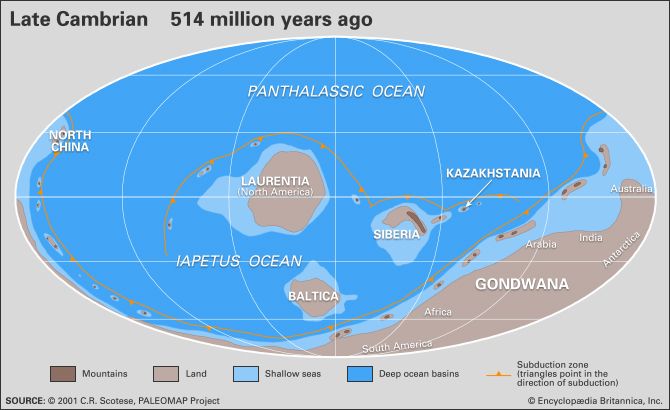
The fossils found in the Burgess Shale date back to the Middle Cambrian Epoch, which occurred approximately 520 to 512 million years ago.1
This formation represents a significant portion of the Cambrian Period, a time spanning from 541 million to 485.4 million years ago. The period is famously associated with the “Cambrian explosion,” an evolutionary event characterized by the rapid emergence and diversification of many ancestral lineages of modern animal life.134
What makes the fossils found in the Burgess Shale so unique and important to paleontology?
The Burgess Shale is considered one of the most important fossil formations in the world because it provides an exceptionally detailed record of soft-bodied organisms from the Middle Cambrian Epoch. While the vast majority of the fossil record is dominated by hard parts, such as shells or bones, the Burgess Shale preserves the soft tissues of tens of thousands of specimens, offering a rare window into the true diversity and ecological complexity of ancient marine life.12
The site’s uniqueness stems from the following factors:
- Exceptional Preservation: The fauna were likely buried rapidly by submarine mudslides, which protected them from decay and preserved fine morphological details that are typically lost to time.12
- Ecological Insight: The fossils reveal a complex community as diverse in structure and adaptation as modern ecosystems. Hard-shelled organisms represent only about 40 percent of the genera found there, a proportion remarkably similar to modern continental shelf faunas.2
- Evolutionary Significance: The site contains bizarre, unique-looking creatures like Opabinia, Hallucigenia, and the apex predator Anomalocaris. While these were once thought to represent entirely unique phyla, further discoveries globally have shown they belong to early-diverging lineages of known groups, proving the Burgess Shale is unique in its preservation rather than its biological composition.12
How is the Burgess Shale being preserved and studied today?
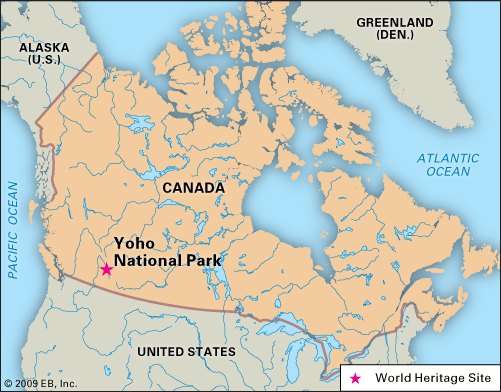
The Burgess Shale is a protected site located in the Canadian Rockies, where it remains a focal point for paleontological research. Since its discovery in 1909, over 60,000 specimens have been retrieved from the fossil beds, providing scientists with an unparalleled record of Middle Cambrian life. of Middle Cambrian life.1
Today, the study of these fossils continues to refine our understanding of evolutionary history. Researchers analyze the specimens to reconstruct the ecology of ancient marine communities, comparing the diversity of soft-bodied organisms found in the shale to those discovered in other global deposits, such as the Chengjiang Biota in China, Greenland, and Australia. These comparative studies are essential for determining that the Burgess Shale is unique primarily due to its exceptional preservation—caused by rapid burial in submarine mudslides—rather than a unique biological composition. By examining these fossils, paleontologists can better understand the phylogenetic development of early animal lineages and the true extent of biodiversity during the Cambrian Period.12
Sources
- Burgess Shale — Encyclopædia Britannica
- Cambrian Period - Deposits with soft-bodied organisms — Encyclopædia Britannica
- A Journey Through Time Since the Precambrian - Cambrian Period: 541 million to 485.4 million years ago — Encyclopædia Britannica
- Cambrian explosion — Merriam-Webster
Published on · 3 min read