Tonian Period
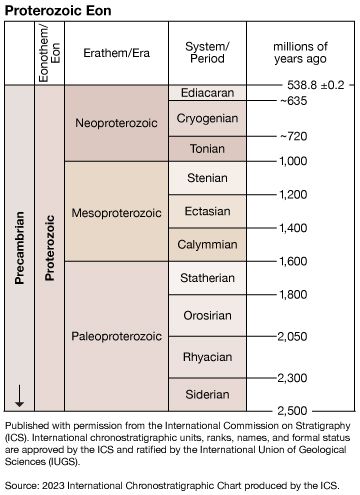
The Tonian Period is the earliest of the three periods within the Neoproterozoic Era, spanning from 1 billion to approximately 720 million years ago. It…
What is Tonian Period?
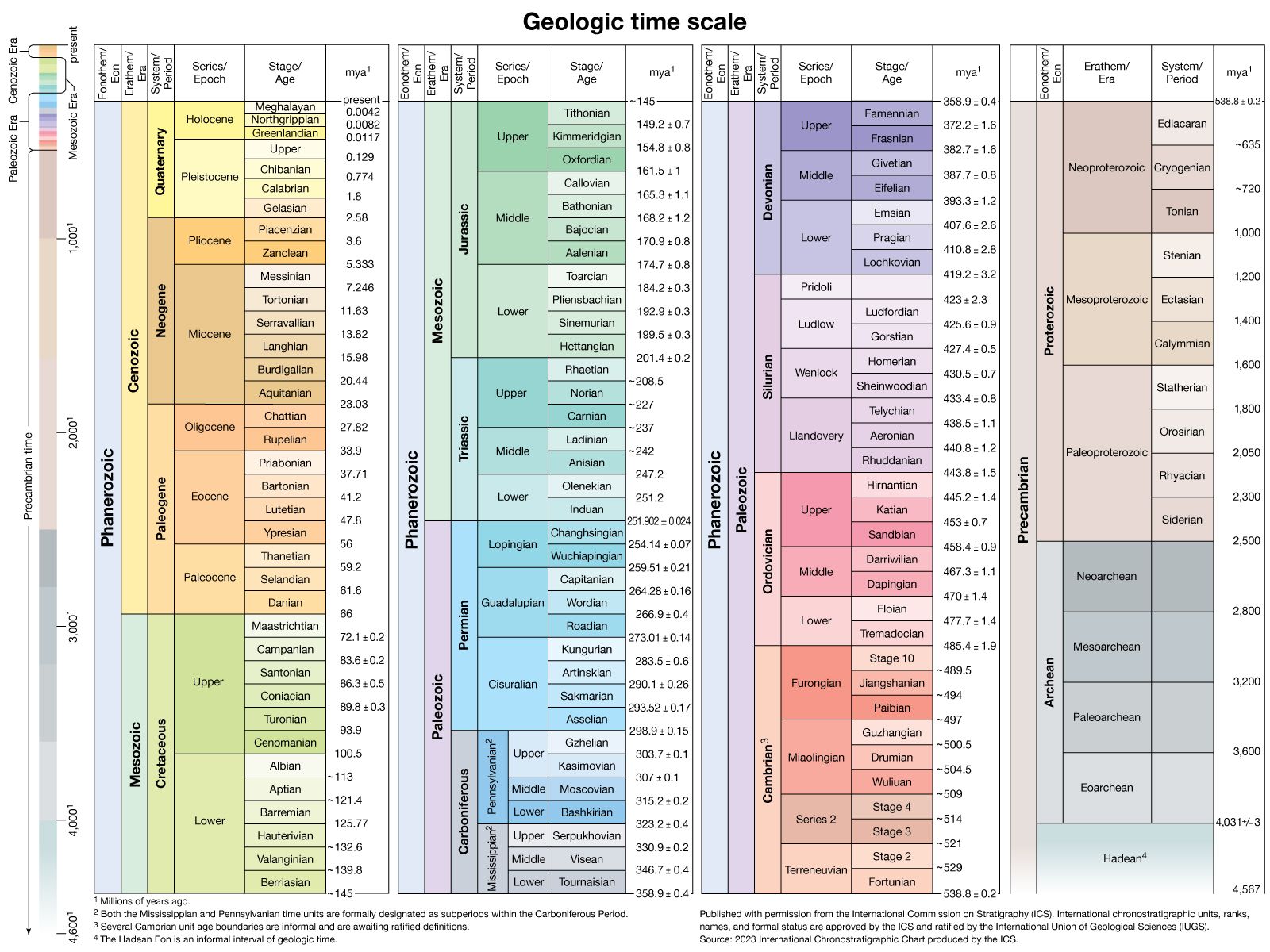
The Tonian Period is the earliest of the three periods within the Neoproterozoic Era, spanning from 1 billion to approximately 720 million years ago. It followed the Stenian Period and preceded the Cryogenian Period.12
Geologically, the period began with Earth’s landmasses consolidated into the supercontinent Rodinia, which began to rift and break apart toward the end of the interval. The atmosphere remained largely devoid of oxygen, though concentrations began to rise to about 1 percent of modern levels between 900 and 800 million years ago.1
Biological developments during this time were significant: the ancestors of green algae and seaweed appeared as primitive forms near the end of the period. Furthermore, evidence from the rock record suggests that the first animals may have emerged between 800 and 700 million years ago. The period concluded near the onset of the first major glacial episode.12
What was the supercontinent Rodinia?
Rodinia was a supercontinent that incorporated nearly all of Earth’s landmasses for approximately 450 million years during the Proterozoic Eon.3
Formation and Structure
Forming about 1.2 billion years ago at the start of the Stenian Period, Rodinia emerged from the convergence of fragments from an earlier supercontinent known as Columbia (or Nuna). This assembly was marked by several mountain-building events, or orogenies, most notably the Grenville Orogeny, which involved the collision of Laurentia with other landmasses. While many models place Laurentia at the center of Rodinia, the exact orientation of other continents remains a subject of scientific debate.3
Disintegration
Rodinia held together until roughly 750 million years ago. Signs of its breakup began as early as 1 billion years ago, evidenced by basaltic dikes and the Keweenawan Rift. The massive volcanic activity associated with this rifting is believed to have triggered the global cooling of the Cryogenian Period by increasing weathering, which removed carbon dioxide from the atmosphere.34
What defines the Cryogenian Period?
The Cryogenian Period was the second of three periods within the Neoproterozoic Era, spanning from approximately 720 million to 635 million years ago. It followed the Tonian Period and preceded the Ediacaran Period. Its beginning is defined by the onset of the first major glacial episode following 750 million years ago.45
The period is primarily characterized by two long, intense glaciations—the Sturtian and the Marinoan—during which much or all of Earth was covered in ice. These events are attributed to volcanic activity linked to the breakup of the supercontinent Rodinia. Massive outpourings of magma increased weathering, which removed carbon dioxide from the atmosphere, weakening the greenhouse effect and cooling the planet.45
Scientific debate regarding this era often centers on the Snowball Earth and Slushball Earth hypotheses, which attempt to explain how life survived and evolved under such extreme conditions. Additionally, the period saw rising oxygen levels, fueled by increased phosphorus in the oceans and the productivity of photosynthetic organisms.5
How did early life forms survive without much oxygen?
Early life forms on Earth survived in an environment with little to no oxygen by relying on anaerobic metabolic processes, most notably glycolysis9.
Anaerobic Metabolism
Before oxygen became abundant in the atmosphere, early organisms utilized glycolysis, a form of fermentation, to generate ATP, the primary energy carrier for cells. This process allows for the breakdown of sugars into pyruvic acid and the production of energy without the need for oxygen. Because oxygen was largely absent during the Archean Eon, this anaerobic pathway was the essential source of energy for early life.67
The Role of Early Photosynthesis
As primitive organisms, such as cyanobacteria, evolved to perform photosynthesis, they began releasing oxygen as a by-product. However, because free oxygen was toxic to these early cells in the absence of oxygen-mediating enzymes, it had to be removed from the environment.7
Oxygen Sinks
The oxygen produced by these early organisms was rapidly consumed by “sinks”—abundant oxidizable materials in the environment, such as ferrous iron and sulfides. This process led to the large-scale deposition of banded-iron formations, which effectively “accepted” the oxygen and prevented it from accumulating in the atmosphere for over a billion years.789
Sources
- Tonian Period — Encyclopædia Britannica
- Tonian Period: Top Questions — Encyclopædia Britannica
- Rodinia — Encyclopædia Britannica
- Cryogenian Period: Top Questions — Encyclopædia Britannica
- Cryogenian Period — Encyclopædia Britannica
- geologic history of Earth - Formation of the secondary atmosphere — Encyclopædia Britannica
- evolution of the atmosphere - Rise of molecular oxygen — Encyclopædia Britannica
- Climate change - Photosynthesis and atmospheric chemistry — Encyclopædia Britannica
- cell - ATP: fueling chemical reactions — Encyclopædia Britannica
- life - Hypotheses of origins — Encyclopædia Britannica
- evolution of the atmosphere - Transition to an aerobic environment — Encyclopædia Britannica
Published on · 3 min read