Killdeer
The killdeer is an insectivorous bird that primarily consumes a variety of insects, including beetles, grasshoppers, and dragonflies.
What is the killdeer’s diet and how does it forage for food?
The killdeer is an insectivorous bird that primarily consumes a variety of insects, including beetles, grasshoppers, and dragonflies.1
Regarding their foraging habits, killdeers are shorebirds that frequent open areas such as pastures, fields, and grassy mud flats. While they are capable of flight, they are ground-dwelling birds that forage for their food on the surface of these habitats. Notably, killdeer chicks are precocial, meaning they are able to walk and feed themselves shortly after hatching.1
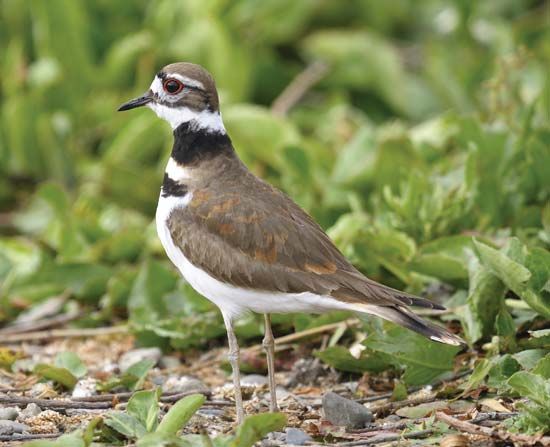
What are the distinguishing physical characteristics of the killdeer bird?
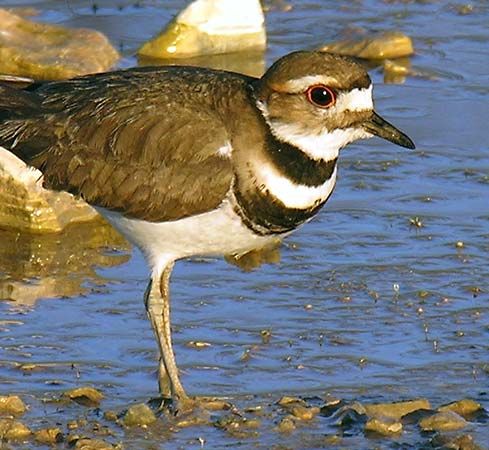
The killdeer is a distinctive member of the plover family, typically measuring about 25 centimeters (10 inches) in length. Its physical appearance is characterized by a brown back and a white belly.
A primary distinguishing feature of the killdeer is the presence of two black breast bands, which sets it apart from other ringed plovers that possess only one. When in flight, the bird displays a notable black and white wing pattern along with a brown tail. Additionally, the species is well-known for its loud, insistent, and penetrating whistle, which is the source of its name.12
How did the killdeer get its unique name, and what does it have to do with its behavior?
The killdeer did not receive its name due to any aggressive behavior toward deer or a diet involving venison. Instead, the name is a human interpretation of the bird’s vocalizations. The killdeer produces a loud, insistent, and somewhat melancholy whistle that, to the human ear, sounds like the phrase “Kill deer! Kill deer!”21
This naming convention is purely phonetic and reflects the bird’s vocal nature rather than its actual habits. While the bird is not vicious, it is highly protective of its nesting area. When an intruder approaches, the parent bird often employs a “broken wing” distraction display, limping or fluttering along the ground to appear injured and lure the threat away from its nest.1
Where are killdeer birds commonly found, and what type of habitats do they prefer?
Killdeer are widely distributed across the Americas. They breed throughout North America and parts of northwestern South America, with occasional sightings in western Europe and Iceland.
Regarding their preferred environment, these birds are not strictly coastal; they are frequently found in open, terrestrial habitats. They favor areas such as:
- Grassy mud flats
- Pastures
- Open fields
Because they are ground-nesting birds, they require these open spaces to create their nests, which consist of simple scrapes in the ground lined with pebbles. They are highly adaptable and generally migrate only when necessary to escape snow, often returning to their breeding grounds earlier in the spring than many other migratory species.1
Sources
- Killdeer — Encyclopædia Britannica
- killdeer — Merriam-Webster
- deerkill — Merriam-Webster
Published on · 2 min read