Kittiwake
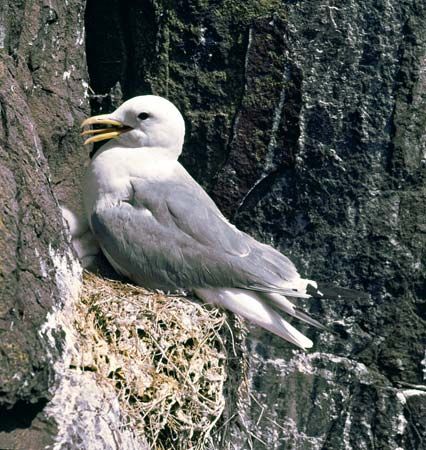
A kittiwake is an oceanic gull belonging to the genus Rissa. These birds are characterized by their white plumage, pearl-gray mantles, and black-tipped wings.
What is Kittiwake?
A kittiwake is an oceanic gull belonging to the genus Rissa. These birds are characterized by their white plumage, pearl-gray mantles, and black-tipped wings.12
There are two primary species:
- Black-legged kittiwake (Rissa tridactyla): This species nests along the northern coasts of the Atlantic and Pacific oceans. It has evolved specific structural and behavioral adaptations to nest on narrow cliff ledges, such as a deep nest cup, a smaller clutch size (typically two eggs), and strong claws. Unlike many other gulls, they have reduced anti-predator behaviors, such as rare alarm calls and non-camouflaged chicks.123
- Red-legged kittiwake (R. brevirostris): Found in the region of the Bering Sea, this species closely resembles the black-legged variety but is distinguished by its red bill and feet, as well as a shorter bill.14
After the breeding season, kittiwakes are generally pelagic, meaning they spend their time on the open ocean.3
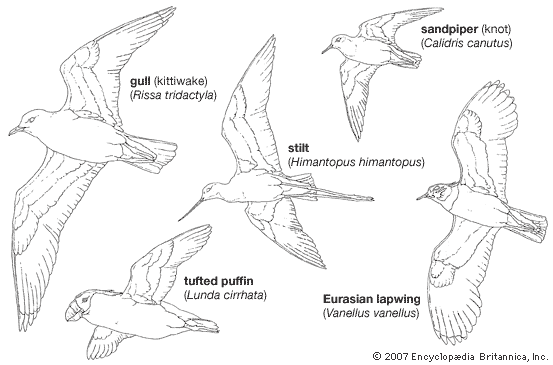
How do kittiwakes adapt to nesting on narrow cliff ledges?
Kittiwakes have evolved specific structural and behavioral adaptations to survive while nesting on narrow cliff ledges, where space is limited and there is a constant risk of eggs or chicks falling.1
Structural Adaptations
To prevent their offspring from falling off the cliffs, kittiwakes have developed:
- Deep nest cups: These provide a secure cradle for the eggs and chicks.1
- Strong claws: These allow the birds to maintain a firm grip on the rocky surfaces.1
- Smaller clutch size: Kittiwakes typically lay only two eggs, which helps manage the limited space on the ledge.1
Behavioral Adaptations
Because the cliff environment provides natural protection from many predators, kittiwakes have reduced their reliance on traditional anti-predator behaviors. Specifically:1
- Reduced alarm responses: Alarm calls are rare, and the birds do not engage in the same level of mobbing behavior seen in other gulls.1
- Chick behavior: Unlike other gull chicks that may run from the nest, kittiwake chicks are adapted to crouch in the nest to remain secure.1
- Sanitation: Because they nest on cliffs, they do not carry away eggshells at hatching, and defecation occurs directly on the nest rim.1
What are the main differences between black-legged and red-legged kittiwakes?
The black-legged kittiwake (Rissa tridactyla) and the red-legged kittiwake (R. brevirostris) are distinct species within the genus Rissa. Their primary differences involve their physical appearance and geographic distribution.
Physical Differences
- Leg and Foot Color: As their names suggest, the black-legged kittiwake possesses black feet and legs, while the red-legged kittiwake is distinguished by its red legs and feet.43
- Bill Characteristics: The red-legged kittiwake has a shorter bill compared to the black-legged variety. Additionally, the black-legged kittiwake is typically described as having a yellow bill.13
- General Appearance: The black-legged kittiwake is largely pure white with a pearl-gray mantle and black wing tips.43
Geographic Distribution
- Black-legged Kittiwake: This species is found nesting along the northern coasts of the Atlantic and Pacific oceans. It includes two subspecies: one in the North Atlantic with a rudimentary hind toe and one in the North Pacific with a fully developed hind toe.4
- Red-legged Kittiwake: This species is unique to the region of the Bering Sea, with a population located almost entirely on St. George Island in the Pribilofs.13
How do kittiwake chicks differ from other gull species in their behavior?
Kittiwake chicks exhibit distinct behavioral adaptations compared to other gull species, primarily driven by the constraints of nesting on narrow cliff ledges where space is limited and the risk of falling is high.1
Key behavioral differences include:
- Crouching vs. Running: While chicks of many other gull species, such as the herring gull, eventually run from the nest as they grow, kittiwake chicks are adapted to remain securely in the nest by crouching.1
- Lack of Camouflage: Unlike other gulls that rely on concealing coloration for their chicks, kittiwake chicks are not camouflaged, as their cliff-side environment provides natural protection from many predators.1
- Sanitation Habits: Kittiwakes do not carry away eggshells at hatching, and defecation occurs directly on the nest rim, whereas other gulls typically maintain cleaner nest environments by removing shells and defecating at a distance.1
These behaviors reflect an evolutionary trade-off where the safety provided by the cliff location allows for the reduction of traditional anti-predator strategies common in ground-nesting gulls.1
Sources
- Kittiwake — Encyclopædia Britannica
- Charadriiform - Gulls (suborder Lari) — Encyclopædia Britannica
- black-legged kittiwake — Merriam-Webster
- red-legged kittiwake — Merriam-Webster
Published on · 3 min read