Kiwi
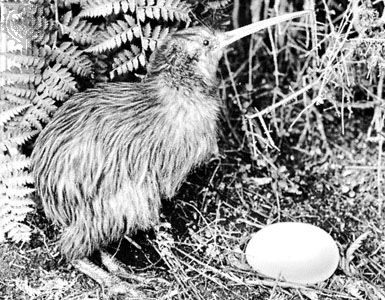
The kiwi is a unique, flightless bird native to New Zealand that possesses several distinct physical characteristics:
What are the unique physical characteristics of kiwi birds?
The kiwi is a unique, flightless bird native to New Zealand that possesses several distinct physical characteristics:
- Bill and Senses: They have a long, flexible bill with nostrils located at the tip rather than the base. Near the tip, the bill contains numerous sensory pores used for foraging, and long, tactile bristles are found at its base. Their eyes are small and inefficient in daylight, while their ear openings are large and well-developed.123
- Plumage: Their feathers are soft and hairlike, lacking aftershafts, and they possess vestigial wings that remain hidden within their plumage.12
- Body and Limbs: Kiwis are chicken-sized with grayish-brown coloring. They have stout, muscular legs and four toes, each equipped with a large claw used for defense.12
- Reproduction: They lay exceptionally large eggs—relative to the bird’s size, these are the largest of any living species—which are incubated by the male.2
How do kiwi birds reproduce, and what makes their egg-laying process unusual?
Kiwis reproduce by laying one or two large, white eggs in a burrow. The egg-laying process is particularly notable for its extreme proportions: relative to the size of the bird, the kiwi lays the largest egg of any living species, weighing up to 450 grams (1 pound).45
Once the eggs are laid, the male takes on the responsibility of incubation, which lasts for approximately 80 days. This is a significant commitment, as the male incubates the eggs for this extended period before the chick hatches. When the chick emerges, it is already fully feathered and has its eyes open, though it does not eat for about a week following hatching.4
What are some interesting facts about kiwi birds that make them unique among other bird species?
The kiwi is a remarkable bird native to New Zealand that defies many typical avian characteristics. While most birds rely on sight, the kiwi has small, inefficient eyes and instead utilizes a highly specialized, long, flexible bill with nostrils located at the very tip to forage for food at night.14
Several other unique traits distinguish them from other species:
- Physical Anatomy: They possess soft, hairlike feathers that lack aftershafts and have vestigial wings hidden within their plumage.14
- Sensory Adaptations: In addition to their unique bill, they have large, well-developed ear openings and long, tactile bristles at the base of their bill to help navigate their forest environment.4
- Reproductive Extremes: Relative to their body size, kiwis lay the largest egg of any living bird species, weighing up to 450 grams (1 pound).4
- Development: Unlike many birds that require extensive parental feeding, kiwi chicks hatch fully feathered with their eyes open and do not eat for their first week of life.4
What cultural significance do kiwi birds hold in New Zealand?
The kiwi holds profound cultural significance in New Zealand, serving as a primary symbol of the nation’s natural heritage and identity. The connection is so deep that the term “Kiwi” has been adopted as a widespread nickname for New Zealanders, often preferred in casual conversation over the official demonym.9
This cultural association emerged in the 19th century as images of the bird were used in local commerce and popular media to signify New Zealand origins. The term gained international prominence during World War I, when New Zealand soldiers became known as “Kiwis”—partly due to the bird’s presence on military badges and the soldiers’ frequent use of a popular brand of shoe polish.9
Beyond its role as a national moniker, the bird is deeply rooted in Māori culture; the name “kiwi” itself is a Māori word derived from the male bird’s distinct, shrill call. Today, the term is recognized globally, symbolizing the friendly and adventurous spirit associated with the people of New Zealand.419
Sources
- Did you know? — Merriam-Webster
- Bird - Flightlessness — Encyclopædia Britannica
- Bird - Other external features — Encyclopædia Britannica
- Kiwi — Encyclopædia Britannica
- 8 Birds That Can’t Fly — Encyclopædia Britannica
- Reproductive behaviour - Birds — Encyclopædia Britannica
- Passeriform - Territoriality and courtship — Encyclopædia Britannica
- Galliform - Nesting — Encyclopædia Britannica
- Why are people from New Zealand called Kiwis? — Encyclopædia Britannica
- New Zealand - Plant and animal life — Encyclopædia Britannica
Published on · 3 min read