Konkouré River
The Konkouré River is primarily recognized for its geographical significance and its role in Guinea's industrial development rather than for specific…
Are there any significant cultural or historical sites along the Konkouré River?
The Konkouré River is primarily recognized for its geographical significance and its role in Guinea’s industrial development rather than for specific cultural or historical sites along its banks. Rising in the Fouta Djallon plateau, the river is characterized by numerous rapids and waterfalls that have been harnessed for hydropower1.1
While the river historically served as a barrier to land transportation between Conakry and the towns of Boffa and Boké, it is now bridged at Ouassou. Its modern importance is tied to the Amaria and Souapiti hydroelectric plants, which provide essential power to the nation’s bauxite-processing industry. There is no information in the current Britannica records regarding significant cultural or historical landmarks situated along its course.2
How does the Konkouré River impact the local ecosystem and biodiversity?
The provided search results do not contain specific information regarding the impact of the Konkouré River on its local ecosystem or biodiversity. While the river is noted for its role in hydropower generation through the Amaria and Souapiti dams, and general information about Guinea’s plant and animal life mentions that crocodiles and various fish inhabit most rivers in the country, there is no data detailing the specific ecological consequences of the Konkouré River’s flow or its unique biodiversity.13
How do local communities rely on the Konkouré River for their daily lives?
Local communities in the region surrounding the Konkouré River rely on the river primarily as a vital source of energy and a facilitator of regional connectivity.
- Energy Infrastructure: The river is a critical component of Guinea’s national power grid. Hydroelectric plants, such as those at Amaria and Souapiti, generate electricity that supports the nation’s bauxite-processing industry, which is a cornerstone of the local and national economy.
- Transportation: Historically, the river acted as a significant barrier to travel between Conakry and the towns of Boffa and Boké. Today, the bridge at Ouassou—the river’s head of navigation—serves as a crucial link for local trade and movement, overcoming the geographical obstacles posed by the river’s rugged course of rapids and waterfalls.1
While the Fouta Djallon region, where the river originates, is home to Fulani peoples who engage in cattle herding, the provided records do not detail specific daily subsistence activities like fishing or irrigation directly tied to the Konkouré.3
Where is the Konkouré River located in Africa, and through which countries does it flow?
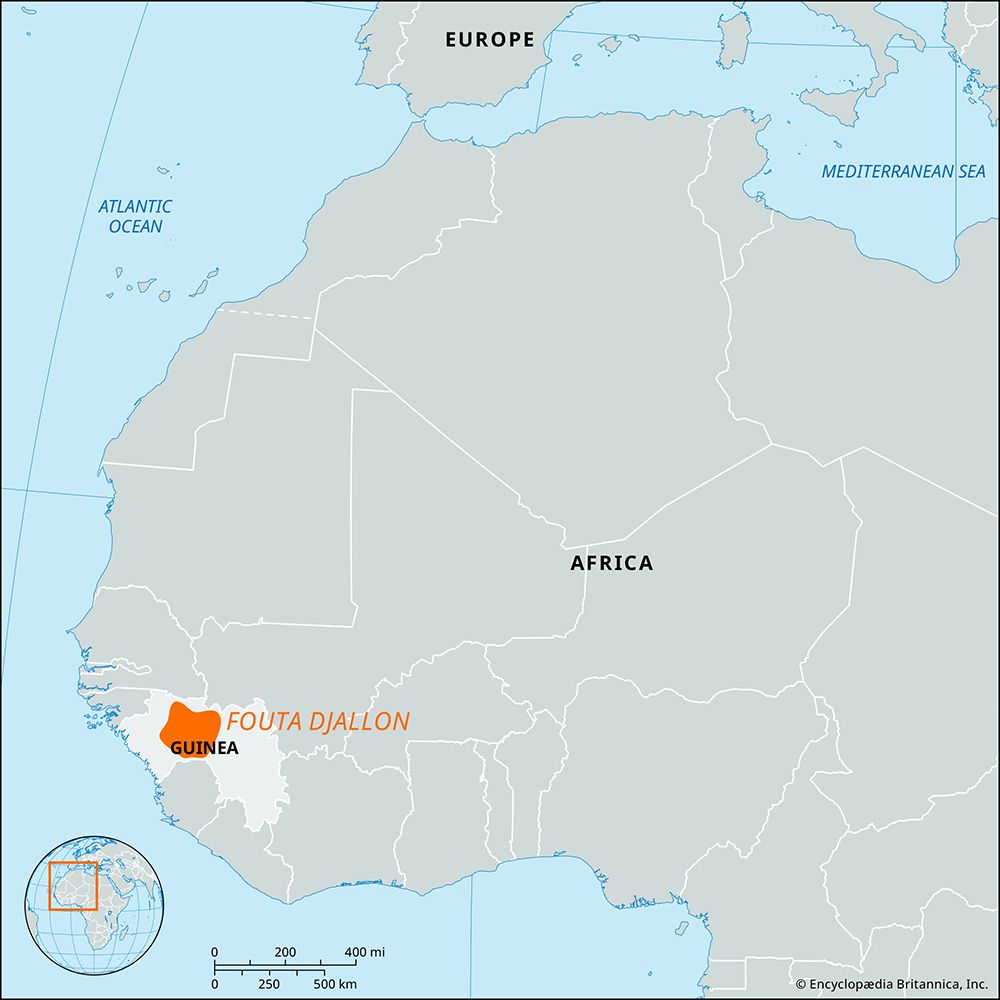
The Konkouré River is located in West Africa, specifically within the nation of Guinea.
Contrary to the implication that it flows through multiple countries, the Konkouré is contained entirely within Guinea. It rises in the Fouta Djallon plateau in the west-central part of the country and flows in a westerly direction across the coastal plain before emptying into the Atlantic Ocean just north of Sangareya Bay.12
Sources
- Konkouré River — Encyclopædia Britannica
- Guinea - Drainage and soils — Encyclopædia Britannica
- Fouta Djallon — Encyclopædia Britannica
- Guinea - Plant and animal life — Encyclopædia Britannica
- Guinea-Bissau - Plant and animal life — Encyclopædia Britannica
Published on · 2 min read