Kowloon Peninsula
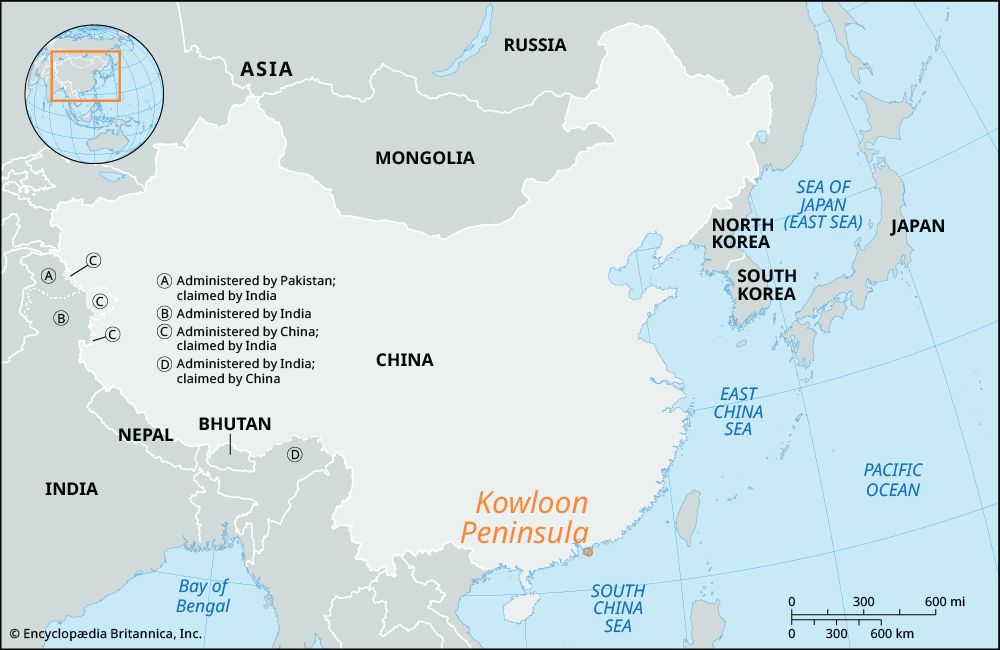
The Kowloon Peninsula is a contiguous landmass that serves as the mainland portion of the Hong Kong Special Administrative Region.
How does the Kowloon Peninsula connect to Hong Kong Island and the New Territories?
The Kowloon Peninsula is a contiguous landmass that serves as the mainland portion of the Hong Kong Special Administrative Region.1
It connects to the New Territories to the north without a physical barrier; the two areas form a single peninsula, with the New Territories occupying the northern, hillier, and more rural portion, while the urban Kowloon area lies to the south. Historically, the boundary between these regions was defined by a line north of Boundary Street, though administrative definitions have evolved over time.12
To the south, the Kowloon Peninsula is separated from Hong Kong Island by Victoria Harbour. The southern tip of the peninsula, particularly the Tsim Sha Tsui district, directly faces the island across this body of water.1
How did the Kowloon Peninsula become a part of Hong Kong?
The Kowloon Peninsula became part of the British-administered territory of Hong Kong following the second Opium War (1856–1860). Dissatisfied with their limited control over the harbor after the initial cession of Hong Kong Island in 1842, the British forced China to cede the southern portion of the peninsula—specifically the area south of what is now Boundary Street—along with Stonecutters Island via the Convention of Beijing in 1860.3
This acquisition was part of a series of unequal treaties that significantly expanded British influence in the region. Later, in 1898, the New Territories (the northern, more rural portion of the peninsula and surrounding islands) were leased to Britain for 99 years. The entire region, including the Kowloon Peninsula, was eventually returned to China during the handover of Hong Kong in 1997.31
How does the Kowloon Peninsula contribute to Hong Kong’s economy and culture?
The Kowloon Peninsula is a vital engine for Hong Kong’s economy and a dense hub of its cultural life.
Economic Contributions
Kowloon has historically served as a primary industrial and commercial center. Since the 1950s, it became a powerhouse for manufacturing, particularly in textiles and electronics, driven by immigrant industrialists and foreign investment. While the broader Hong Kong economy has shifted toward services, Kowloon remains a critical node for trade and logistics. Its deep-water access via Victoria Harbour supports major container terminals and oceangoing vessels, maintaining Hong Kong’s status as a global port. Additionally, the peninsula has been central to the region’s transportation infrastructure, including the historic Kowloon-Canton Railway, which facilitates vital freight and passenger links to mainland China.156
Cultural and Social Significance
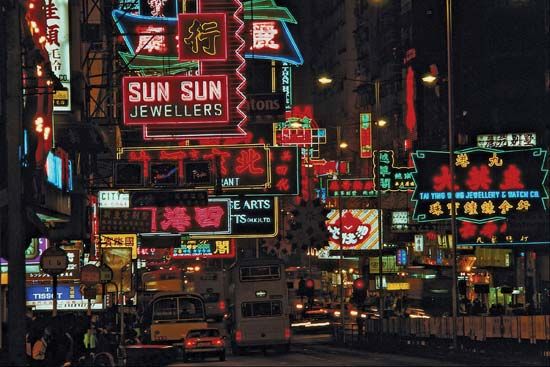
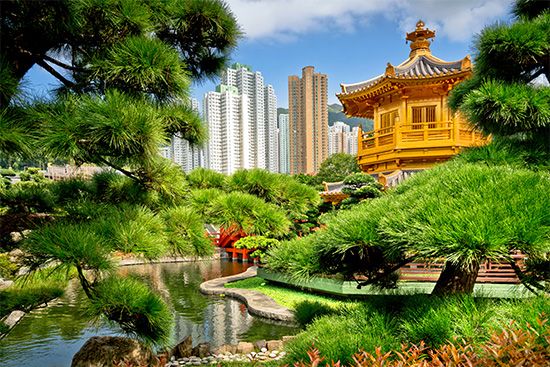
Kowloon is defined by its intense urban character. Districts like Tsim Sha Tsui serve as major business, shopping, and entertainment hubs, rivaling the administrative centers on Hong Kong Island as a premier tourist destination. The area is also home to some of the most densely populated neighborhoods on Earth, such as Mong Kok, which reflect the vibrant, high-energy lifestyle of the region.1
What are some of the most famous landmarks or attractions in the Kowloon Peninsula?
The Kowloon Peninsula is home to several iconic districts and landmarks that define the urban landscape of Hong Kong. Key areas of interest include:
- Tsim Sha Tsui: Located at the southern tip of the peninsula, this district is a premier hub for business, shopping, and entertainment, serving as a major destination for tourists.1
- Mong Kok: Renowned as one of the most densely populated areas on Earth, it offers a high-energy, authentic look at the region’s vibrant urban life.1
- Victoria Harbour: The peninsula is surrounded on three sides by this world-famous harbor, which accommodates large oceangoing vessels and serves as a central feature of the region’s geography.1
- Yau Ma Tei and Kowloon City: These districts are integral parts of the densely populated Kowloon area, contributing to the peninsula’s unique cultural and residential character.1
- Kowloon Walled City: Historically noted as a distinct district, it remains a significant, albeit infamous, part of the peninsula’s complex history.1
Sources
- Kowloon Peninsula — Encyclopædia Britannica
- New Territories — Encyclopædia Britannica
- Hong Kong - British administration — Encyclopædia Britannica
- unequal treaty — Encyclopædia Britannica
- Hong Kong - Manufacturing of Hong Kong — Encyclopædia Britannica
- Hong Kong — Encyclopædia Britannica
- Hong Kong - Transportation and telecommunications — Encyclopædia Britannica
Published on · 3 min read