Land of Ten Thousand Sinks
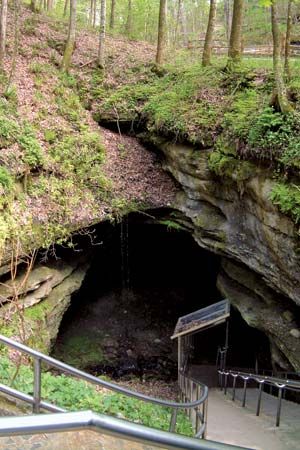
The Land of Ten Thousand Sinks is a region located in west-central Kentucky, U.S., characterized by its extensive karst topography. This area is defined by a…
What is Land of Ten Thousand Sinks?
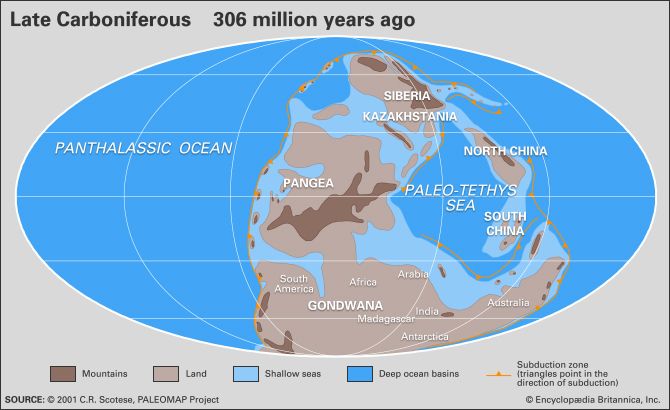
The Land of Ten Thousand Sinks is a region located in west-central Kentucky, U.S., characterized by its extensive karst topography. This area is defined by a high concentration of sinkholes and caves, which formed as groundwater dissolved the underlying limestone bedrock deposited during the Carboniferous Period1.1
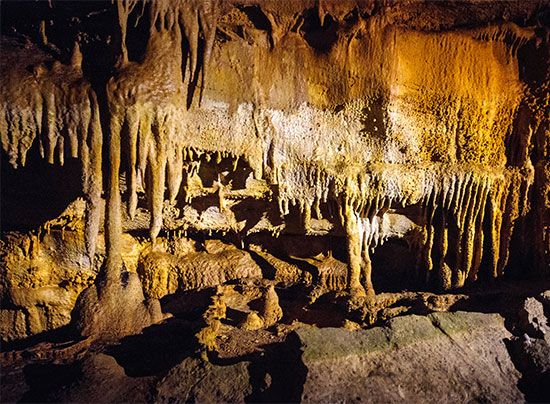
The region is home to significant geological features, including the interconnected cave networks of Mammoth Cave National Park and the Flint Ridge Cave System. These systems contain diverse sulfate mineral formations, as well as stalactites and stalagmites, created by the interaction of abundant water with the soluble rock over millions of years.2
How does karst topography shape the landscape?
Karst topography fundamentally reshapes the landscape by shifting drainage from the surface to the subsurface through the dissolution of soluble bedrock, such as limestone or dolomiteestone) or dolomite. This process creates a distinct, often rugged terrain characterized by several key features:43
- Internal Drainage: Instead of flowing in surface channels, water percolates through joints and fractures, enlarging them into complex cave systems and underground conduits.43
- Sinkholes: As subsurface voids enlarge, the overlying ground may collapse, creating sinkholes. These range from small depressions to massive features that can coalesce into larger valleys.35
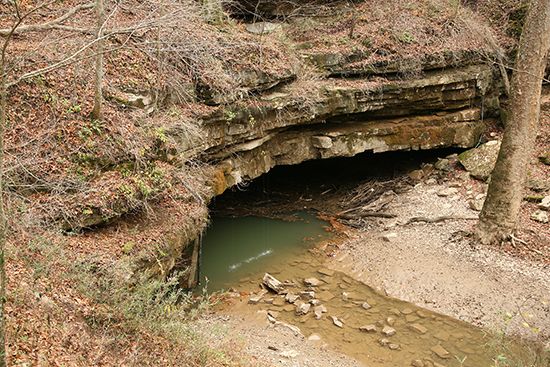
- Modified Valleys: In fluviokarst, surface streams may disappear into “swallow holes,” leaving behind dry valleys or blind valleys that terminate abruptly at cliffs.6
- Jagged Terrain: The removal of surface material often produces grooved, rocky ground known as limestone pavement, along with other features like natural bridges and pepino hills.3
Because this landscape is shaped by hidden underground processes, it can pose significant challenges for land use, particularly when sudden sinkhole collapses occur beneath infrastructure.5
What is the difference between stalactites and stalagmites?
Stalactites and stalagmites are both cave deposits formed by minerals, primarily calcite, that precipitate out of dripping water. The primary difference lies in their orientation and growth pattern:89
- Stalactites: These formations hang downward from the ceiling or sides of a cavern, resembling an icicle. They often begin as thin-walled “stone straws” formed by water droplets held by surface tension, eventually thickening into downward-tapering cones as mineral-rich water flows down their exterior.8
- Stalagmites: These appear as inverted stalactites, rising upward from the cavern floor. They are typically thicker in proportion than stalactites and form from the mineral deposits left behind after a water droplet falls across the open space of the cave.8
While they often share the same drip-water source, they do not always occur in pairs. However, when a stalactite and a stalagmite continue to grow toward one another, they may eventually join to form a single column join to form a single column.8
How are cave systems like Mammoth Cave formed?
Cave systems like Mammoth Cave are primarily formed through the dissolution of limestone by circulating groundwater, a process that creates solution caves within karst terrain.104
The formation of extensive systems often involves specific geological conditions:
- Protective Caprock: Systems like those in the Mammoth Cave area develop beneath a protective layer of relatively non-soluble rocks, such as sandstone and shale. As this caprock erodes, the underlying limestone is exposed to runoff, which drains into the subsurface to carve out conduits.11
- Dissolution and Drainage: Water enters the limestone through joints and fractures, gradually enlarging them into integrated drainage networks. Over time, these conduits may become large enough to carry entire streams, leaving behind dry, abandoned passages as water levels lower.1110
- Vertical Integration: Vertical shafts and solution chimneys, formed by water moving through the unsaturated zone, can cut through multiple tiers of horizontal passages. This process connects different levels of the cave, creating the complex, multilevel systems observed today.11
- Structural Collapse: As passages enlarge, the ceiling may exceed its critical load-bearing capacity, leading to breakdown and collapse. This can cause passages to migrate upward and further integrate the system.11
Sources
- Land of Ten Thousand Sinks — Encyclopædia Britannica
- What causes sinkholes? — Encyclopædia Britannica
- cave - Fluviokarst — Encyclopædia Britannica
- cave — Encyclopædia Britannica
- karst — Encyclopædia Britannica
- cave - Karst topography — Encyclopædia Britannica
- cave - Doline karst — Encyclopædia Britannica
- stalactite and stalagmite — Encyclopædia Britannica
- cave deposit — Encyclopædia Britannica
- cave - Geomorphic characteristics of solution caves — Encyclopædia Britannica
- Mammoth Cave National Park — Encyclopædia Britannica
- cave - Major caves and cave systems — Encyclopædia Britannica
Published on · 3 min read