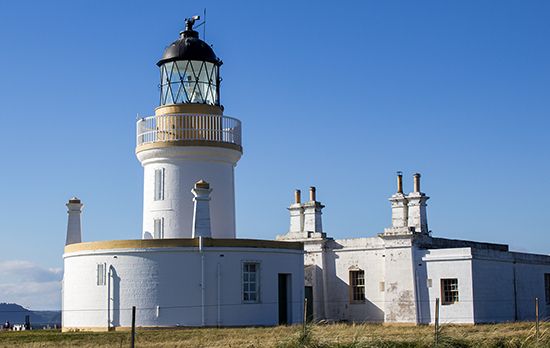
Land’s End
Land’s End is the westernmost peninsula of the county of Cornwall in England. Formed from a massive block of granite, its tip serves as the southwesternmost…
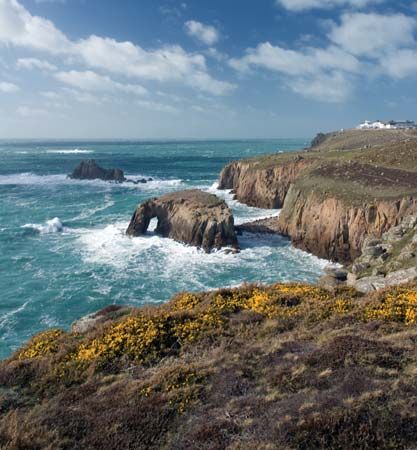
What is Land’s End?
Land’s End is the westernmost peninsula of the county of Cornwall in England. Formed from a massive block of granite, its tip serves as the southwesternmost point of the English mainland.
The location is famously paired with John o’ Groats, the traditional northernmost point of Great Britain, to represent the full length of the island. The phrase “from Land’s End to John o’ Groats” is a common idiom used to describe the entire span of Britain. Today, the site is a popular tourist destination known for its scenic, rocky coastline and the nearby Longships lighthouse, which warns ships of the dangerous reefs located just offshore.1
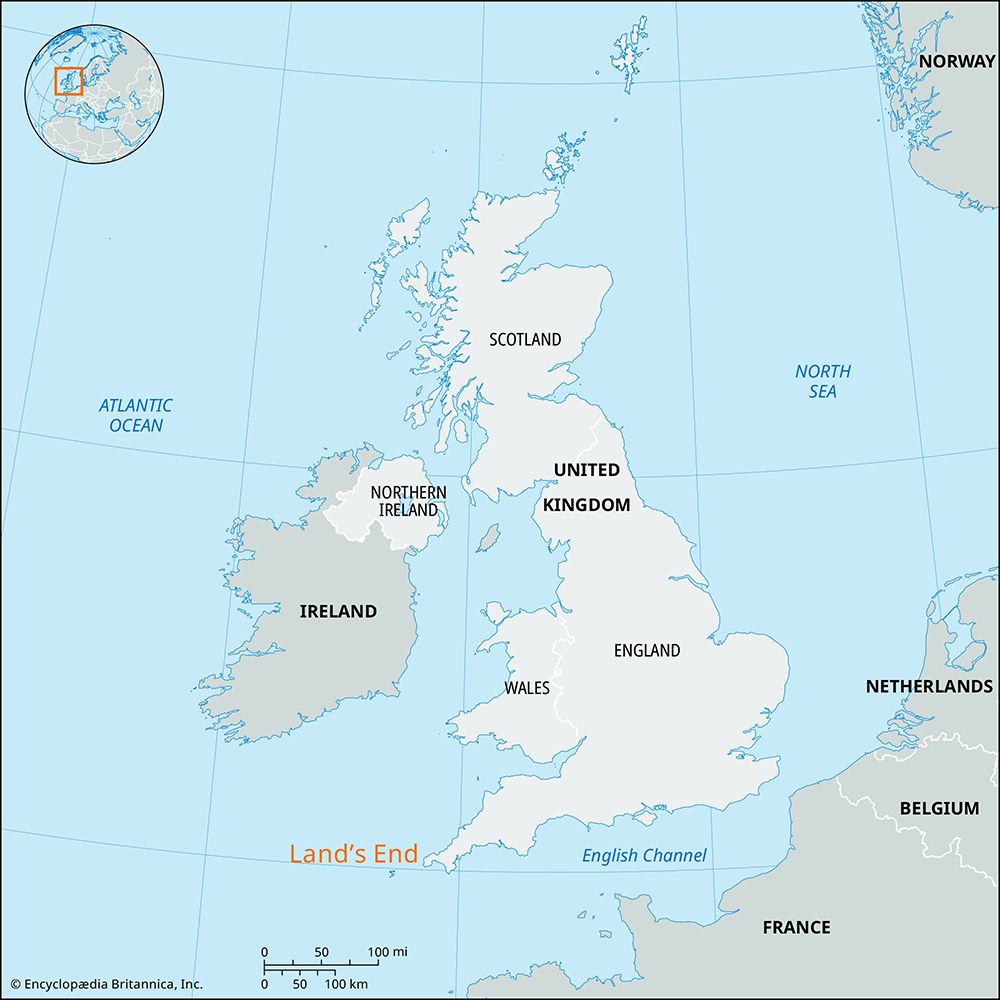
Where is John o’ Groats located?
John o’ Groats is a village located in the Highland council area of Scotland, within the historic county of Caithness.2
While it is traditionally cited as the northernmost point of mainland Great Britain, this is a common misconception. The actual northernmost point of the British mainland is Dunnet Head, which is situated nearby. John o’ Groats is famously paired with Land’s End in the idiom “from Land’s End to John o’ Groats” to represent the full span of Great Britain, a distance of approximately 870 miles (1,400 km).234
How was the granite landscape of Cornwall formed?
The distinctive granite landscape of Cornwall is primarily defined by a series of granitic intrusions that form the county’s upland areas and moorlands, such as Bodmin Moor5. These formations are composed of ancient igneous rocks, which represent some of the oldest geological structures in the region.51
Over time, these granite masses have been significantly shaped by environmental processes. The erosion of this granite has produced kaolin, or china clay, which remains a resource of economic importance in areas like St. Austell. Furthermore, the interaction between these resilient granite structures and the sea has created a rugged, scenic coastline, exemplified by the dramatic cliffs found at Land’s End dramatic cliffs found at Land’s End. The landscape is also marked by a wealth of prehistoric stone relics, including megalithic dolmens and circles, which were established around these metalliferous zones.6571
What is the history of the Longships lighthouse?
The Longships lighthouse is situated on a group of dangerous reefs located approximately one mile off the coast of Land’s End in Cornwall, England.8
While the provided search results confirm the lighthouse’s location and its role in marking hazardous reefs near the southwesternmost point of England, they do not contain specific historical details regarding its construction dates, designers, or structural evolution.8
Sources
- Land’s End — Encyclopædia Britannica
- John o’Groats — Encyclopædia Britannica
- Caithness — Encyclopædia Britannica
- Dunnet Head — Encyclopædia Britannica
- Cornwall — Encyclopædia Britannica
- England - Relief — Encyclopædia Britannica
- North Cornwall — Encyclopædia Britannica
- Eddystone Lighthouse — Encyclopædia Britannica
Published on · 2 min read