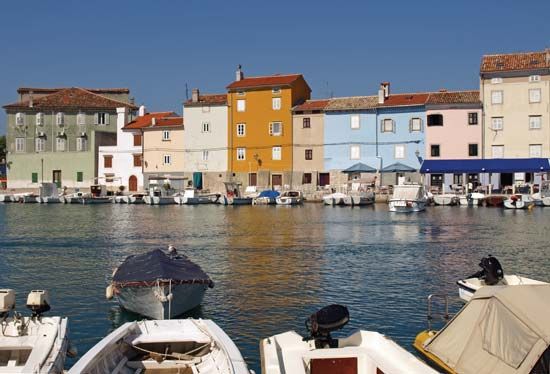
Krk
The available information does not provide a direct comparative analysis of the economy of Krk against other specific Croatian islands. However, Krk…
How does the economy of Krk island compare to other Croatian islands?
The available information does not provide a direct comparative analysis of the economy of Krk against other specific Croatian islands. However, Krk possesses unique infrastructure that distinguishes it from many other islands in the region.
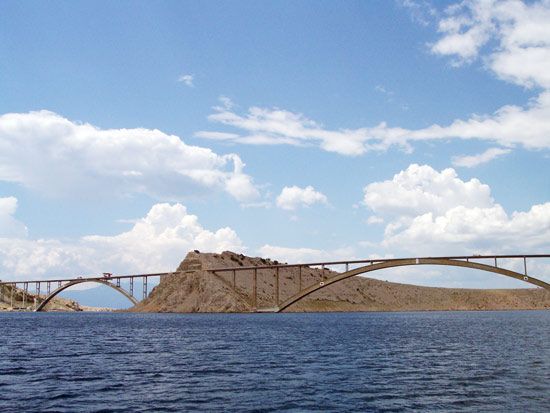
A significant economic factor for Krk is its physical connection to the mainland via a bridge, which carries not only road traffic but also essential pipelines for oil and fresh water. This infrastructure supports the island’s industrial and logistical capacity, including the port of Omišalj, which serves as a transit point for oil.1
Like many other Croatian islands, Krk relies on a service-based economy where tourism is a primary driver. Its agricultural sector is typical of the Adriatic littoral, focusing on viticulture, animal husbandry, and the cultivation of Mediterranean fruits. While beekeeping is a commercial activity found across various islands, Krk’s specific geologic structure—characterized by karstic limestone and flysch—supports its local production.213
What is the significance of Krk Bridge in connecting the island to mainland Croatia?
The Krk Bridge, which opened in 1980, is a vital piece of infrastructure that fundamentally transformed the island’s connectivity to mainland Croatia. At the time of its construction, the bridge featured the world’s longest concrete arch, measuring 1,280 feet (390 metres), as part of its total length of 4,296 feet (1,039 metres).1
Beyond facilitating road travel, the bridge serves as a critical utility corridor. It supports numerous pipelines that are essential for both the island and the mainland:
- Energy Transport: Pipelines carry oil from the port of Omišalj on Krk to refineries located on the mainland.1
- Water Supply: The bridge carries fresh water to the island, which is necessary because Krk has limited natural water resources.1
By integrating the island into the mainland’s transportation and utility networks, the bridge has played a significant role in supporting the island’s economic and logistical operations.
What is the geographical location and size of Krk island in Croatia?
Krk is the largest and most northern of Croatia’s Adriatic islands. It encompasses an area of 158 square miles (410 square km).1
Geographically, the island is characterized by a contrast between its stony, bare eastern region and its more fertile western and central areas. Its terrain is defined by karstic limestone and flysch zones, which support various agricultural activities, including viticulture and animal husbandry. The island reaches its maximum elevation at Obzova, which stands at 1,824 feet (556 metres).1
Are there any notable archaeological sites or discoveries on Krk island?
Krk island has been continuously inhabited since the Neolithic Period, and archaeological evidence reflects its long history of human settlement and cultural development.1
One of the most significant archaeological discoveries on the island is the Baška Tablet (Bašćanska Ploča). Dating to approximately 1100, this stone monument was found on the island and is inscribed with the Glagolitic alphabet. It serves as a cornerstone of Croatian literary development and provides vital insight into the region’s early history.1
Additionally, the town of Krk itself contains historical structures that highlight the island’s layered past. These include a 12th-century cathedral and the castle of the Frankopan family, who ruled the island from 1133 to 1480. The town, known as Vecla during the Byzantine Empire, also preserves evidence of its Roman influence, which began in the 1st century BCE.1
Sources
- Krk — Encyclopædia Britannica
- Croatia - Finance, trade, and services — Encyclopædia Britannica
- Croatia - Agriculture, forestry, and fishing — Encyclopædia Britannica
- Croatia - Labour and taxation — Encyclopædia Britannica
- Glagolitic alphabet — Encyclopædia Britannica
- alphabet - Cyrillic and Glagolitic alphabets — Encyclopædia Britannica
Published on · 2 min read