Lake Chūzenji
Lake Chūzenji is a significant geographical and cultural landmark located within Nikkō National Park in Japan’s Tochigi prefecture. Situated at the base of…
What is the significance of Lake Chūzenji in Japanese culture and history?
Lake Chūzenji is a significant geographical and cultural landmark located within Nikkō National Park in Japan’s Tochigi prefecture. Situated at the base of the volcanic Mount Nantai, the lake is deeply integrated into the region’s spiritual and recreational landscape.12
Historically and culturally, the area is tied to the broader significance of Nikkō, a major pilgrimage center home to the Futarasan Shrine, which sits atop Mount Nantai. The lake itself is a popular destination for visitors, offering opportunities for yachting, trout fishing, and skiing.21
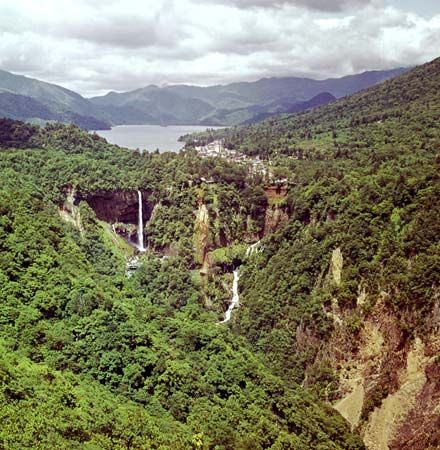
A notable feature of the lake is its outlet, the Daiya River, which flows over the famous Kegon Falls. In the early 20th century, these falls gained a somber cultural association as a site frequently chosen by Japanese youths for suicide. Today, the lake remains a vital part of the natural beauty and tourism infrastructure that defines the Nikkō region.12
How deep is Lake Chūzenji, and how does its depth compare to other lakes in Japan?
Lake Chūzenji has a maximum depth of 535 feet (163 meters).1
While it is a significant body of water formed within a structural depression, it is not among the deepest in the country. For comparison, Lake Towada—which occupies a volcanic crater in northern Honshu—reaches a maximum depth of 1,096 feet (334 meters), making it the third deepest lake in Japan. Consequently, Lake Chūzenji is significantly shallower than Japan’s deepest volcanic lakes.4
What types of fish can be found in Lake Chūzenji, and is fishing allowed?
Lake Chūzenji is well-known as a destination for trout fishing, which is a recognized recreational activity at the site. While the lake is noted for this specific type of fish, the provided information does not detail other species present in the water.1
Fishing is permitted and serves as one of the primary attractions for visitors to this resort area within Nikkō National Park.1
How does Lake Chūzenji contribute to the local ecosystem and biodiversity?
Lake Chūzenji serves as a vital component of the Nikkō National Park ecosystem, acting as a central water feature within a mountainous, volcanic landscape. While the provided search results do not offer a detailed analysis of the lake’s specific biodiversity or its broader ecological functions, they do note that the lake supports a trout hatchery, which contributes to the management of local aquatic life.13
The lake is fed by small rivers in the west and northwest, and its sole outlet, the Daiya River, flows over the Kegon Falls, connecting the lake to the surrounding river system. Beyond its role as a habitat, the area is characterized by its proximity to the volcanic Mount Nantai and the surrounding forest environments that define the national park.13
Sources
- Lake Chūzenji — Encyclopædia Britannica
- Chuzenji — Merriam-Webster
- Nikkō — Encyclopædia Britannica
- Lake Towada — Encyclopædia Britannica
Published on · 2 min read