Larne River
The Larne River is a river located in County Antrim, Northern Ireland. It originates in the low watershed between its own valley and that of the…
What is Larne River?
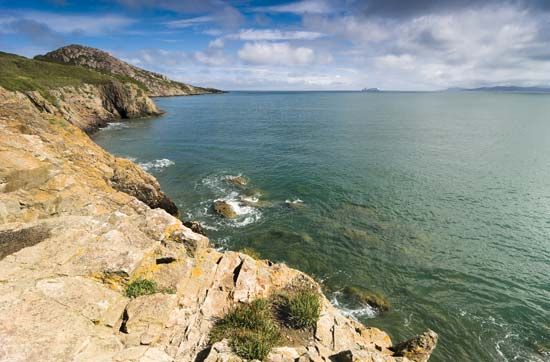
The Larne River is a river located in County Antrim, Northern Ireland. It originates in the low watershed between its own valley and that of the Six-Mile-Water, flowing northeastward for approximately 9 miles (14.5 km).1
Upon reaching the port of Larne, the river turns east and empties into Larne Lough, an inlet of the Irish Sea. The valleys formed by the Larne River and the Six-Mile-Water cut across the Antrim plateau, serving as a vital through-route connecting the lowlands east of Lough Neagh to the coast.1
What is the significance of Larne Lough to the local geography?
Larne Lough is a significant geographical feature in northeastern Northern Ireland, serving as a natural inlet of the Irish Sea.12
Its importance to the local geography includes:
- Coastal Transition: The lough marks the transition point where the high moors of the southern region descend into hills and lowlands, eventually meeting the flat shores of the inlet.2
- Hydrological Endpoint: It serves as the terminal point for the Larne River, which flows northeastward across the Antrim plateau to empty into the lough.1
- Maritime Gateway: The lough provides the sheltered waters necessary for the Larne harbour, which has developed into an important port with modern loading facilities. This location facilitates regular passenger and commercial shipping services to Scotland.2
- Regional Boundary: The lough is bordered to the east by the peninsula of Island Magee, helping to define the coastal landscape of the Mid and East Antrim district.2
How do rivers like the Larne River shape the landscape of the Antrim plateau?
Rivers like the Larne River play a crucial role in shaping the topography of the Antrim plateau, an ancient basalt highland in northeastern Northern Ireland.
By carving deep valleys through the plateau, the Larne River and the nearby Six-Mile-Water act as vital geographical agents that break up the upland terrain. These valleys serve as essential through-routes, connecting the lowlands east of Lough Neagh to the Irish Sea coast. This process of valley formation is a classic example of how rivers function as agents of landscape evolution, where the flow of water gradually cuts into the underlying geology to create accessible corridors through otherwise rugged or elevated terrain.14
While the plateau itself is characterized by moorland, peat bogs, and steep coastal cliffs, these river valleys provide a necessary contrast, facilitating movement and drainage across the region’s complex relief.15
What role has the port of Larne played in Northern Ireland’s history?
The port of Larne has served as a pivotal maritime gateway throughout Northern Ireland’s history, functioning as both a strategic military landing point and a vital center for trade and transport.29
Its historical significance is marked by several key events:
- Military Landings: In 1315, the Scottish leader Edward Bruce landed near the site of the modern town during his campaign to liberate Ireland from English rule, an event that shaped early regional political aspirations.2
- Political Conflict: The harbour became a focal point of political tension in 1914, when Ulster unionists—opposed to the prospect of an independent, Catholic-dominated Ireland—successfully smuggled a large shipment of German-made rifles through the port.2
- Economic and Transport Hub: Beyond its political history, Larne has evolved into one of Northern Ireland’s most significant ports. It has long facilitated essential passenger and commercial shipping links to Scotland, currently maintaining active routes to Cairnryan.92
Today, the port remains a cornerstone of the regional economy, supported by modern loading facilities that sustain its role in cross-channel connectivity.29
Sources
- Larne River — Encyclopædia Britannica
- Larne — Encyclopædia Britannica
- Larne — Merriam-Webster
- Northern Ireland - Relief — Encyclopædia Britannica
- Antrim — Encyclopædia Britannica
- Northern Ireland - Drainage — Encyclopædia Britannica
- River Bann — Encyclopædia Britannica
- river - Valley evolution — Encyclopædia Britannica
- Northern Ireland - Transportation — Encyclopædia Britannica
Published on · 3 min read