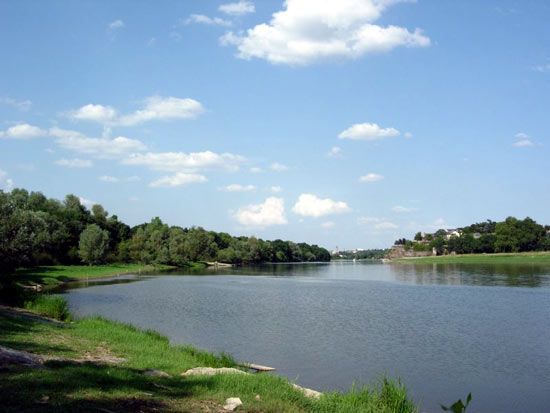
Loire River
During the Middle Ages, the Loire River served as a vital geographic and political axis in France. Its valley was home to powerful principalities, such as…
What role did the Loire River play in French history, particularly during medieval times?
During the Middle Ages, the Loire River served as a vital geographic and political axis in France. Its valley was home to powerful principalities, such as Anjou in the lower reaches, which became a strategic center of power during the 10th century. The river’s banks were heavily fortified, with cities like Loches featuring citadels that were contested by French and English forces during the 12th and 13th centuries.12
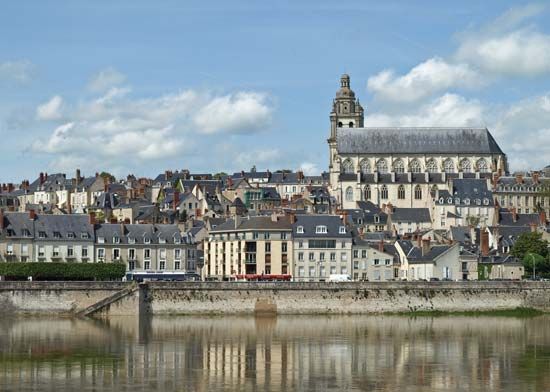
The region around the river was also central to the development of the French monarchy. Blois, situated on the Loire, became the seat of powerful counts from whom the Capetian kings descended. By the 15th century, the valley’s importance grew further as it became a preferred residence for the French court, stimulating agricultural reclamation and the construction of numerous châteaux. Additionally, the river acted as a staging ground for pivotal historical events, such as when Joan of Arc departed from Blois in 1429 to lift the siege of Orléans429 to lift the siege of Orléans.34
How does the Loire River compare to other major rivers in France in terms of size, importance, and cultural significance?
The Loire River holds a unique position among French waterways, distinguished by its physical scale and its historical cultural identity.
Size and Geography
The Loire is the longest river in France, stretching 634 miles (1,020 km) and draining the country’s widest basin at approximately 45,000 square miles (117,000 square km). Unlike the Rhône, which has been extensively engineered for hydroelectric power and modern navigation, the Loire remains an extremely irregular, torrential river. Its flow is highly variable, often hindering large-scale commercial navigation compared to more regulated systems.162
Economic and Historical Importance
Historically, the Loire served as a “great highway” for goods, particularly during the 17th and 18th centuries, when canal links were built to connect it to the Seine system. However, while the Rhône and other major rivers remain vital for industrial transport and energy, the Loire has largely been left behind by modern industrial development. Today, its waters are primarily utilized for cooling atomic power stations.1726
Cultural Significance
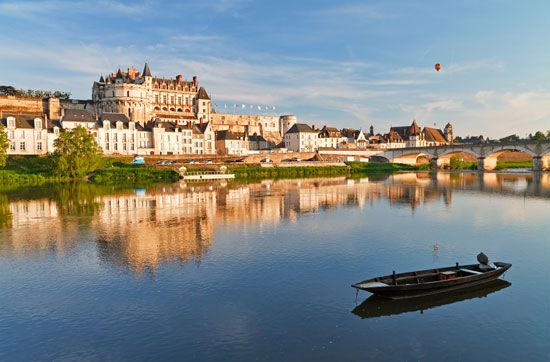
The Loire is defined by its “Old World” character and rural landscape, famously dotted with châteaux that reflect its history as a center of the French court. In 2000, UNESCO designated a significant portion of the valley as a World Heritage site, cementing its status as a cultural landmark rather than an industrial artery.16
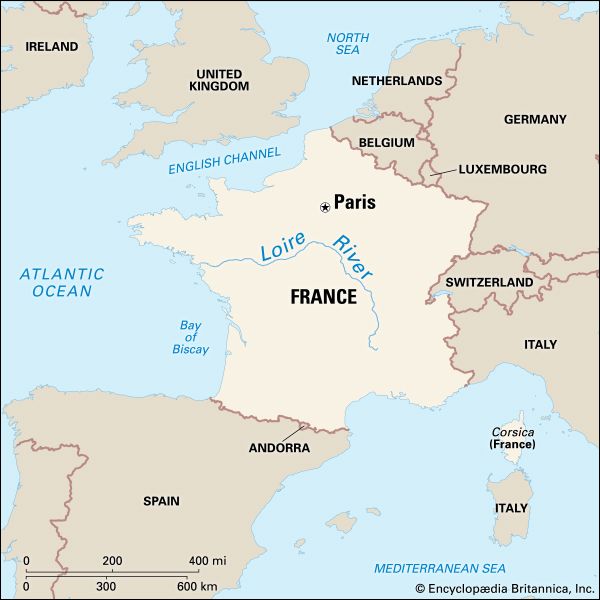
How has the Loire River been used for transportation and trade throughout history?
Throughout history, the Loire River served as a vital commercial artery for France, reaching the height of its importance as a “great highway” for the movement of goods during the 17th and 18th centuries. During this period, cities along its banks functioned as bustling ports, facilitating trade across the region.1
To enhance this connectivity, engineers constructed canal links to integrate the Loire with the Seine system, allowing products to be transported directly to Paris. A notable achievement was the completion of the Briare Canal in 1642, a sophisticated engineering feat that utilized a series of locks to overcome significant elevation changes between the two river systems.18
Despite its historical prominence, the Loire’s utility for modern transportation is limited. Its naturally torrential and irregular flow, which causes significant fluctuations in water levels, has historically hindered large-scale navigation. Consequently, these older canals are too narrow for modern vessels, and the river has largely been bypassed by contemporary industrial development, remaining a predominantly rural landscape.12
What are some of the major cities and landmarks along the Loire River?
The Loire River valley is renowned for its rich history, picturesque landscapes, and significant architectural heritage. Several major cities and iconic landmarks define the region:
Major Cities
- Orléans: Located on the northern bank of the Loire, this historic city is famous for its association with St. Joan of Arc, who delivered it from an English siege in 1429. It features the Sainte-Croix Cathedral, a landmark rebuilt in the Gothic style between the 17th and 19th centuries.3
- Blois: Once a second capital of France, this city is home to the Château de Blois, which showcases architectural styles ranging from the 13th to the 17th century, including a famous Renaissance staircase.9
- Nantes: Situated near the river’s long estuary, Nantes serves as a key urban center as the Loire approaches the Atlantic Ocean.110
Landmarks
The valley is famously dotted with châteaux, many of which are recognized as part of a UNESCO World Heritage site designated in 2000. Notable examples include:110
- Château de Chambord: Often described as a blend of a fortified Gothic castle and a Renaissance palace, it is the most famous chateau in the district.2
- Château de Chenonceaux: A classic example of the châteaux de plaisance (country houses) that emerged during the transition from medieval fortifications to residential palaces.2
Sources
- Loire River — Encyclopædia Britannica
- France - The Loire system — Encyclopædia Britannica
- Blois — Encyclopædia Britannica
- Loches — Encyclopædia Britannica
- France - Principalities north of the Loire — Encyclopædia Britannica
- France - Waterways — Encyclopædia Britannica
- Rhône River - The economy — Encyclopædia Britannica
- canals and inland waterways - France — Encyclopædia Britannica
- Château — Encyclopædia Britannica
- Orléans — Encyclopædia Britannica
Published on · 4 min read