Indre River
The Indre River is a 165-mile (265-km) waterway located in west-central France. As a left-bank tributary of the Loire River, it originates on the northern…
What is Indre River?
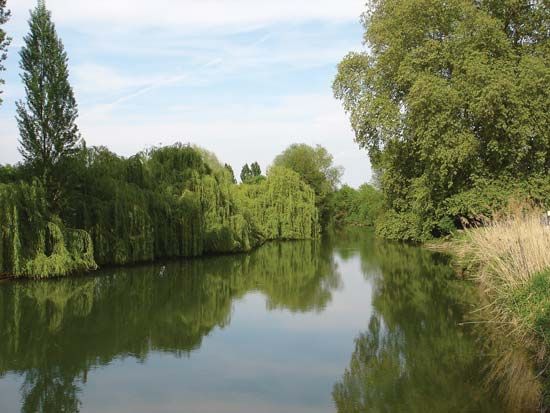
The Indre River is a 165-mile (265-km) waterway located in west-central France. As a left-bank tributary of the Loire River, it originates on the northern slopes of the Massif Central and flows northwest through the Indre and Indre-et-Loire départements.1
The river winds through agricultural landscapes, passing through Châteauroux and near Nohant, the former home of the novelist George Sand. Its course is marked by historical landmarks, including the medieval castle of Loches and the 16th-century château of Azay-le-Rideau. The Indre eventually joins the Loire River near the Avoine-Chinon nuclear power station.1
What is the significance of the Loire River in France?
The Loire River is the longest river in France, stretching 634 miles (1,020 km) from the Massif Central to the Atlantic Ocean. Its significance is multifaceted:23
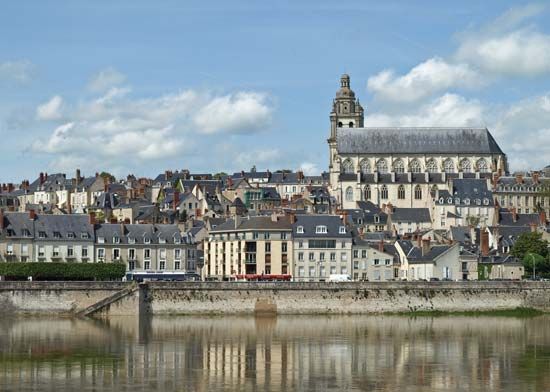
- Historical and Cultural Hub: The valley is renowned for its picturesque châteaux, reflecting centuries of French history. In 2000, UNESCO designated the middle valley a World Heritage site.23
- Economic Importance: Historically, the river served as a vital highway for transporting goods, with canal links connecting it to the Seine system. Today, it remains an agricultural center and provides essential cooling water for several nuclear power stations.23
- Environmental Dynamics: The river is characterized by an irregular, torrential flow that deposits sand and gravel, which holds commercial value. Its floodplain is protected by levées (embankments) constructed between the 12th and 19th centuries to manage flooding.32
Who was George Sand and why is she famous?
George Sand (1804–1876), born Amandine-Aurore-Lucile Dudevant, was a dominant and prolific French Romantic writer of the 19th century. She is famous for her significant contributions to literature and her role in spreading feminist consciousness.56
Her fame stems from several key areas:
- Literary Innovation: She gained immediate acclaim with her novel Indiana (1832), a passionate protest against social conventions that trapped women in unhappy marriages. Her work often explored the subordinate position of women and advocated for the ideal of free association in social and class relationships.56
- Rustic Novels: She is perhaps best known for her “rustic novels,” such as La Mare au diable (1846) and La Petite Fadette (1849), which drew inspiration from her deep love for the Berry countryside and sympathy for the poor.56
- Cultural Influence: Sand was a central figure in the intellectual circles of her time, maintaining high-profile relationships with figures such as Alfred de Musset and Frédéric Chopin.57
What are the main features of the Massif Central region?
The Massif Central is a vast, elevated region in south-central France covering approximately 33,000 square miles. Its primary features include:
- Geology and Relief: The region is largely composed of crystalline rocks like granite and schist. It is defined by extensive plateaus, typically between 2,000 and 3,000 feet high, and dramatic volcanic activity that created features like the Chaîne des Puys and the Sancy Hill, the region’s highest peak at 6,184 feet.910
- Diverse Landscapes: The area includes the Grands-Causses, a limestone region known for deep, gorgelike river valleys, and the Cévennes mountains. The landscape also features numerous mineral springs, a relic of past volcanic processes.910
- Economy and Agriculture: The region maintains a strong rural character. Agriculture is dominated by cattle rearing, dairy production, and the creation of distinctive cheeses like Cantal and Roquefort. While early industrial development relied on coal mining, the modern economy is centered on the service sector in cities like Clermont-Ferrand, alongside tourism and hydroelectric power generation.910
Sources
- Indre River — Encyclopædia Britannica
- Loire River — Encyclopædia Britannica
- France - The Loire system — Encyclopædia Britannica
- Blois — Encyclopædia Britannica
- Léonard-Sylvain-Julien Sandeau — Encyclopædia Britannica
- George Sand — Encyclopædia Britannica
- French literature - Sand — Encyclopædia Britannica
- Frédéric Chopin - Life — Encyclopædia Britannica
- Massif Central — Encyclopædia Britannica
- France - The Massif Central — Encyclopædia Britannica
Published on · 3 min read