Lu Mountains
In the 20th century, the Lu Mountains (Lushan) served as a significant site for high-level political meetings that shaped modern Chinese history. Most…

What role did the Lu Mountains play in modern Chinese history, particularly during the 20th century?
In the 20th century, the Lu Mountains (Lushan) served as a significant site for high-level political meetings that shaped modern Chinese history. Most notably, the Lushan Conference held in the summer of 1959 became a pivotal and destructive event for the Chinese Communist Party (CCP).12
During this conference, Defense Minister Peng Dehuai presented a letter to Mao Zedong criticizing the economic failures and excesses of the Great Leap Forward. Mao responded by attacking Peng for “right deviationism,” leading to his purge and the removal of his followers from power. This outcome effectively stifled internal criticism of the Great Leap Forward, preventing necessary policy corrections and contributing to the subsequent economic crisis and widespread famine. The conference solidified Mao’s intolerance for dissent, as he began to view any challenge to his policies as a criminal act.123
Beyond its political role, the area remained a popular resort destination throughout the century, having previously served as a summer retreat for Western residents in China before World War II.4
What are the main geological features and landscapes of the Lu Mountains?
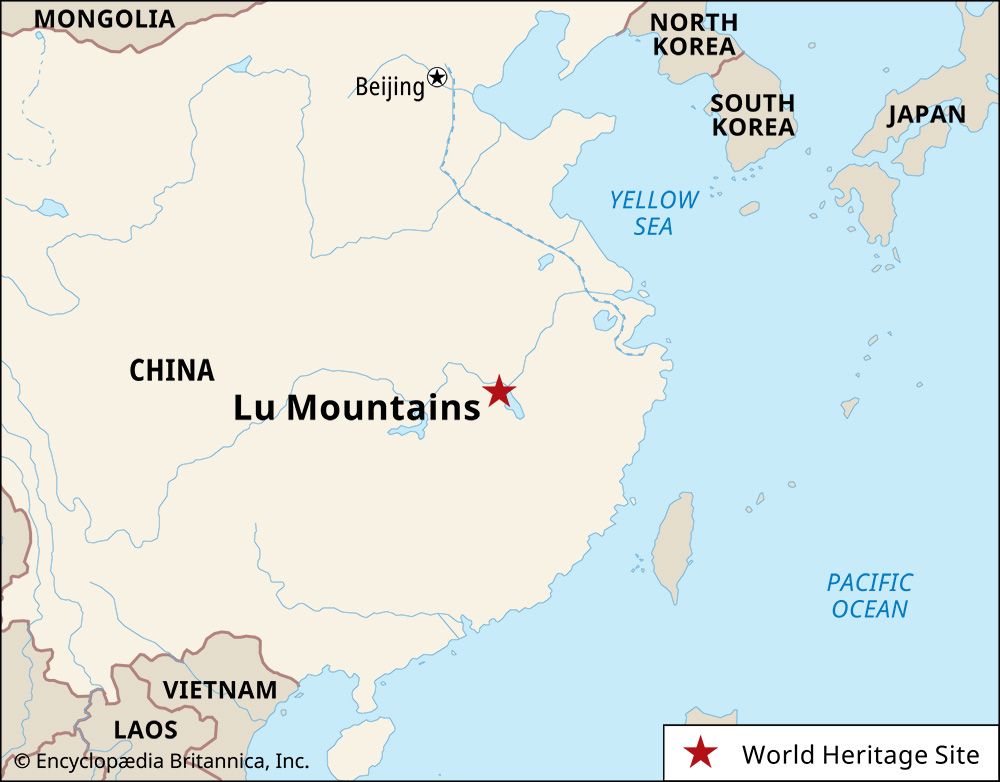
The Lu Mountains are a prominent mountain range located in northern Jiangxi province, China. Geologically, the massif is characterized as a horst-style fault block that integrates diverse landscapes, including mountains, rivers, and lakes, into a single unit.4
Key features of the region include:
- Topography: The range forms the eastern extremity of the Mufu Mountains. Its highest peak, Dahanyang, reaches an elevation of approximately 4,836 feet (1,474 metres) above sea level.4
- Geographic Setting: The mountains are situated south of Jiujiang and west of Xingzi. They overlook the Yangtze River valley to the north and Lake Poyang to the east.4
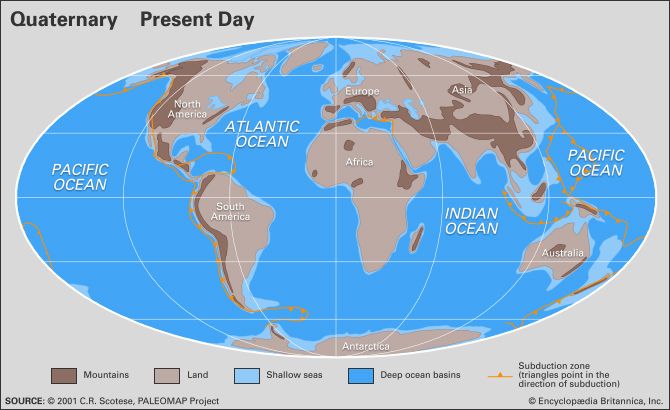
- Scientific Significance: The area is noted for its unique geological history and has been a significant site for studies regarding glaciers from the Quaternary Period.4
- Scenic Status: Renowned for their grandeur and unusual shapes, the mountains were designated a UNESCO World Heritage site in 1996, covering a scenic area of approximately 117 square miles (302 square km).4
How has tourism developed in the Lu Mountains region, and what impact has it had on the local environment?
Tourism in the Lu Mountains has a long history, evolving from a site of religious and intellectual significance into a major destination for visitors. In the early 20th century, the area became a popular summer resort for Western residents living in Shanghai and other coastal cities. This trend has persisted, and the region continues to thrive as a resort destination today.4
The area’s status as a premier tourist attraction was solidified in 1996 when it was designated a UNESCO World Heritage site. The protected scenic area now encompasses approximately 117 square miles (302 square km), with an additional outlying zone of 193 square miles (500 square km) established to help preserve the landscape.4
Regarding the impact of tourism on the local environment, the provided information does not contain specific details on ecological degradation or conservation challenges resulting from visitor activity.
How do the Lu Mountains compare to other famous mountain ranges in China in terms of cultural and natural significance?
The Lu Mountains hold a distinct position among China’s famous ranges due to their unique integration of cultural history and geological significance. While ranges like the Tien Shan are defined by massive alpine elevations exceeding 16,000 feet and extensive glacial systems, the Lu Mountains are celebrated for their dramatic, sharp rise from lowlands to approximately 4,836 feet.467
Culturally, the Lu Mountains served as a vital intellectual and spiritual hub. From the 6th to the 8th century, they were a primary center for Daoism and home to many prominent Buddhists, hosting hundreds of temples and shrines. This contrasts with the broader, often more remote spiritual significance attributed to other sacred peaks in Chinese tradition, where mountains are frequently viewed as mystical “cavern-heavens” connecting heaven and earth. Furthermore, the Lu Mountains are deeply embedded in Chinese literature, having inspired generations of poets and literary figures.68
Geologically, the range is a horst-style fault block that serves as a critical site for studying Quaternary Period glaciers.6
Sources
- An Lushan — Encyclopædia Britannica
- history of China - New directions in national policy, 1958–61 — Encyclopædia Britannica
- Mao Zedong - Retreat and counterattack — Encyclopædia Britannica
- Lu Mountains — Encyclopædia Britannica
- Mao Zedong - The emergence of Mao’s road to socialism — Encyclopædia Britannica
- Taoism - Taoist imagery — Encyclopædia Britannica
- China - The Tien Shan — Encyclopædia Britannica
- Jiangxi - Relief — Encyclopædia Britannica
Published on · 3 min read