Lake Poyang
Seasonal changes at Lake Poyang profoundly shape the lives of local communities by dictating the landscape and land use. As a vital retention lake for the…
How do the seasonal changes in Lake Poyang affect the local communities?
Seasonal changes at Lake Poyang profoundly shape the lives of local communities by dictating the landscape and land use. As a vital retention lake for the Yangtze River, the lake experiences dramatic water-level fluctuations—sometimes reaching 25 feet—that transform the region’s geography.1
- Summer Flooding: During the summer, the region is flooded, turning hills into islands. Because the lake receives excess water from the Yangtze, surrounding farmland is frequently subjected to extensive flooding, which has historically posed significant risks to inhabitants of the adjacent plains.12
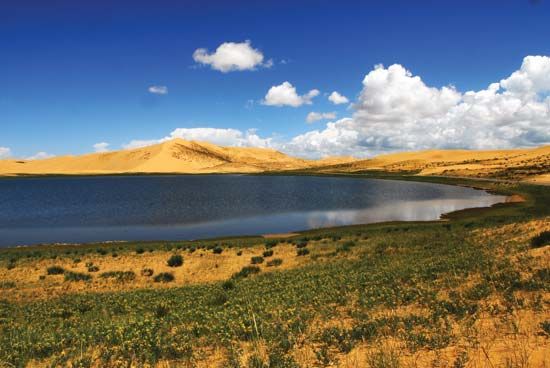
- Winter Marshlands: In winter, the water recedes, leaving behind a vast marshland intersected by waterways. This landscape is dotted with hills where local villages are situated.1
- Land Reclamation: Over centuries, communities have adapted to these cycles by reclaiming large areas of farmland from lacustrine deposits. However, the ongoing silting of the lake has altered the shoreline significantly; for example, the city of Nanchang was once on the lakeshore but is now located 15 miles away.1
How is Lake Poyang connected to the Yangtze River, and what role does this connection play in the lake’s ecology?
Lake Poyang is connected to the Yangtze River via a wide neck at Hukou, located near the port of Jiujiang. This connection is fundamental to the lake’s hydrology and ecology, as it functions as a critical retention basin for the river.13
The relationship between the two bodies of water is defined by seasonal fluctuations:
- Summer: When the Yangtze rises due to monsoon rains, water flows into Lake Poyang, significantly increasing the lake’s size, depth, and surface area. During this time, the lake acts as a reservoir, absorbing excess floodwaters from the Yangtze.13
- Winter: As the Yangtze’s water levels recede, the lake drains back into the river, causing the lake to shrink and transform into a vast system of marshlands and shallow channels.13
This dynamic connection is ecologically significant because it regulates the water volume of the Yangtze basin; runoff from the Lake Poyang basin accounts for approximately two-fifths of the total volume delivered to the river’s mouth. However, this interaction also makes the surrounding region highly susceptible to flooding when high-water stages in the lake and the Yangtze coincide.213
How does the water level of Lake Poyang fluctuate throughout the year, and why?
The water level of Lake Poyang fluctuates significantly throughout the year, with differences between flood and low-water levels reaching as much as 25 feet (8 meters). These variations are primarily driven by the lake’s role as a vital retention basin for the Yangtze River and the influence of regional monsoon rains.1
The seasonal cycle functions as follows:
- Summer: During the monsoon season, the Yangtze River experiences high water levels. Because Lake Poyang is connected to the river at Hukou, it receives a substantial influx of the river’s excess floodwaters. This causes the lake to expand dramatically, flooding surrounding plains and turning hills into islands.12
- Winter: As the Yangtze’s water levels recede, the lake drains back into the river. During this period, the water level drops to its lowest point, and the lake transforms into a vast, marshy landscape intersected by smaller waterways.1
These fluctuations are essential to the hydrology of the Yangtze basin, as the lake helps regulate the river’s flow. However, because the lake lacks an artificial retention basin to manage its capacity, the timing of these cycles can lead to extensive flooding in the surrounding agricultural areas.1
What unique wildlife can be found in and around Lake Poyang?
Lake Poyang and its surrounding marshlands serve as a critical habitat for diverse wildlife, particularly aquatic birds. The region is most notably recognized as a vital wintering ground for the Siberian crane (Grus leucogeranus), which relies on the lake’s expansive seasonal wetlands for survival.1
While the broader Jiangxi province—where the lake is located—is home to rare species such as the endangered Chinese giant salamander (Andrias davidianus) and the critically endangered South China tiger (Panthera tigris amoyensis), these animals are primarily associated with the province’s mountainous and forested regions rather than the lake itself. The lake environment remains defined by its shifting landscape of reedbeds and swamps, which provide essential refuge for migratory bird populations.14
Sources
- Lake Poyang — Encyclopædia Britannica
- Yangtze River - Hydrology of the Yangtze River — Encyclopædia Britannica
- Jiangxi - Drainage — Encyclopædia Britannica
- Jiangxi - Plant and animal life — Encyclopædia Britannica
Published on · 3 min read