Manas National Park
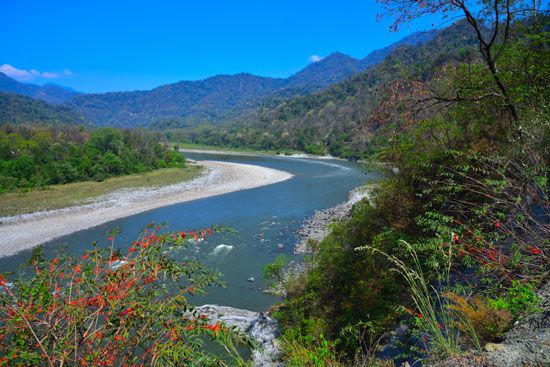
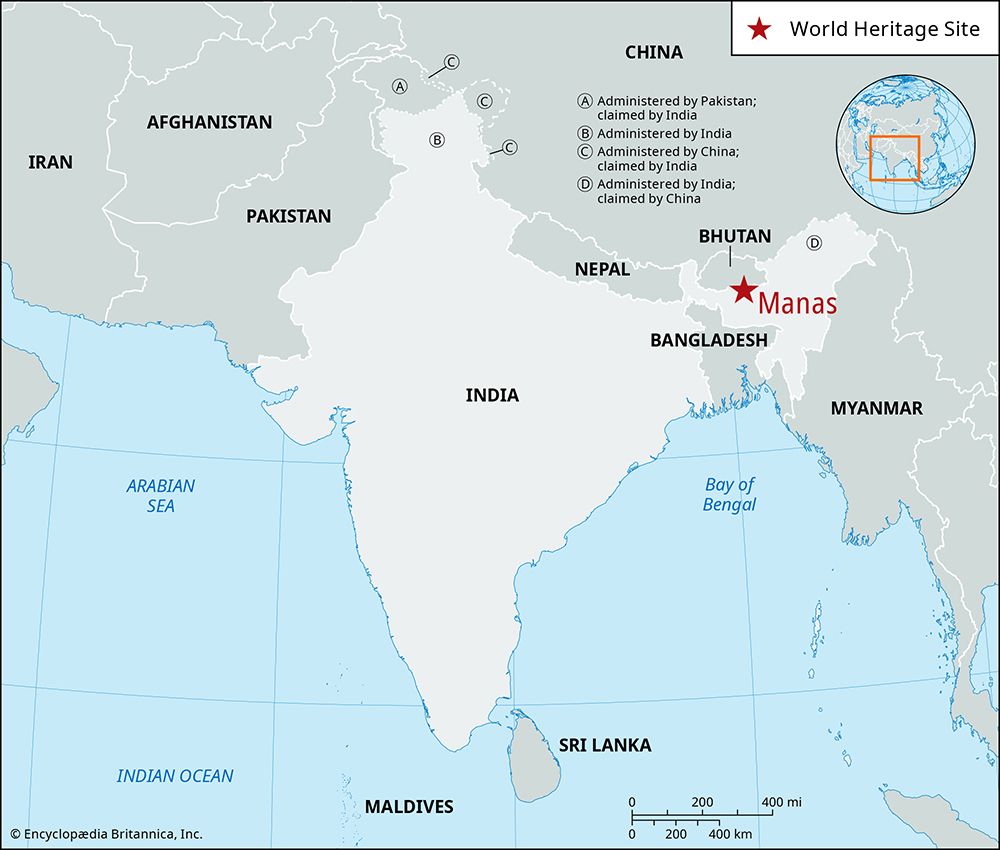
Manas National Park is a protected area in western Assam, India, situated at the Himalayan foothills. Established as a wildlife sanctuary in 1928 and…
What is Manas National Park?
Manas National Park is a protected area in western Assam, India, situated at the Himalayan foothills. Established as a wildlife sanctuary in 1928 and designated a national park in 1990, it spans approximately 193 square miles. The park is a UNESCO World Heritage site and serves as the core zone for a larger tiger reserve and biosphere reserve.
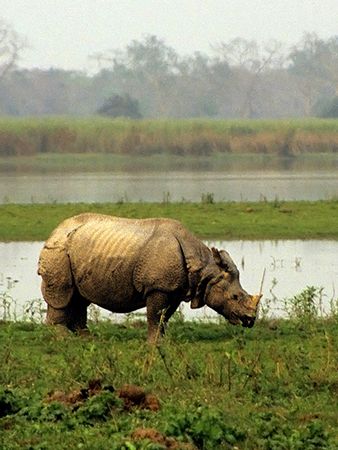
The park features diverse vegetation, including semievergreen and wet-deciduous forests, and supports numerous threatened species, such as Indian rhinoceroses, elephants, and golden langurs. Although armed conflict in the late 20th century severely impacted its wildlife, the park has undergone a successful recovery through community-led conservation efforts, including the rehabilitation of former poachers and the translocation of endangered animals. It was removed from the list of World Heritage in Danger in 2011.
What is a biosphere reserve and how does it differ from a national park?
A biosphere reserve is a designated area managed to conserve ecosystems while serving as a “learning place” for sustainable development. These sites, designated by UNESCO, aim to demonstrate how human communities can live in balance with their environment. In contrast, a national park is an area set aside by a national government primarily to preserve the natural environment for scientific interest or public recreation.
The primary differences include:
- Management Structure: Biosphere reserves are typically divided into three concentric zones—a strictly protected core area, a buffer zone for research and education, and a transition area that allows for sustainable economic activities and human settlement. National parks generally focus on keeping landscapes and wildlife in their natural state, often limiting human contact to specific areas to minimize disturbance.
- Purpose: While national parks prioritize preservation and tourism, biosphere reserves specifically function as models for reconciling human social structures with ecological needs.
- Overlap: These designations are not mutually exclusive; a biosphere reserve’s footprint may overlap with existing national parks or other protected areas.34
Why are golden langurs and pygmy hogs considered endemic species?
In ecology, an endemic species is defined as any organism whose geographic range is confined to a single, specific area, meaning it is not found naturally anywhere else in the world.5
Golden langurs and pygmy hogs are considered endemic because their natural distributions are restricted to very specific, localized habitats within the Himalayan foothills and surrounding regions of northeastern India and neighboring areas. Because these species are confined to such limited geographic ranges, they often possess specialized adaptations that make them highly susceptible to environmental disturbances, such as habitat loss or climate change.65
This restricted distribution is a hallmark of endemism. Unlike native species, which may have evolved in a region but also exist in surrounding areas, endemic species are uniquely tied to their specific environment. Due to their limited range and specialized needs, both the golden langur and the pygmy hog—the latter being the world’s smallest and rarest wild pig—are considered vulnerable, necessitating targeted conservation efforts to prevent their extinction.56
How do conservationists successfully reintroduce endangered animals into the wild?
Reintroducing endangered animals into the wild is a complex, high-stakes process with a high rate of failure. While successful cases like the California condor exist, conservationists must overcome significant biological and environmental hurdles to achieve long-term viability.78
Key components of successful reintroduction include:
- Addressing the Root Cause: Reintroduction is often futile if the original threats—such as invasive species, habitat destruction, or environmental toxins—remain present in the ecosystem.78
- Genetic Management: Because captive populations are often small, scientists must carefully screen individuals to minimize inbreeding and preserve genetic diversity.8
- Behavioral Training: Captive-reared animals often lack the survival skills taught by wild parents. For example, attempts to raise condors using puppets were less successful than natural rearing, as young animals require parental guidance to learn essential behaviors for life in the wild.8
- Post-Release Monitoring: Ongoing observation is critical to ensure that released individuals can forage, nest, and successfully rear their own young.8
Ultimately, these interventions are resource-intensive and require careful scientific planning to ensure that the species can thrive independently.89
Sources
- Manas National Park: Top Questions — Encyclopædia Britannica
- Manas National Park — Encyclopædia Britannica
- biosphere reserve — Encyclopædia Britannica
- national park — Encyclopædia Britannica
- endemic species — Encyclopædia Britannica
- pygmy hog — Merriam-Webster
- conservation - Introducing species — Encyclopædia Britannica
- conservation - Protective custody — Encyclopædia Britannica
- conservation - Associated difficulties and costs — Encyclopædia Britannica
Published on · 3 min read