Marken
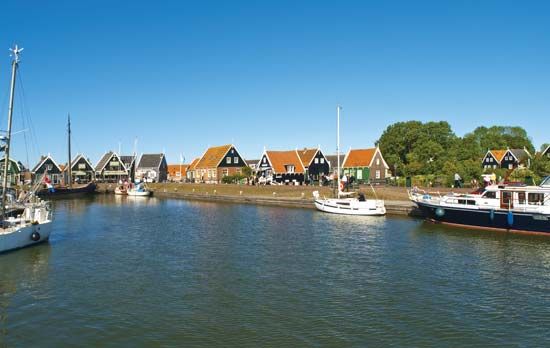
Marken is a former island and municipality located in the west-central Netherlands, situated within the IJsselmeer. It lies approximately 11 miles (17 km)…
What is Marken and where is it located in the Netherlands?
Marken is a former island and municipality located in the west-central Netherlands, situated within the IJsselmeer. It lies approximately 11 miles (17 km) northeast of Amsterdam and about 1.5 miles (2.5 km) offshore.1
Historically, Marken was separated from the mainland in the 13th century during the formation of the Zuiderzee. While it was once an isolated fishing community, it has been connected to the mainland by a causeway since 1957. The area is known for its traditional atmosphere, where houses were historically built on piles and mounds to protect against high tides, and residents often wear traditional regional costumes during the tourist season. Today, tourism serves as a significant economic factor for the community.1
How has Marken’s geography and connection to water shaped its history and way of life?
Marken’s geography as an island separated from the mainland in the 13th century necessitated a unique way of life centered on its relationship with the water. Because the island was vulnerable to high tides, residents adapted by building their homes on piles and grouping them on small mounds to ensure safety from flooding.1
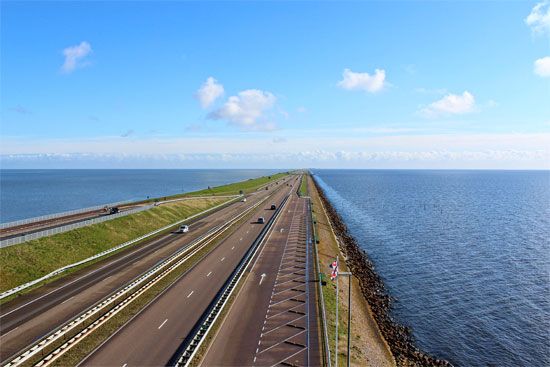
This isolation fostered a distinct culture and economy. For centuries, the inhabitants relied heavily on fishing, particularly for eels, within the Zuiderzee. The construction of the Afsluitdijk, which transformed the Zuiderzee into the IJsselmeer, fundamentally altered the local environment and the traditional fishing industry.1
Following the completion of a causeway in 1957, the island gained a permanent physical connection to the mainland. While this ended its geographic isolation, the community has preserved much of its historical character, with tourism now serving as a vital economic pillar. Residents continue to honor their heritage by wearing traditional regional costumes, maintaining the island’s identity as a living link to the past.1
How did Marken’s history as a former island influence its development and isolation?
Marken’s development was fundamentally shaped by its 13th-century separation from the mainland during the formation of the Zuiderzee. This geographic isolation forced the community to adapt to a precarious environment, leading to a distinct way of life centered on fishing, particularly for eels.1
The island’s isolation fostered a unique cultural identity that persists today. To mitigate the constant threat of flooding, residents developed specialized architectural practices, grouping their houses on small mounds and constructing them on piles. This adaptation mirrors the historical use of terpen—artificial mounds used by early inhabitants of the region to survive rising sea levels.12
The construction of a causeway in 1957 ended Marken’s physical isolation, yet the community has successfully retained much of its historical atmosphere. While the transformation of the Zuiderzee into the IJsselmeer by the Afsluitdijk fundamentally changed the local economy, the village has transitioned toward tourism as a primary economic pillar, often highlighting its heritage through traditional regional costumes.1
How has tourism impacted Marken and its local community?
Tourism has become a vital economic pillar for Marken, significantly influencing the community’s modern development. Following the construction of a causeway in 1957, which ended the island’s physical isolation, the village has successfully leveraged its unique history to attract visitors.1
The impact of tourism is most visible in how the community presents its heritage. To preserve and showcase the island’s distinct atmosphere, residents often wear traditional regional costumes during the tourist season. This practice reinforces Marken’s identity as a living link to its past, allowing the community to maintain its historical character even as it integrates into the modern economy of the Netherlands.1
While the transition from a traditional fishing economy—once centered on the Zuiderzee—to a tourism-based model has been significant, the village continues to balance these economic shifts with its deep-rooted cultural and religious traditions.1
Sources
- Marken — Encyclopædia Britannica
- Zuiderzee — Encyclopædia Britannica
Published on · 3 min read