Martha’s Vineyard
Martha’s Vineyard is a prominent island off the coast of Massachusetts known for its summer tourism and yachting culture. The island is divided into six…
What are the main towns and attractions on Martha’s Vineyard?
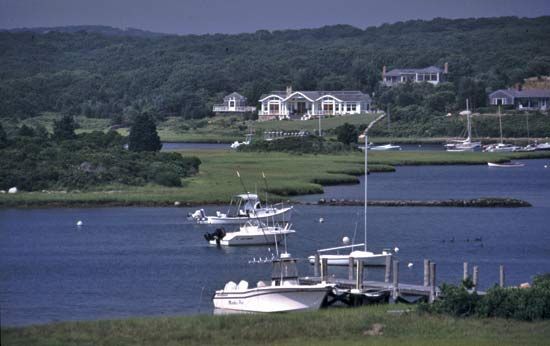
Martha’s Vineyard is a prominent island off the coast of Massachusetts known for its summer tourism and yachting culture. The island is divided into six distinct towns, each offering unique character:1
- Edgartown: The island’s oldest settlement and county seat, famous for its historic whaling-era architecture, such as the Vincent House and Thomas Cooke House. It also encompasses Chappaquiddick Island and features nature sites like the Felix Neck Wildlife Sanctuary.12
- Oak Bluffs: A popular resort town known for its vibrant atmosphere.1
- Tisbury (Vineyard Haven): A primary hub for the island.1
- Aquinnah: Formerly known as Gay Head, this town is home to the Wampanoag people and is celebrated for its iconic multicolored cliffs and a historic lighthouse.1
- West Tisbury & Chilmark: These towns contribute to the island’s scenic and residential landscape.1
Visitors often explore the Martha’s Vineyard State Forest at the island’s center or enjoy the various beaches and marine recreational facilities.12
How does Martha’s Vineyard’s culture differ from mainland Massachusetts?
Martha’s Vineyard possesses a distinct cultural identity that sets it apart from mainland Massachusetts, shaped by its unique history, geography, and social evolution.
Historical and Social Uniqueness
Unlike the mainland, the island developed a singular social integration during the 18th and 19th centuries due to a high prevalence of hereditary deafness. Because a significant portion of the population was deaf, hearing islanders learned a specialized sign language, leading to a society where deaf individuals were fully integrated into all aspects of life, including farming, fishing, and civic activities, rather than forming a separate social network.1
A Hub for Black Culture
The island has also evolved into a significant cultural destination for African Americans. Since the early 20th century, particularly in the town of Oak Bluffs, the island became a haven where Black families could vacation and reside without the social pressures of race representation found elsewhere. This community grew around institutions like the Shearer Cottage and the Bradley Memorial Church, eventually attracting prominent intellectuals, civil rights leaders, and artists.4
Modern Identity
While the mainland is characterized by diverse urban and suburban environments, Martha’s Vineyard is defined by its seasonal economy, which centers on yachting and summer tourism. It remains a place where historical legacies—such as the presence of the Wampanoag people—coexist with its status as a retreat for the affluent and a center for intellectual and cultural festivals.54

What is the geographical location and size of Martha’s Vineyard?
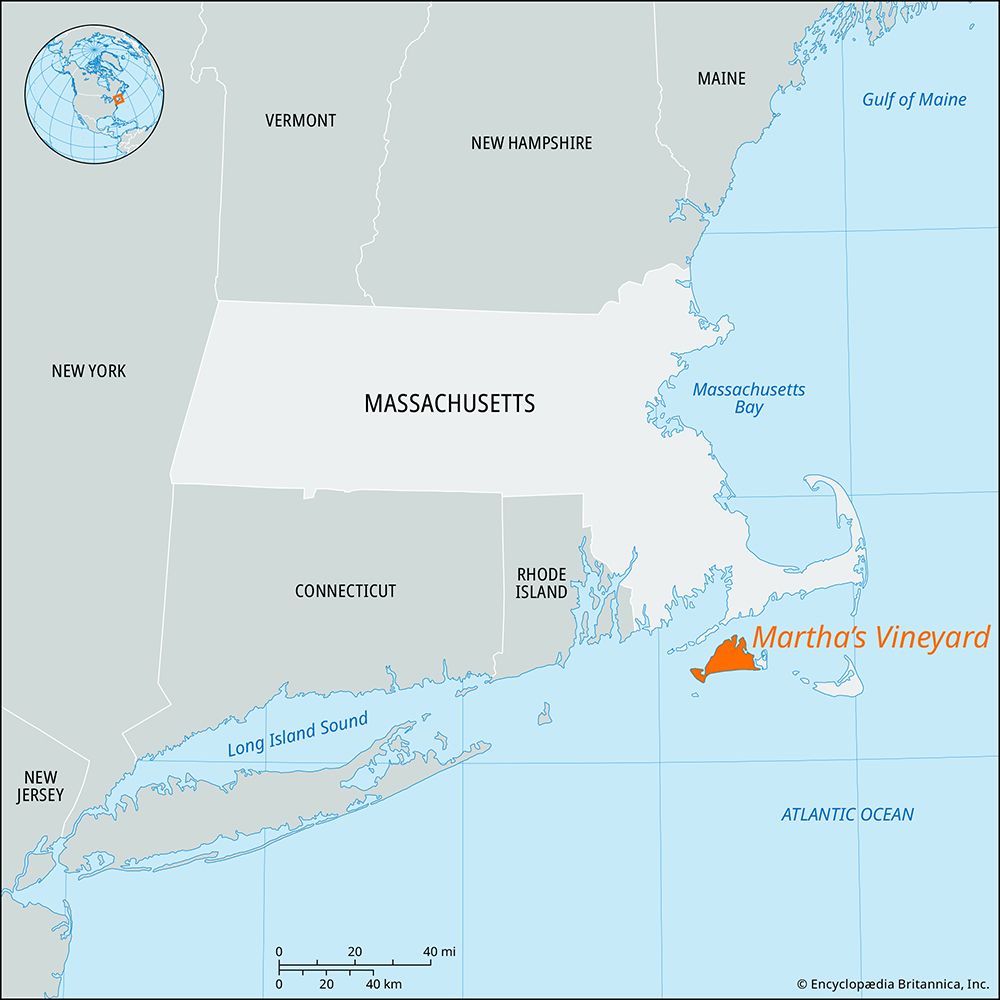
Martha’s Vineyard is an island of glacial origin located in the Atlantic Ocean off the southeastern coast of Massachusetts. It is situated approximately 4 miles (6 km) across Vineyard Sound from Cape Cod and lies west-northwest of Nantucket.13
Regarding its size and dimensions, the island is roughly 20 miles (32 km) long and varies in width from 2 to 10 miles (3 to 16 km). It reaches an elevation of 311 feet (95 meters) above sea level at its highest point. The island constitutes the majority of the territory and population of Dukes County, which has a total area of 104 square miles (269 square km).13
How did Martha’s Vineyard get its name and what is its historical significance?
Martha’s Vineyard was first recorded by explorers Bartholomew Gosnold and Gabriel Archer in 1602. They named the island for the abundance of vines they discovered and in honor of Gosnold’s daughter, Martha.1
The island’s historical significance is multifaceted:
- Early Colonial History: Settled in 1642 after being purchased by Thomas Mayhew, the island was initially considered part of New York before being ceded to Massachusetts in 1692.1
- Economic Evolution: During the 18th and 19th centuries, the island became a major center for whaling and fishing, particularly in Edgartown, which once operated the world’s largest sperm-oil candle factory.1
- Cultural Haven: Since the early 20th century, the town of Oak Bluffs has served as a vital hub for African American culture. It evolved into a sanctuary where Black families, intellectuals, and civil rights leaders could vacation and reside, free from the social pressures of race representation.4
- Indigenous Heritage: The island remains home to descendants of the Wampanoag people, who have inhabited the region since the 17th century.1
Sources
- Martha’s Vineyard — Encyclopædia Britannica
- Edgartown — Encyclopædia Britannica
- Martha's Vineyard — Merriam-Webster
- Black life on Martha’s Vineyard — Encyclopædia Britannica
- deafness on Martha’s Vineyard — Encyclopædia Britannica
- Elizabeth Islands — Encyclopædia Britannica
Published on · 3 min read