IJsselmeer
The IJsselmeer serves several critical functions in the modern Netherlands, primarily centered on water management, agriculture, and regional infrastructure.
What are the main purposes and uses of the IJsselmeer in modern times?
The IJsselmeer serves several critical functions in the modern Netherlands, primarily centered on water management, agriculture, and regional infrastructure.
Key Purposes and Uses
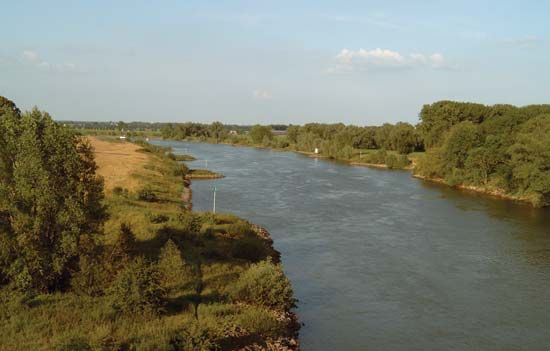
- Freshwater Reservoir: By replacing formerly brackish water with fresh water—largely through inflow from the IJssel River—the lake acts as a vital freshwater supply. This is essential for the provinces of Noord-Holland, Zuid-Holland, and Friesland, providing a buffer against summer droughts and helping to improve surrounding brackish marshlands.1
- Land Reclamation: A significant portion of the original area has been reclaimed to create fertile polders. These reclaimed lands, known as the IJsselmeer Polders, have expanded the nation’s land area by 626 square miles. While originally intended for agricultural production, they are now also utilized for industrial, residential, and recreational purposes.12
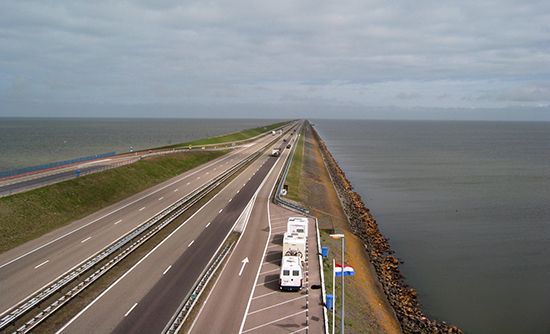
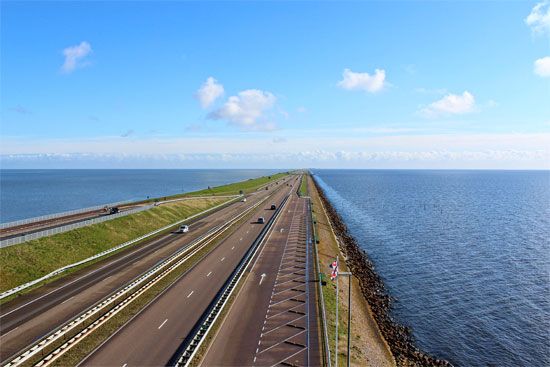
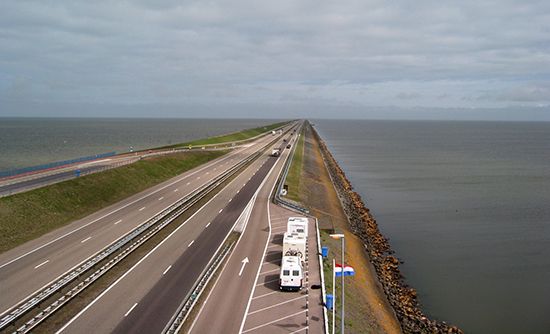
- Fisheries and Transport: The lake supports freshwater fisheries, particularly for eels. Additionally, the Afsluitdijk dam, which separates the lake from the sea, features locks that facilitate the passage of barges and small seagoing craft.1
How has the creation of the IJsselmeer impacted the traditional fishing industry in the area?
The creation of the IJsselmeer fundamentally transformed the region’s fishing industry by altering the ecological composition of the water. Before the construction of the Afsluitdijk in 1932, the area was part of the Zuiderzee, a saltwater inlet that supported a robust fishing industry focused on species such as herring, anchovies, and flounder.12
Following the dam’s completion, the formerly brackish water was replaced by fresh water, primarily through the inflow of the IJssel River. This environmental shift rendered the original saltwater fishing practices obsolete. In their place, a new freshwater fishery emerged, which is now centered primarily on the harvesting of eels. These eels enter the lake as larvae from the Sargasso Sea through the locks in the dam.1
Are there any significant towns or cities around the IJsselmeer, and how do they benefit from the lake?
Several significant towns and cities are situated around the IJsselmeer, many of which have adapted their economies following the transformation of the former Zuiderzee into a freshwater lake.
Notable Towns and Cities
- Lelystad: Serving as the capital of Flevoland province, this city is a central hub located on the East Flevoland Polder. It is a key population center that benefits from its position on the lake and its connection to the surrounding reclaimed land.13
- Enkhuizen: Located in the northwestern Netherlands, this historic town maintains economic ties to the lake through eel fishing and the distribution of agricultural products. It also serves as a transit point with boat services to other lakeside towns and a road connection to Lelystad.5
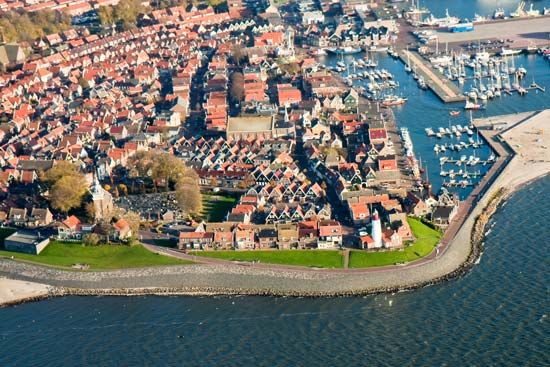
- Volendam: Once a flourishing fishing center, this town has shifted its economic focus toward tourism. Its picturesque harbor and traditional culture attract many visitors, making tourism the principal economic factor for the municipality.6
- Urk: Situated on the Northeast Polder, this municipality is another key settlement integrated into the Flevoland province, benefiting from the development of the reclaimed polder lands.3
These communities utilize the lake for various purposes, including recreation, light industry, and residential expansion, while the surrounding polders provide fertile land for agriculture.13
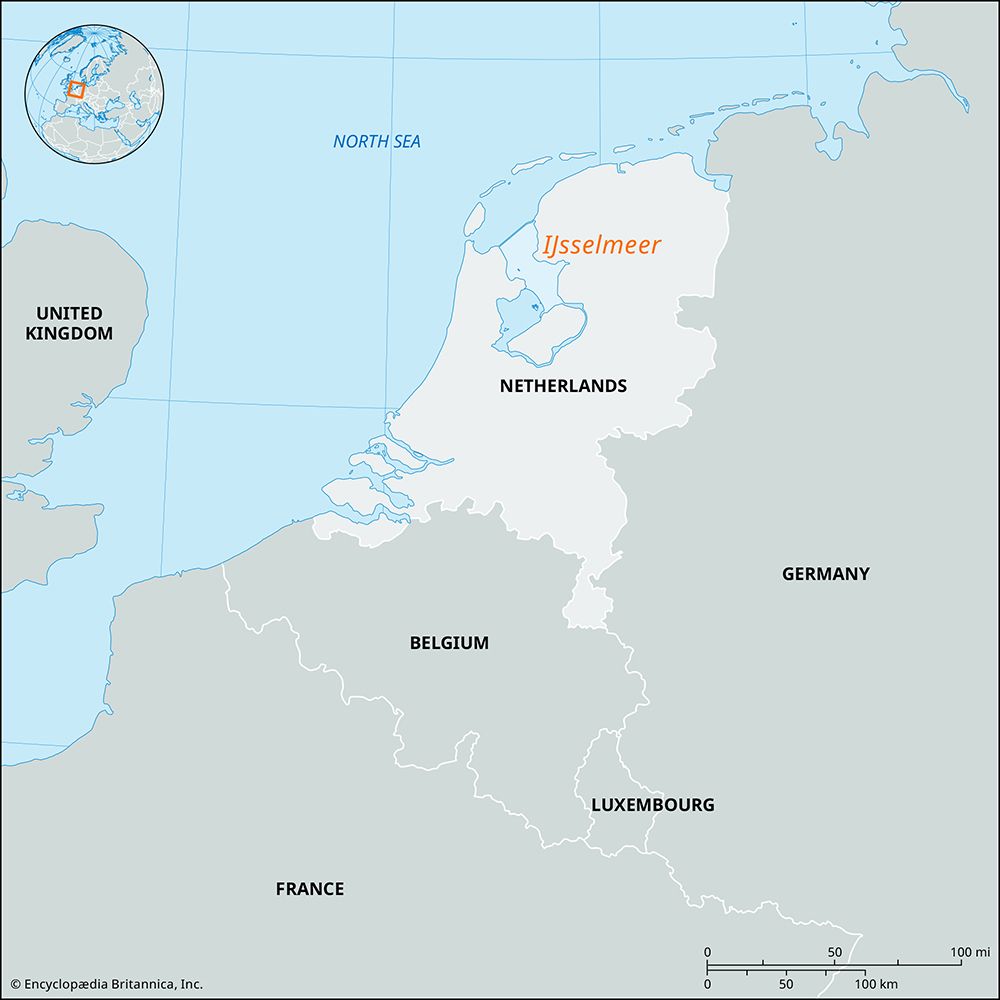
What is the IJsselmeer and where is it located in the Netherlands?
The IJsselmeer is a shallow freshwater lake located in the northern and central Netherlands.1
It was created in 1932 by the construction of the Afsluitdijk, a 19-mile-long dam that separated the southern portion of the former Zuiderzee from the North Sea and the Waddenzee. This engineering project transformed the previously brackish inlet into a freshwater reservoir, primarily fed by the IJssel River, a branch of the Rhine River.12
The lake covers a total area of 1,328 square miles, though significant portions have been reclaimed to create fertile polders, which have expanded the land area of the Netherlands](https://www.britannica.com/science/polder), which have expanded the land area of the Netherlands. Today, the IJsselmeer serves as a vital source of fresh water for surrounding provinces and supports freshwater fisheries, most notably for eels.12
Sources
- IJsselmeer — Encyclopædia Britannica
- Zuiderzee — Encyclopædia Britannica
- IJsselmeer Polders — Encyclopædia Britannica
- IJssel River — Encyclopædia Britannica
- Flevoland — Encyclopædia Britannica
- Enkhuizen — Encyclopædia Britannica
- Volendam — Encyclopædia Britannica
Published on · 3 min read