Minahasa
Minahasa refers to both a geographic region and the people who inhabit it.
What is Minahasa?
Minahasa refers to both a geographic region and the people who inhabit it.
The Region
Minahasa is the northeasternmost peninsula of the island of Celebes (Sulawesi) in Indonesia. This mountainous area extends between the Celebes and Molucca seas.1
The People
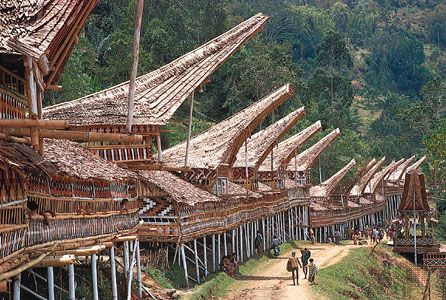
The Minahasan people are a Malayan group residing in and around the port city of Manado. Historically, their rural society was organized patrilineally with communal land ownership and a system of reciprocal agricultural assistance known as mapalus. Their primary crops include rice, corn, coffee, tobacco, and cocoa.23
Following the arrival of missionaries in the 19th century, the population converted almost entirely to Roman Catholicism and Christianity. Today, the Minahasan are known for being well-educated and are active in various professional sectors, ranging from administrative roles on Java to managing coconut plantations.21
What is the significance of the mapalus society in Minahasan culture?
The mapalus system is a fundamental element of traditional Minahasan culture, serving as a structured framework for community cooperation. These special societies are organized to provide reciprocal agricultural assistance among rural villagers.1
By facilitating shared labor, the mapalus system reinforces the communal nature of Minahasan society, where land is held collectively by the village and estates are managed to meet the specific needs of individual households. This practice of mutual aid ensures that the labor-intensive demands of cultivating crops—such as wet and dry rice, corn, sago palms, coffee, tobacco, and cocoa—are met through collective effort rather than individual isolation. Ultimately, these societies strengthen the social fabric of the region, ensuring that the community remains the primary political and economic unit.1
How did the arrival of missionaries change Minahasan traditions?
The arrival of missionaries in the mid-19th century profoundly transformed Minahasan society, primarily through widespread religious conversion. Following the influx of Portuguese Roman Catholic missionaries around 1850, the Minahasan population transitioned almost entirely to Christianity.1
This religious shift was accompanied by a significant emphasis on education, which has since become a defining characteristic of the Minahasan people. While traditional structures—such as the patrilineal organization of villages and the communal mapalus system of agricultural cooperation—have persisted in rural settings, the influence of missionary work helped integrate the Minahasan into a broader modern context. Today, this legacy of education allows the Minahasan to participate in a diverse range of professional activities, including holding administrative positions on Java and managing commercial coconut plantations.1
What are the unique geographical features of the island of Sulawesi?
The island of Sulawesi (formerly known as Celebes) is characterized by a rugged, mountainous topography shaped by significant geological activity. Its unique features include:
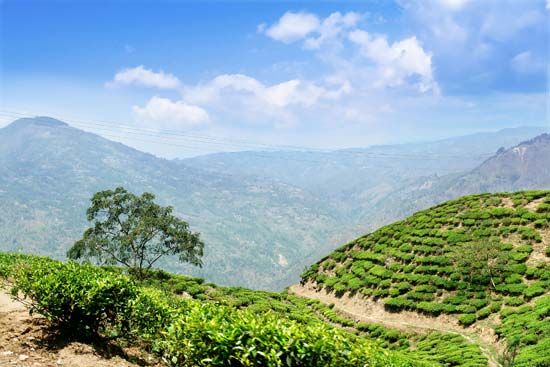
- Mountainous Terrain and Volcanic Activity: The island is dominated by a north-south chain of mountains featuring numerous volcanic cones, such as Mount Rantekombola—the highest peak on the island at 11,335 feet (3,455 metres)—and Mount Mekongga.456
- Tectonic Processes: Extensive uplifting, faulting, and subsidence have created deep, steep-sided rift valleys and gorges throughout the interior.456
- Hydrology: The island’s landscape is marked by rapid perennial streams and several deep lakes, most notably Lake Poso in the central region.456
- Coastal Features: The coastal lowlands are generally narrow and discontinuous. The surrounding waters contain extensive coral reefs, particularly in the Gulfs of Tomini and Tolo.56
- Vegetation: The diverse elevation supports dense equatorial rainforests, including teak, oak, banyan, ironwood, and pine, which thin out at higher altitudes.456
Sources
- Minahasan — Encyclopædia Britannica
- Minahasa — Encyclopædia Britannica
- Minahasa — Merriam-Webster
- Selayar — Encyclopædia Britannica
- South Sulawesi — Encyclopædia Britannica
- Southeast Sulawesi — Encyclopædia Britannica
- Central Sulawesi — Encyclopædia Britannica
Published on · 3 min read