Java
Traditional Javanese art forms are deeply rooted in history, often blending indigenous traditions with Hindu and Islamic influences. Key examples include:
What are some traditional Javanese art forms and how have they evolved over time?
Traditional Javanese art forms are deeply rooted in history, often blending indigenous traditions with Hindu and Islamic influences. Key examples include:
- Wayang: This classical puppet drama, particularly the leather shadow-puppet play wayang kulit, dates back before the 10th century. It features stories from the Ramayana and Mahabharata and is performed by a dalang (puppeteer). Over time, this evolved into other forms like wayang golek (wooden rod puppets) and wayang wong, where live actors perform in a style mimicking the puppets.123
- Gamelan: A traditional orchestra primarily composed of bronze instruments, the gamelan reflects Javanese philosophical concepts of refinement (halus).4
- Batik: A sophisticated batik dyeing technique uses wax to create intricate patterns on cloth. It evolved from hand-applied wax to include 18th-century copper tools and 19th-century wood-block applicators, allowing for greater complexity.5
Modernization has significantly influenced these arts. Since independence, choreographers have integrated Western classical ballet and modern dance with local styles to create contemporary works like the sendratari dance-drama.2
What is the geographical location and size of Java island in Indonesia?
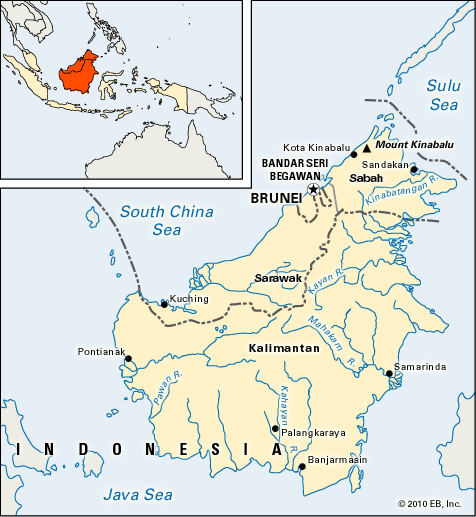
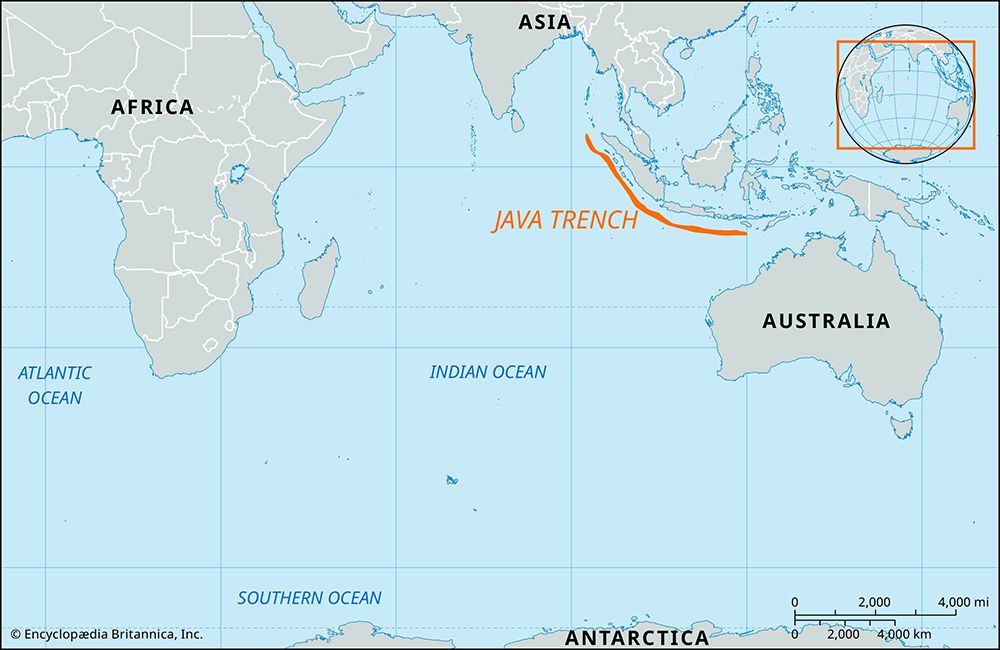
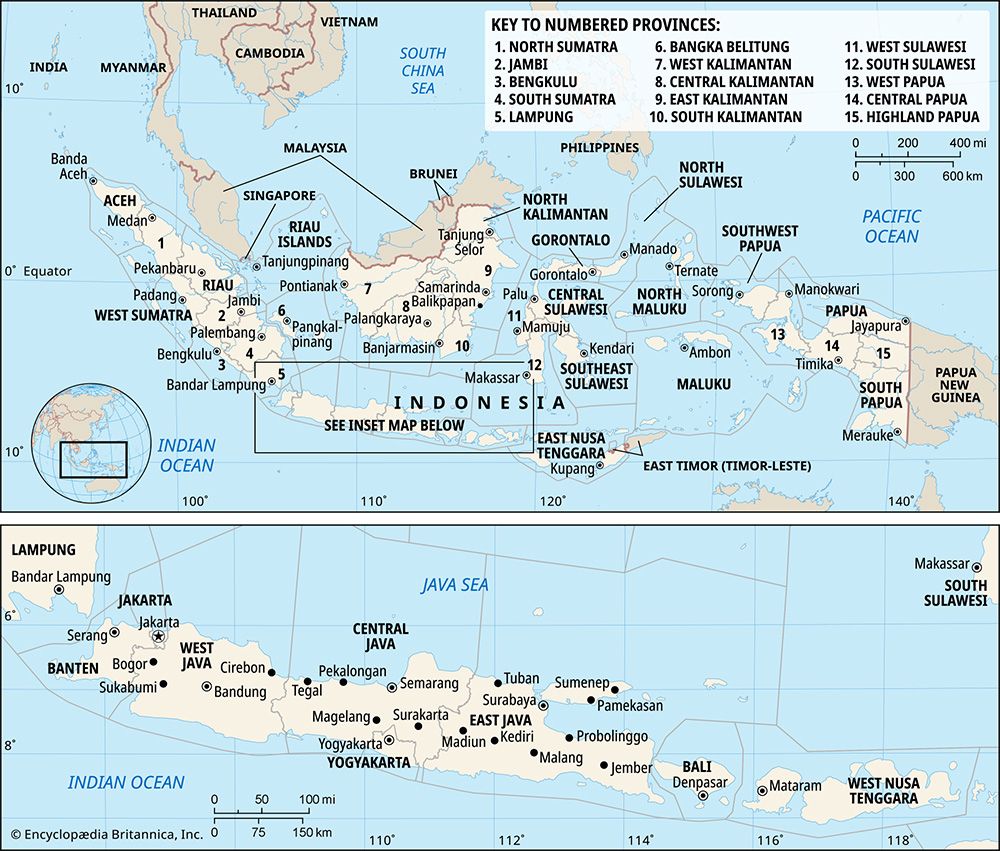
Java is a major island of Indonesia situated in Southeast Asia. Geographically, it lies south of Borneo, southeast of Malaysia and Sumatra, and west of Bali.8
The island spans approximately 661 miles (1,064 km) in length from east to west. Its width varies, measuring about 60 miles (100 km) at its center and expanding to over 100 miles (160 km) near its eastern and western ends. Including nearby islands, Java covers a total area of 49,976 square miles (129,438 square km).98
How does the Javanese language differ from Bahasa Indonesia?
The Javanese language and Bahasa Indonesia differ significantly in their social function, structure, and historical development.
Social Stratification and Speech Levels A defining characteristic of Javanese is its complex system of speech levels, which reflect social hierarchy. Speakers choose vocabulary based on the status of the person they are addressing, primarily distinguishing between ngoko (informal/neutral), krama (deferential/polite), and madya (middle) styles. In contrast, Bahasa Indonesia was intentionally developed to be egalitarian; it lacks these hierarchical speech registers, which has helped it serve as a unifying national language across Indonesia’s diverse ethnic groups.12131415
Origins and Usage
- Javanese: An Austronesian language with over 68 million native speakers, it has a long written tradition dating back to 750 CE, influenced by Indian and Islamic literatures.1213
- Bahasa Indonesia: This is the national language, which evolved from a literary style of Malay. It is the primary medium for education, government, media, and scientific discourse, whereas Javanese is primarily a regional language.15
What role did Java play in the spice trade during the colonial era?
During the colonial era, Java served as the strategic administrative and commercial hub for the Dutch East India Company (VOC). In 1619, the Dutch established their headquarters at Batavia (modern-day Jakarta), which functioned as the central base for managing their monopoly over the spice trade across the Indonesian archipelago.161718
While the primary source of spices was the Moluccas, the Dutch utilized Java to consolidate their territorial power. By the late 17th century, the VOC began asserting control over Java’s various Muslim kingdoms, eventually reducing them to vassal states. The Dutch implemented systems of forced deliveries, requiring the local aristocracy to collect export crops—including pepper, coffee, sugar, and indigo—from the peasantry.1819
Following the dissolution of the VOC in 1799, the Dutch government intensified this exploitation through the Culture System, which mandated that a portion of village land be dedicated to export crops. This made Java the most intensively developed and closely governed region of the Dutch East Indies throughout the 19th century.1918
Sources
- Southeast Asian arts - Balinese dance-drama — Encyclopædia Britannica
- wayang — Encyclopædia Britannica
- Southeast Asian arts - Java — Encyclopædia Britannica
- Indonesia - Theatre and dance — Encyclopædia Britannica
- batik — Encyclopædia Britannica
- Southeast Asian arts - Wayang orang — Encyclopædia Britannica
- Southeast Asian arts - Textiles — Encyclopædia Britannica
- Java — Encyclopædia Britannica
- Java - Land — Encyclopædia Britannica
- Central Java — Encyclopædia Britannica
- Java - People — Encyclopædia Britannica
- Javanese language — Encyclopædia Britannica
- Javanese — Encyclopædia Britannica
- Indonesia - Languages — Encyclopædia Britannica
- Austronesian languages - Speech levels and honorific registers — Encyclopædia Britannica
- history of Indonesia - Expansion of European influence — Encyclopædia Britannica
- Indonesia - The Culture System — Encyclopædia Britannica
- India - The Dutch — Encyclopædia Britannica
- Java - History — Encyclopædia Britannica
Published on · 3 min read