Montebello Islands
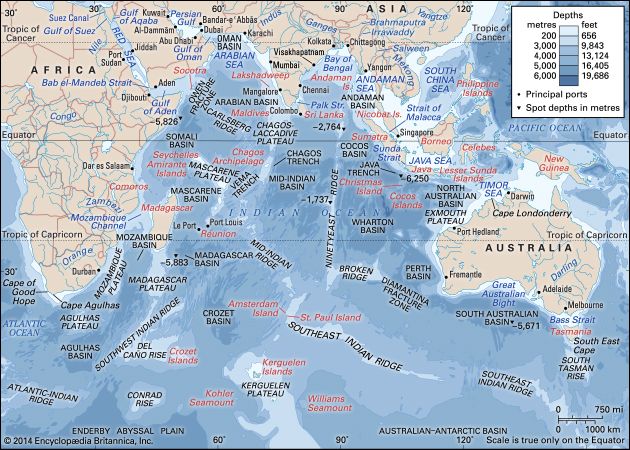
The Montebello Islands are a group of Australian coral islands situated in the Indian Ocean, approximately 60 miles (100 km) west of the Dampier Archipelago…

What is Montebello Islands?
The Montebello Islands are a group of Australian coral islands situated in the Indian Ocean, approximately 60 miles (100 km) west of the Dampier Archipelago off the coast of Western Australia1.
The archipelago is characterized by its flat, sandy terrain and coves lined with mangroves. Its largest islands include North West, Trimouille, South East, and Hermite. The islands have a notable history: the English ship Tryal wrecked on their reefs in 1622, and the area was later charted by Nicolas Baudin, who named the islands after the French duke of Montebello, Jean Lannes.1
In the mid-20th century, the islands were the site of British atomic weapons tests conducted in 1952 and 1956. Due to the resulting radiation, the area was closed to Japanese and Australian fishermen.1
How did the British nuclear tests affect the islands’ environment?
The provided search results do not contain specific information regarding the environmental impact of the British nuclear tests on the Montebello Islands, other than noting that the area was closed to fishermen due to radiation. While the Marshall Islands experienced significant environmental degradation, including the vaporization of islands and long-term radioactive contamination from U.S. testing, this information cannot be applied to the Montebello Islands.21
I cannot provide further details on the specific environmental effects on the Montebello Islands due to a lack of data in the provided search results.
What kind of marine life lives in the Montebello Islands Marine Park?
Sorry, the Britannica knowledge base does not contain information regarding the specific marine life found in the Montebello Islands Marine Park.
Who was Jean Lannes, the Duke of Montebello?
Jean Lannes, duc de Montebello (1769–1809) was a distinguished French general and one of the original marshals of the First Empire under Napoleon. Born to humble origins as the son of a stable boy, Lannes rose through the ranks due to his exceptional courage and tactical skill.3
His military career was marked by several key achievements:
- Early Success: He gained Napoleon’s attention during the Italian campaign in 1796 and played a significant role in the coup d’état of 18 Brumaire.3
- Victory at Montebello: In 1800, he led the vanguard across the Alps and defeated the Austrians at Montebello, a victory for which he was later named duc de Montebello in 1808.3
- Napoleonic Wars: He served with distinction in major conflicts, including the battles of Austerlitz, Jena, and Friedland.3
Lannes died in Vienna in 1809 after suffering fatal injuries during the Battle of Aspern-Essling. Napoleon famously remarked on his transformation: “I found him a pygmy and left him a giant.”3
Sources
- Montebello Islands — Encyclopædia Britannica
- Marshall Islands atomic bomb tests — Encyclopædia Britannica
- Jean Lannes, duc de Montebello — Encyclopædia Britannica
Published on · 2 min read