Moorea
Daily life on Moorea, like much of French Polynesia, is shaped by a complex interplay between enduring indigenous traditions and the significant cultural…
How do the local Polynesian traditions and customs influence daily life on Moorea?
Daily life on Moorea, like much of French Polynesia, is shaped by a complex interplay between enduring indigenous traditions and the significant cultural shifts brought about by colonial history and modern economic changes.12
While missionaries in the late 18th century suppressed many traditional practices—including aspects of religion, music, and dance—there is a contemporary resurgence in reclaiming Polynesian identity. This revival is evident in the emphasis on Polynesian languages, the preservation of oral histories, and the practice of traditional arts.31
Core cultural concepts continue to influence social interactions. For instance, the traditional belief in mana (sacred power) remains relevant; actions such as passing a hand over someone’s head or standing higher than a person of high rank are still often considered disrespectful as they are believed to sap an individual’s mana. Furthermore, the Polynesian Voyaging Society has helped revive ancient navigation and shipbuilding, teaching younger generations to observe, listen to elders, and follow cultural rules, which fosters a strong sense of identity. Today, these customs exist alongside a tourism-based economy, reflecting a society actively balancing its heritage with modern global influences.412
How does Moorea compare to other islands in French Polynesia in terms of development and lifestyle?
Moorea is distinguished from many other islands in French Polynesia by its high level of connectivity and its status as a primary hub for the territory’s booming tourism industry.46
Development and Connectivity
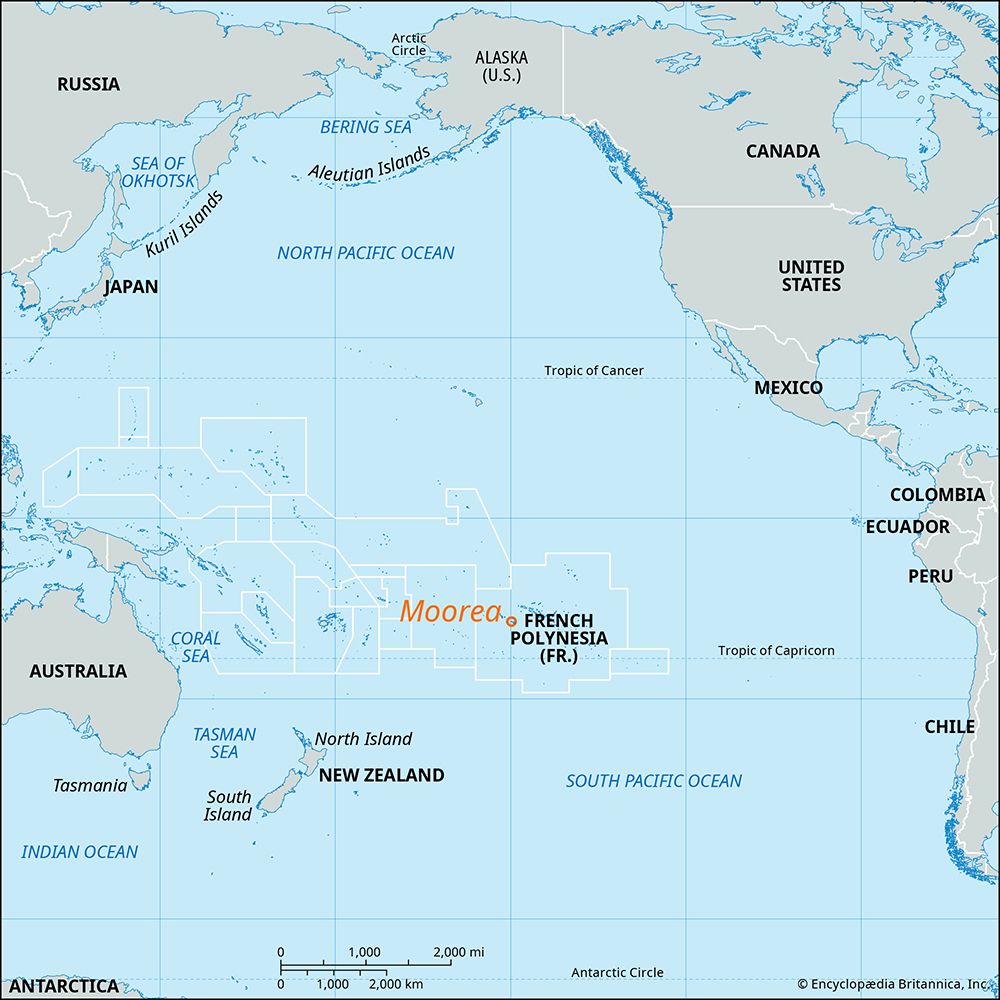
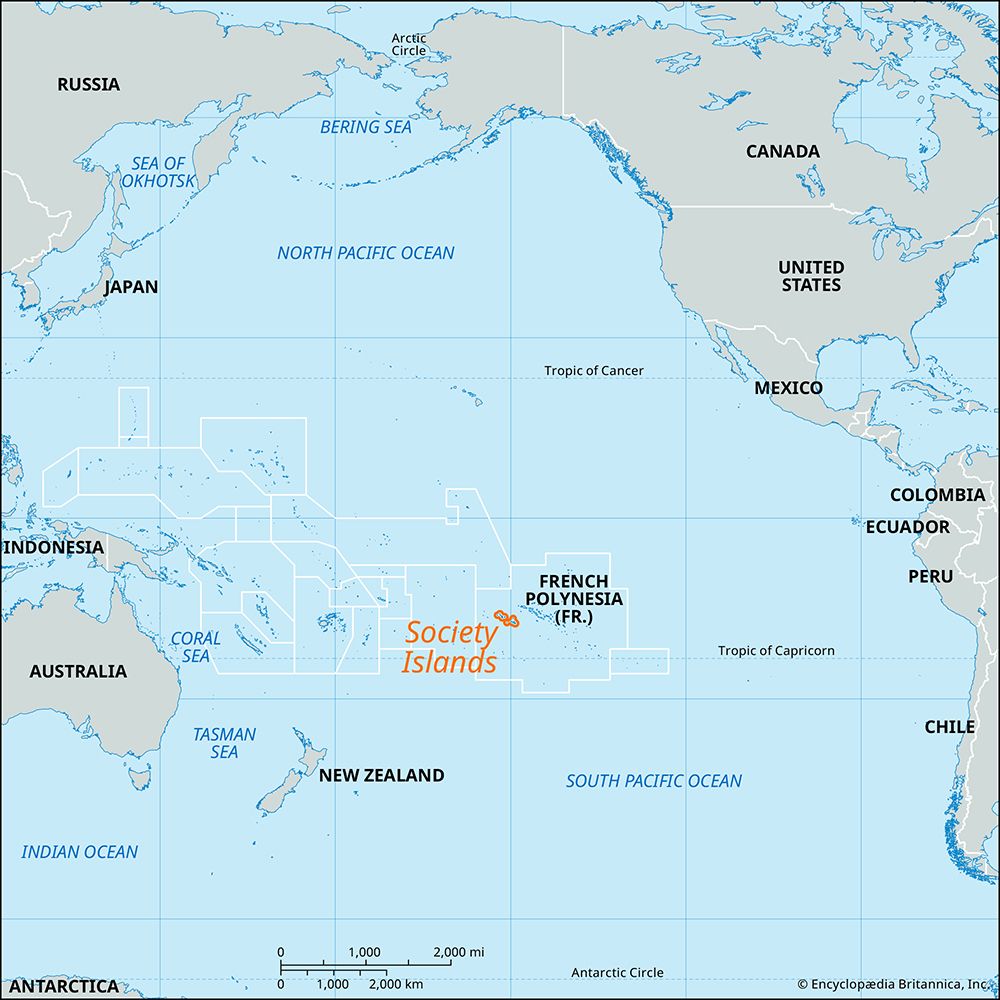
Unlike more remote archipelagos such as the Tuamotu Archipelago or the Marquesas Islands, where living conditions can be difficult and transportation links to the administrative center of Papeete are limited, Moorea is exceptionally well-connected. Located only 12 miles from Tahiti, it benefits from frequent boat and taxi plane services, making it easily accessible for both residents and visitors.748
Lifestyle and Economy
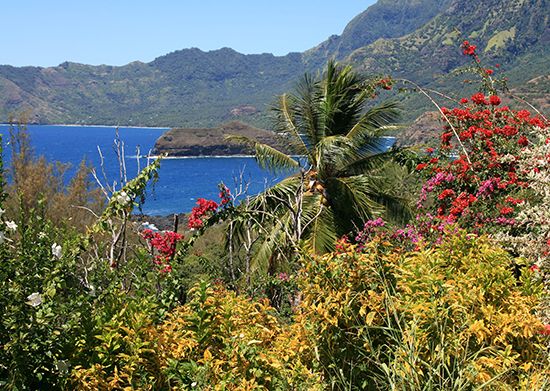
While many outer islands rely heavily on subsistence activities, fishing, or specific agricultural exports like copra and vanilla, Moorea’s economy is heavily integrated into the modern tourism sector. This development has fostered a lifestyle that balances traditional island characteristics—such as its rugged volcanic terrain and fertile valleys—with the infrastructure required to support a significant tourist trade.8746
In contrast, islands like those in the Tubuai chain or the smaller atolls often face challenges related to isolation and limited agricultural potential, leading to higher rates of emigration toward the more developed urban centers on Tahiti.4
What are the main economic activities and industries on Moorea?
The economy of Moorea is primarily driven by the tourism industry, which serves as a major pillar of the island’s financial activity. Due to its proximity to Tahiti and its natural beauty, the island has become a favored destination for visitors, significantly shaping its modern economic landscape.486
In addition to tourism, Moorea maintains a foundation in agriculture. The island’s fertile soil supports the cultivation of several traditional crops, which remain important to its local economy:
- Vanilla: A historically significant export crop.46
- Copra: Derived from coconut plantations, this remains a key agricultural product.48
- Coffee: Grown as one of the island’s chief crops.4
While agriculture was once of primary importance across French Polynesia, it now contributes a smaller portion to the overall gross domestic product, with many resources also utilized for local subsistence, including fishing and planting. Moorea’s integration into the broader regional economy is further supported by its connectivity to Papeete, facilitating the movement of goods and people essential to its service-based and agricultural sectors.6
What is the significance of Moorea’s volcanic origin and how does it shape the island’s landscape?
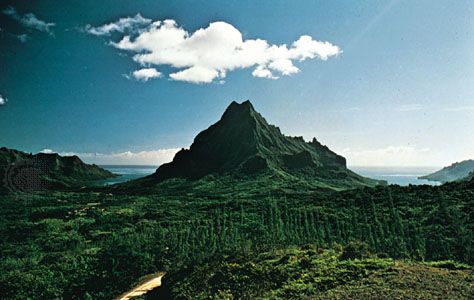
Moorea is the remains of an ancient, half-eroded volcano, and its volcanic origin is the fundamental architect of its rugged and mountainous landscape. This geological history has shaped the island into a triangular form characterized by high crests and deep, radiating valleys that drop abruptly toward the coast or directly into the sea.410
The significance of this volcanic structure is evident in several key features:
- Topography: The island’s interior is defined by steep, mountainous terrain, with its highest point, Mount Tohivea, reaching an elevation of 3,960 feet (1,207 meters).4
- Coastal Bays: The island’s iconic northern bays, Cook (Paopao) Bay and Opunohu (Papetoai) Bay, are situated at the center of what was once the volcano’s crater, separated by Mount Rotui.4
- Soil Fertility: The erosion of the volcanic mass has created fertile soils throughout the island, which support local agriculture, including the cultivation of vanilla, copra, and coffee.4
- Surrounding Reefs: Like other high islands in the Society Islands, Moorea is protected by a barrier reef, a feature that often develops as volcanic islands subside over time.1110
Sources
- Polynesian culture - Contemporary Polynesia — Encyclopædia Britannica
- French Polynesia - Cultural life — Encyclopædia Britannica
- Polynesian culture - Traditional Polynesia — Encyclopædia Britannica
- Moorea — Encyclopædia Britannica
- Polynesian culture - Religion of Polynesian culture — Encyclopædia Britannica
- French Polynesia - Economy of French Polynesia — Encyclopædia Britannica
- French Polynesia - Relief — Encyclopædia Britannica
- Îles du Vent — Encyclopædia Britannica
- Comoros - Services — Encyclopædia Britannica
- Cook Islands - Soils — Encyclopædia Britannica
- atoll — Encyclopædia Britannica
- Îles Sous le Vent — Encyclopædia Britannica
- Samoa - Relief and drainage — Encyclopædia Britannica
Published on · 4 min read