Morton National Park
Morton National Park is a national park located in the coastal range of eastern New South Wales, Australia, approximately 100 miles south of Sydney.
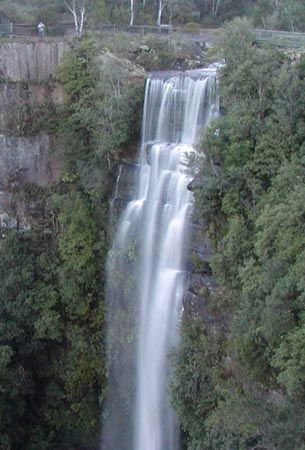
What is Morton National Park?
Morton National Park is a national park located in the coastal range of eastern New South Wales, Australia, approximately 100 miles south of Sydney.1
Established in 1938, the park covers 404 square miles and was named in honor of Mark Morton, a state legislative assembly member who advocated for its protection. The landscape is defined by sandstone summits, gorges, and the Shoalhaven and Kangaroo rivers, with the scenic Fitzroy Falls serving as a notable landmark. The park’s diverse vegetation ranges from bloodwood-scribbly gum forests on the summits to rain forest and hardwood trees within the gorges, providing a habitat for wildlife such as the platypus. Visitors can access the area via trails and roads that branch off from nearby highways.1
What makes Fitzroy Falls a notable feature of the park?
Fitzroy Falls is a prominent landmark within Morton National Park that highlights the dramatic geological character of the region. The falls are situated within a landscape defined by deep gorges and sandstone summits, where the Kangaroo River and other waterways carve through the terrain.
The area surrounding the falls is particularly notable for its ecological diversity, as the transition from the sandstone plateaus to the gorge floors creates distinct environments. While the summits are characterized by bloodwood-scribbly gum forests, the sheltered sides and floors of the gorges—where the falls are located—are covered in rain forest and hardwood trees. This unique topography provides a vital habitat for various wildlife, including the platypus and native fish, making the falls a focal point for both the park’s natural beauty and its biological significance.1
What types of wildlife can be found in the Shoalhaven River region?
The Shoalhaven River region, which drains parts of Morton National Park, supports a variety of wildlife adapted to its diverse landscape of sandstone gorges and river systems.
According to available information, the wildlife in this area includes:
- Platypus: These unique monotremes inhabit the river systems within the park.1
- Native fish: Various species of native fish are found in the waters of the Shoalhaven and Kangaroo rivers.1
The park’s varied vegetation, ranging from bloodwood-scribbly gum forests on the summits to rain forest and hardwood trees in the gorges, provides a critical habitat for these species.1
How do sandstone landscapes influence the types of forests in Australia?
Sandstone landscapes in Australia significantly influence forest types through the development of specific soil conditions. While broad soil patterns across the continent are largely determined by climate, local variations are heavily dictated by parent materials like sandstone.
In areas where sandstone is the underlying bedrock, the resulting soils are often sandy and nutrient-poor. These conditions frequently lead to the development of podzols, which are characterized by their sandy texture, high surface humus content, and acidic nature throughout the soil profile. These nutrient-limited, acidic environments favor specific vegetation communities, such as the bloodwood and scribbly gum forests often found on sandstone plateaus. In contrast, other geological formations, such as basalt outcrops, produce different soil types like krasnozems, which support entirely different forest compositions.2
Sources
- Morton National Park — Encyclopædia Britannica
- Australia - Soils of Australia — Encyclopædia Britannica
Published on · 2 min read