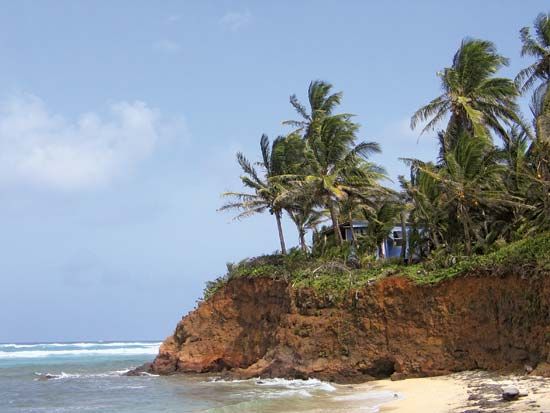
Mosquito Coast
The Miskito people, for whom the Mosquito Coast is named, have played a central role in the region's history through their strategic alliances and cultural…
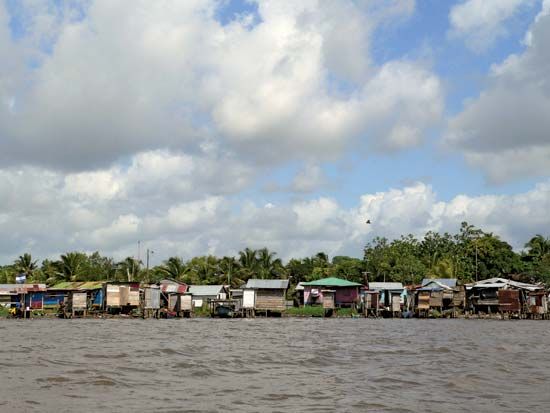
How has the indigenous population of the Mosquito Coast influenced its culture and history?
The Miskito people, for whom the Mosquito Coast is named, have played a central role in the region’s history through their strategic alliances and cultural synthesis.
Historically, the Miskito—along with other groups like the Sumo, Jicaque, and Paya—collaborated with English loggers and buccaneers to challenge Spanish dominance in the Caribbean. This relationship led to the British establishing a protectorate over the region.12
The Miskito culture has been significantly shaped by these European contacts and extensive intermarriage with Africans brought to the area as slaves. This synthesis created a distinct identity that persists today, even as the Miskito have faced political marginalization and conflict, such as the tensions with the Nicaraguan Sandinista government in the 1980s. Modern Miskito society remains largely agricultural, with cassava as a staple crop, alongside animal husbandry. Despite their historical influence, these indigenous communities continue to navigate an economically and politically peripheral position in the region.31
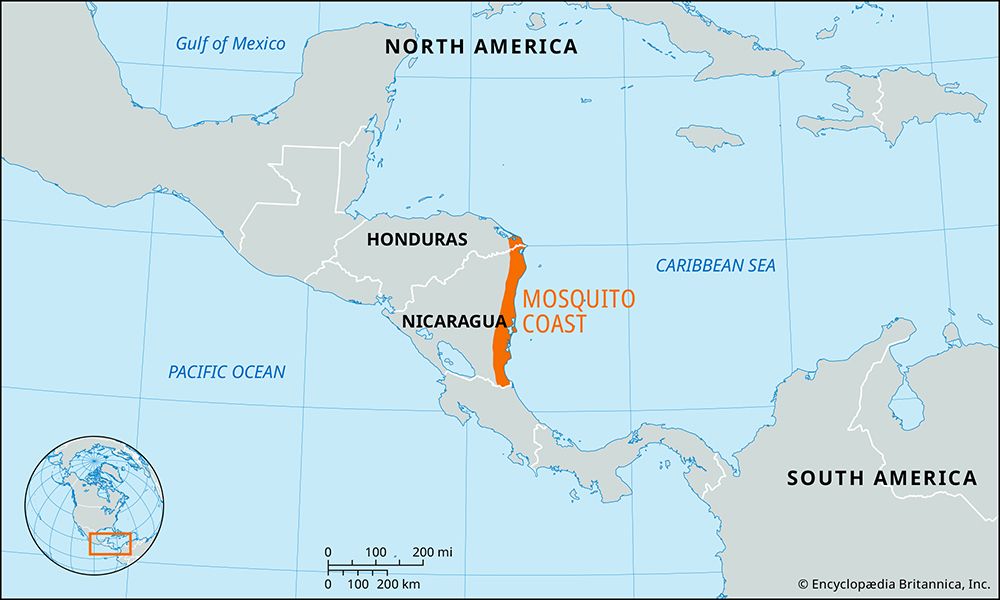
What languages are spoken in the Mosquito Coast region?
In the Mosquito Coast region, the linguistic landscape is diverse, reflecting the area’s unique history and indigenous heritage. While Spanish is the official language of Nicaragua and Honduras, the east coast regions maintain a distinct status for several other languages.
Under the 1987 Atlantic Coast Autonomy Law in Nicaragua, the following languages hold equal status with Spanish in the region:
- Miskito: The language of the Miskito people, who constitute the majority of the population in the Mosquito Coast.15
- Sumo: An indigenous language spoken by the Sumo people.5
- Rama: An indigenous language spoken by the Rama people.5
- Creole English: A creole language that developed in the region due to historical contact between different groups, particularly during the period of the British protectorate.56
These languages are vital to the cultural identity of the indigenous and Afro-descendant communities residing along the Caribbean coast.5
What is the historical significance of the Mosquito Coast region?
The Mosquito Coast holds significant historical importance as a region defined by colonial rivalry and indigenous autonomy. Although visited by Christopher Columbus in 1502, the area remained largely outside European control until the 17th century, when it became a strategic base for buccaneers and English interests.12
The region’s history is marked by a pivotal alliance between the Miskito people and Great Britain. This partnership allowed the British to establish a protectorate over the coast, effectively challenging Spanish influence in Central America. From 1740 to 1786, the territory functioned as a British dependency, serving as a counterpoint to the Spanish-controlled Pacific regions of Nicaragua.128
Territorial disputes involving Spain, Nicaragua, Great Britain, and the United States persisted for decades. These tensions were eventually resolved through the Clayton-Bulwer Treaty of 1850 and the eventual occupation of the region by the Nicaraguan government.1
How has the political relationship between Nicaragua and Honduras impacted the Mosquito Coast?
The political relationship between Nicaragua and Honduras has significantly shaped the Mosquito Coast, primarily through long-standing territorial disputes and the eventual formalization of national borders. For much of its history, the region was claimed by both nations, a situation that persisted until the mid-20th century.12
A major turning point in this relationship was the status of the Coco River, which flows through the region. After extensive litigation, the river’s middle and lower course was declared the international boundary between Honduras and Nicaragua in 1961, effectively settling the territorial claims that had long affected the area.102
Beyond formal border disputes, political instability within Nicaragua has also impacted the region’s population. During the 1980s, conflicts between the Sandinista government and the Miskito people led many Miskitos to flee across the border into Honduras. Some of these individuals joined rebel groups, further intertwining the political dynamics of the two countries with the lives of the indigenous communities living along the coast.11
Sources
- Mosquito Coast — Encyclopædia Britannica
- Miskito — Encyclopædia Britannica
- Honduras - The people of Honduras — Encyclopædia Britannica
- Central American and northern Andean Indian - Modern developments — Encyclopædia Britannica
- Miskito — Merriam-Webster
- Nicaragua - Languages — Encyclopædia Britannica
- creole languages — Encyclopædia Britannica
- history of Nicaragua - Colonial period in Nicaragua — Encyclopædia Britannica
- Nicaragua - Colonial period — Encyclopædia Britannica
- Coco River — Encyclopædia Britannica
- Cape Gracias a Dios — Encyclopædia Britannica
- history of Nicaragua - Foreign intervention — Encyclopædia Britannica
Published on · 3 min read