Corn Islands
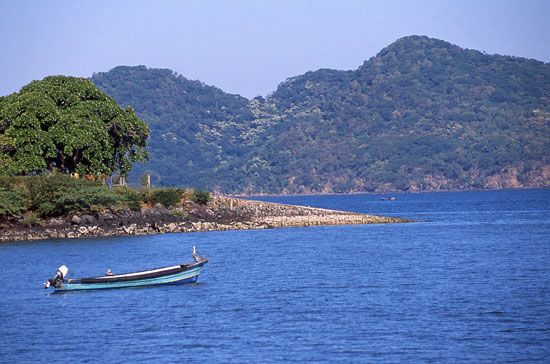
The Corn Islands (Spanish: Islas del Maíz) are two small islands located in the Caribbean Sea belonging to Nicaragua. Situated east-northeast of Bluefields…
What is Corn Islands?
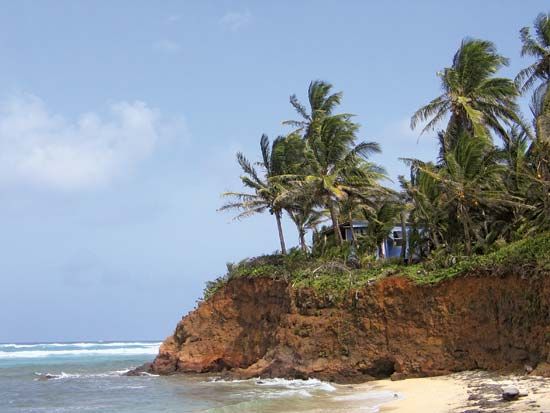
The Corn Islands (Spanish: Islas del Maíz) are two small islands located in the Caribbean Sea belonging to Nicaragua. Situated east-northeast of Bluefields, the group consists of Great Corn Island and Little Corn Island.12
Historically, these islands were leased to the United States under the Bryan-Chamorro Treaty of 1914, intended for use as a naval base to protect a proposed interoceanic canal. However, the U.S. never occupied the land for this purpose, and the lease was officially terminated in 1971.1
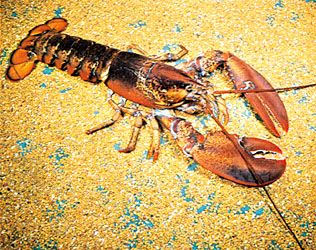
Today, the islands serve as a primary tourist destination on Nicaragua’s Atlantic coast. Their economy relies on the production of copra, coconut oil, lobsters, and frozen shrimp.1
What was the purpose of the Bryan-Chamorro Treaty?
The Bryan-Chamorro Treaty, signed on August 5, 1914, was a strategic agreement between the United States and Nicaragua designed to secure American interests in Central America.3
The primary purposes of the treaty were to grant the United States:
- Canal Rights: The exclusive right to construct an interoceanic canal across Nicaragua.3
- Naval Security: An option to establish a naval base on the Gulf of Fonseca to protect the proposed canal.31
- Territorial Leases: A long-term lease on the Corn Islands in the Caribbean for the purpose of building a naval base.31
Although the treaty remained in effect until its abrogation in 1970, the United States never utilized the land for its intended military purposes, with the exception of constructing a lighthouse on the Corn Islands. The treaty was controversial, as neighboring nations argued it threatened their security, leading to a ruling by the Central American Court of Justice that the United States and Nicaragua ultimately ignored.31
What is the geography of the Caribbean coast of Nicaragua?
The Caribbean coast of Nicaragua is characterized by low, level plains that are among the widest in Central America, averaging about 60 miles (100 km) in width. This region, historically known as the Mosquito Coast, features a coastline broken by river mouths, deltas, and large coastal lagoons. Additionally, the area is bordered by the widest continental shelf in Central America, which is dotted with coral reefs, islands, cays, and banks.4
The drainage of this region is defined by several long rivers flowing eastward from the central mountains into the Caribbean Sea, including the Coco River, the Río Grande de Matagalpa, and the San Juan River.5
Climatically, the Caribbean side is significantly wetter than the Pacific region, receiving nearly double the annual precipitation, with an average of about 150 inches (3,810 mm). The rainy season here lasts for approximately nine months, while the dry season is limited to the period between March and May.67
How does the economy of the Corn Islands rely on the ocean?
The economy of the Corn Islands relies significantly on the ocean through both commercial fishing and the tourism industry.
- Commercial Fishing: The islands’ economy is supported by the harvesting and processing of marine resources, specifically lobsters and frozen shrimp, which serve as principal products for the region.1
- Tourism: The islands are the primary tourist destination on the Atlantic coast of Nicaragua. This sector leverages the islands’ coastal location and natural environment to attract visitors, serving as a vital component of the local economy.1
While the islands have a history involving agricultural products like coconut oil and copra, their modern economic stability is deeply tied to these ocean-based activities.1
Sources
- Corn Islands — Encyclopædia Britannica
- Corn Islands — Merriam-Webster
- Bryan-Chamorro Treaty — Encyclopædia Britannica
- Mosquito Coast — Encyclopædia Britannica
- Nicaragua - Drainage — Encyclopædia Britannica
- Nicaragua - Relief — Encyclopædia Britannica
- Mosquito Coast — Merriam-Webster
- Nicaragua - Land — Encyclopædia Britannica
- Central America - Geography and climate — Encyclopædia Britannica
- Nicaragua - Climate — Encyclopædia Britannica
- Gulf of Fonseca — Encyclopædia Britannica
- United States Virgin Islands - Economy — Encyclopædia Britannica
- Maldives - Agriculture, forestry, and fishing — Encyclopædia Britannica
- Barbados - Agriculture and fishing — Encyclopædia Britannica
- British Virgin Islands - Agriculture — Encyclopædia Britannica
- Central America - Economy and development — Encyclopædia Britannica
Published on · 3 min read