Mount Athos
Mount Athos is a semiautonomous republic of Greek Orthodox monks located on a peninsula in northern Greece. A central, long-standing tradition of the Holy…
What are the rules and restrictions for visiting Mount Athos, especially regarding women and children?
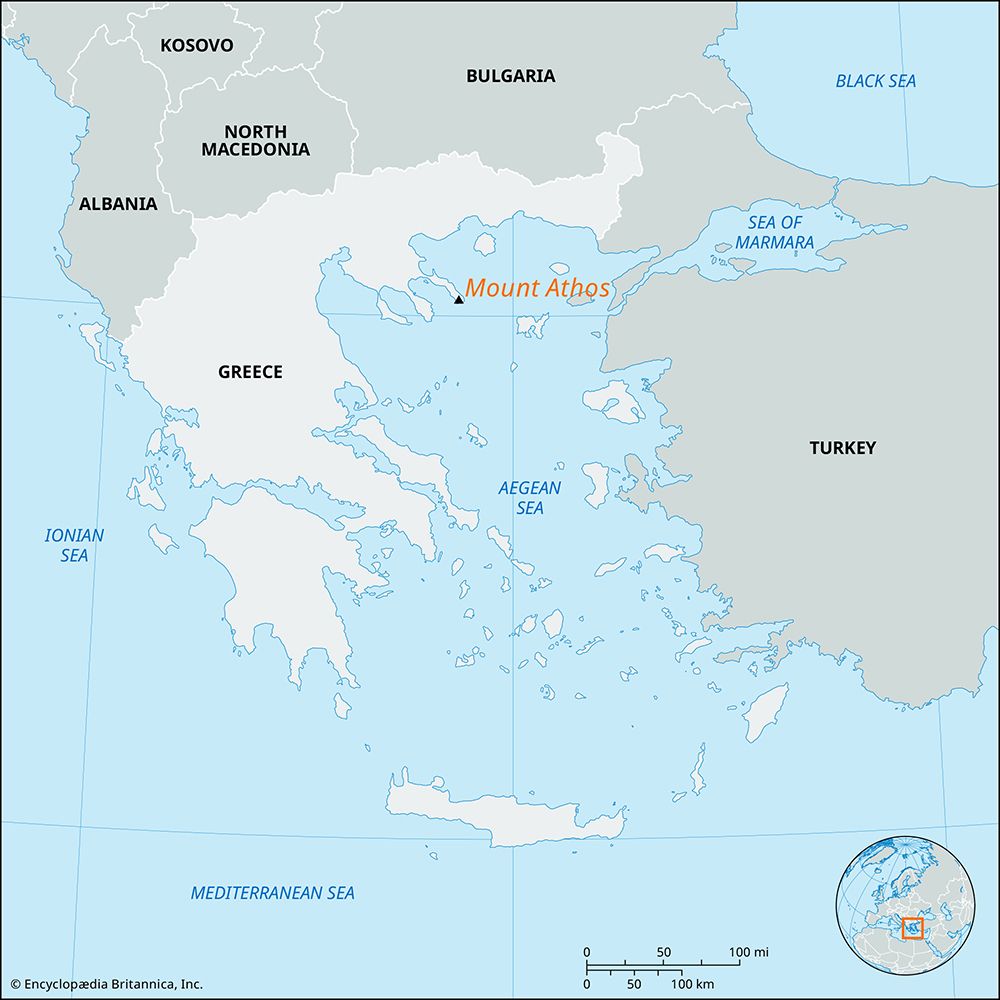
Mount Athos is a semiautonomous republic of Greek Orthodox monks located on a peninsula in northern Greece. A central, long-standing tradition of the Holy Mountain is a strict prohibition that bars women and female animals from entering the territory.1
Because this rule is rooted in the monastic traditions of the community, it applies to all women, regardless of age, meaning children who are female are also excluded from visiting. This policy is maintained as part of the mountain’s unique status and internal governance, which is overseen by the Holy Council (Ierá Sýnaxis) and protected under the Greek constitution.1
How has Mount Athos’ relationship with the Greek government and the European Union evolved over time?
The relationship between Mount Athos and the Greek state is defined by a unique constitutional framework that balances national sovereignty with monastic autonomy. While the peninsula is part of Greece, its status as a semiautonomous republic is explicitly guaranteed by the Greek constitution of 1975.
The Greek government maintains a presence on the mountain through a governor (dioikitís) appointed by the Ministry of Foreign Affairs. This role serves to acknowledge the mountain’s formal inclusion within the Greek state while respecting its internal administration, which is handled by the Holy Council (Ierá Sýnaxis). This governing body, composed of representatives from each of the 20 monasteries, holds actual administrative authority, while executive power is managed by the Epistasia through an annual rotation.
The provided search results do not contain information regarding the evolution of Mount Athos’s relationship with the European Union.
How is Mount Athos governed, and what makes it unique in terms of its autonomous status?
Mount Athos functions as a unique, semiautonomous monastic republic. Its status is defined by a constitution established in 1924, which is formally guaranteed by the Greek constitution of 1975.1
Governance Structure
While the peninsula is part of Greece, its administration is distinct from the national government:
- State Representation: The Greek government appoints a governor (dioikitís) via the Ministry of Foreign Affairs. This position serves primarily to acknowledge the mountain’s inclusion within the Greek state while highlighting its semiautonomous nature.1
- Internal Administration: Actual authority rests with the Holy Council (Ierá Sýnaxis), which consists of one representative from each of the 20 monasteries.1
- Executive Power: Day-to-day executive functions are managed by the Epistasia, a body composed of four representatives who serve on an annual rotational basis.1
Unique Status
Mount Athos is distinguished by its long-standing monastic traditions, including a strict prohibition against the presence of women and female animals. This governance model allows the community to maintain its traditional, often conservative, monastic discipline, serving as a primary stronghold for Eastern Orthodox practices.13
What is the geographical location and significance of Mount Athos in Greece?
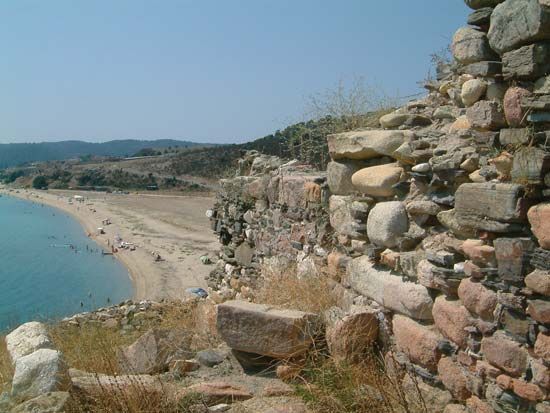
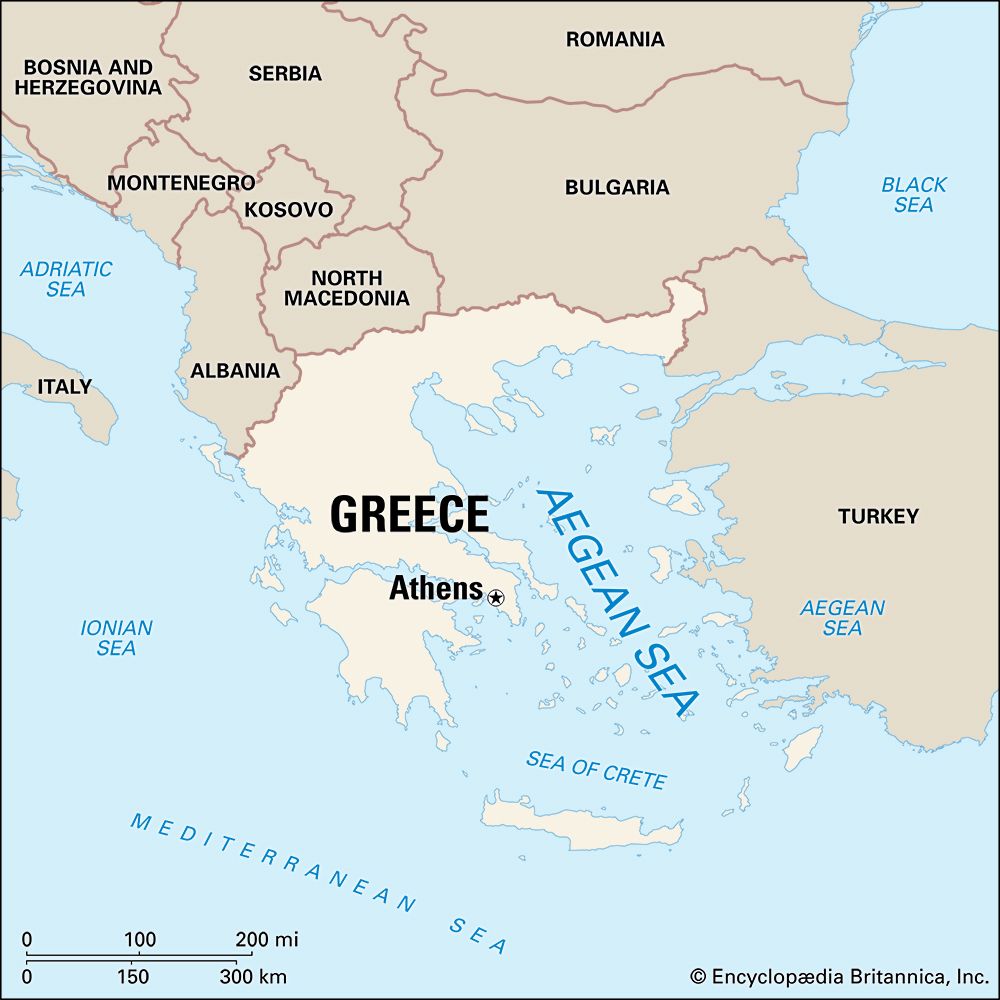
Mount Athos is a mountain located in northern Greece, situated on the easternmost of the three promontories of the Chalcidice Peninsula that projects into the Aegean Sea. The site, which covers 130 square miles (336 square km), is characterized by a mountainous spine that culminates in a marble peak rising 6,670 feet (2,033 metres) above the sea.1
The significance of Mount Athos is multifaceted:
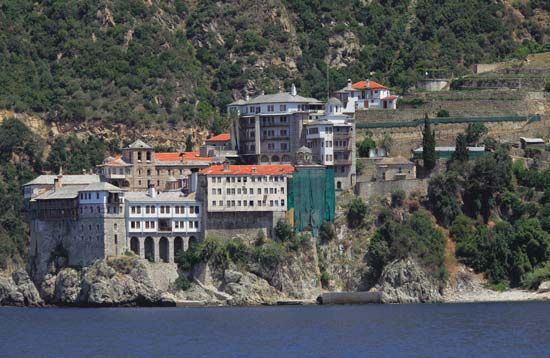
- Monastic Center: It serves as a semiautonomous republic for Greek Orthodox monks, housing 20 monasteries and various ascetic settlements known as skítes. It has been a vital center for monasticism and Hesychasm since the 10th century.14
- Cultural and Historical Heritage: Designated a UNESCO World Heritage site in 1988, the mountain preserves a vast collection of Byzantine art, icons, and medieval manuscripts.1
- Spiritual Influence: Historically, it has acted as a spiritual anchor for the broader Eastern Christian world, influencing religious and intellectual life across Slavic countries and the Byzantine Empire.14
Sources
- Mount Athos — Encyclopædia Britannica
- ancient Olympic Games - Women and the Olympics — Encyclopædia Britannica
- Church of Greece — Encyclopædia Britannica
- Eastern Orthodoxy - Theological and monastic renaissance — Encyclopædia Britannica
- Metéora — Encyclopædia Britannica
Published on · 3 min read