Mount Olympus
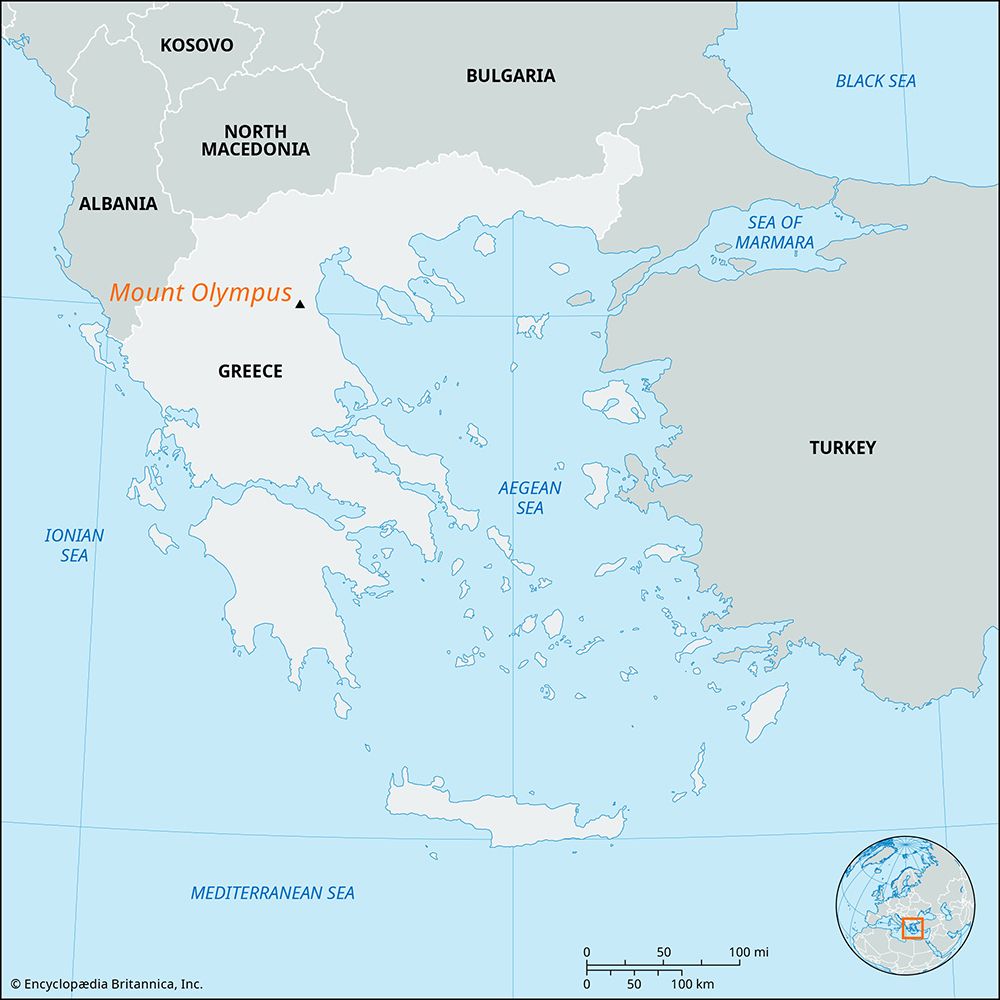
Mount Olympus is the highest mountain massif in Greece, situated in the northern part of the country near the Gulf of Thérmai of the Aegean Sea. It lies…
Where is Mount Olympus located, and what are its key geographical features?
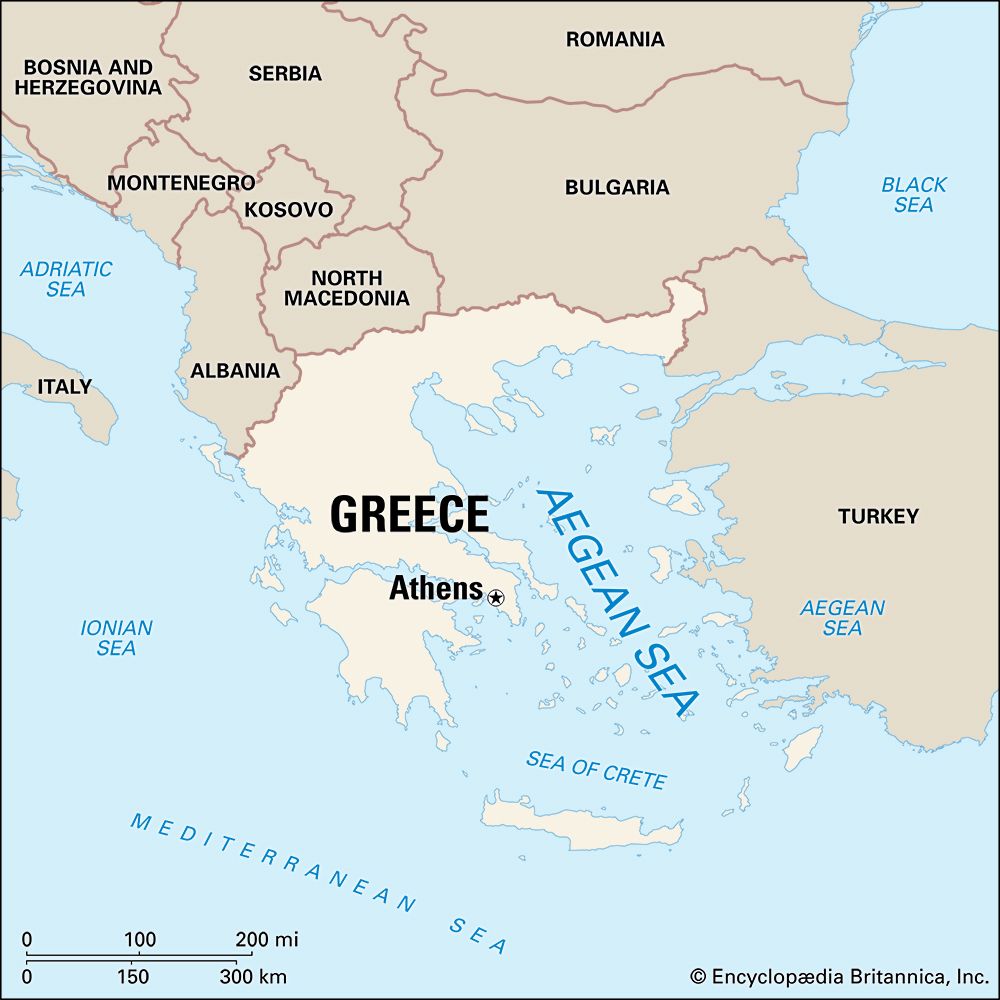
Mount Olympus is the highest mountain massif in Greece, situated in the northern part of the country near the Gulf of Thérmai of the Aegean Sea. It lies astride the border between the regions of Macedonia and Thessaly.12
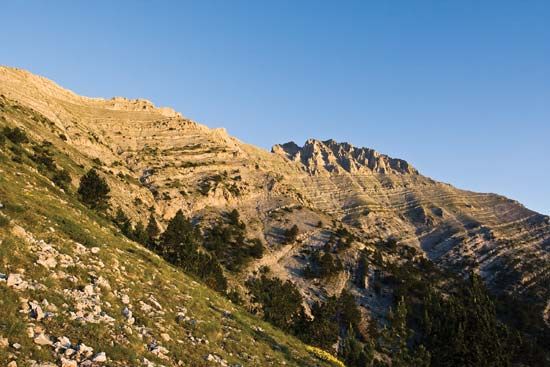
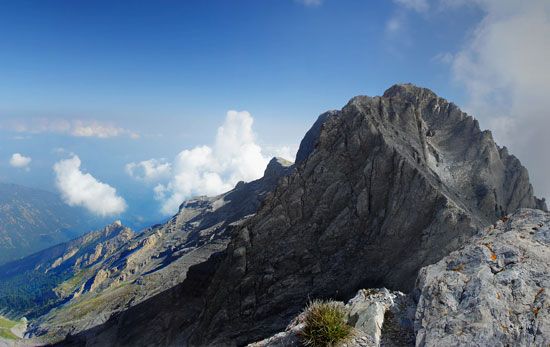
The mountain is a rugged limestone massif featuring 52 peaks, the highest of which is Mytikas, rising to 9,570 feet (2,917 meters). Its geography is characterized by steep cliffs, deep gorges, rocky ridges, and glacial landforms such as cirques. Due to its steep rise from the sea, the mountain supports diverse climate zones, ranging from Mediterranean shrublands at lower elevations to alpine vegetation at the summits.12
Protected as a national park and a UNESCO World Heritage site, it is renowned for its rich biodiversity, including endemic plants and wildlife such as wolves and golden eagles.2
What role does Mount Olympus play in Greek Orthodox Christianity?
Mount Olympus does not play a formal role in Greek Orthodox Christianity. Its historical and cultural significance is rooted in Greek mythology, where it was revered as the divine abode of the 12 Olympian gods and the site of Zeus’s throne.23
While Greece is home to many sites of profound importance to Orthodox Christianity—such as the monastic community of Mount Athos or the Meteora monasteries—Mount Olympus is distinct as a site of natural and mythological heritage rather than a center for Christian worship. The mountain’s identity remains tied to its status as a national park and a UNESCO World Heritage site recognized for its unique biodiversity and ancient cultural legacy.24
How has Mount Olympus influenced Greek culture and literature throughout history?
Mount Olympus has profoundly shaped Greek culture and literature, primarily as the legendary, divine residence of the 12 Olympian gods. In Greek mythology, the mountain was envisioned as a realm beyond the reach of mortals, where deities such as Zeus, Hera, and Athena convened to preside over human affairs.217
Influence on Literature
The mountain’s mythical status was solidified by the Homeric poems, the Iliad and the Odyssey. These works established the familiar characteristics of the gods, portraying them as active participants in human life—intervening in battles, offering advice, or exacting retribution. Homer’s descriptions, such as the peak being bathed in cloudless aithēr (ether), elevated the mountain to a symbol of divine purity and order. This literary tradition provided a framework for understanding the relationship between the human and the divine, influencing generations of writers and philosophers who engaged with these texts.872910
Cultural Legacy
Beyond literature, Mount Olympus serves as a cornerstone of Greek identity. Its physical presence—a rugged, snowcapped massif—inspired the ancient belief that it was a divine throne above the clouds. Today, it remains a protected national park and a UNESCO World Heritage site, symbolizing the enduring intersection of Greece’s natural landscape and its ancient cultural legacy.21
What is the significance of Mount Olympus in Greek mythology?
In Greek mythology, Mount Olympus is primarily significant as the divine abode of the 12 Olympian gods and goddesses. Ancient Greeks viewed the mountain not merely as a physical landmark, but as a celestial realm situated above the clouds, beyond the reach of mortals.12
The summit served as the seat of Zeus, the leader of the pantheon, who governed human affairs and dispensed justice from his throne. The major deities—including Hera, Athena, Poseidon, and others—were believed to convene there to deliberate and interact. Literary works, such as the Homeric poems, further elevated the mountain’s status by describing its peak as a place of eternal, cloudless aithēr (ether), reinforcing its image as a site of divine purity.111212
Beyond its mythological role, the mountain is a rugged limestone massif in northern Greece, now protected as a national park and a UNESCO World Heritage site for its immense natural and cultural importance.2
Sources
- Mount Olympus: Top Questions — Encyclopædia Britannica
- Mount Olympus — Encyclopædia Britannica
- Greek religion - The roots of Greek religion — Encyclopædia Britannica
- Greek religion - Festivals — Encyclopædia Britannica
- list of World Heritage sites - Greece — Encyclopædia Britannica
- Panathenaea — Encyclopædia Britannica
- Homer’s Odyssey vs. Christopher Nolan’s Film: Changes from Poem to Screen - Mount Olympus is awfully quiet — Encyclopædia Britannica
- Greek mythology - The Homeric poems : The Iliad and the Odyssey — Encyclopædia Britannica
- Homer - The Odyssey of Homer — Encyclopædia Britannica
- Greek religion - Religious art and iconography — Encyclopædia Britannica
- Zeus - Supremacy over gods and monsters — Encyclopædia Britannica
- Greek mythology — Encyclopædia Britannica
Published on · 3 min read