Mount Hood National Forest
The U.S. Forest Service manages Mount Hood National Forest by balancing the provision of resources—such as timber, water, forage, and wildlife habitats—with…
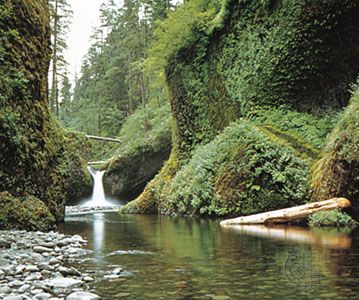
How does the U.S. Forest Service manage and conserve Mount Hood National Forest?
The U.S. Forest Service manages Mount Hood National Forest by balancing the provision of resources—such as timber, water, forage, and wildlife habitats—with the demands of public recreation and ecological conservation.12
Guided by the Multiple-Use Sustained-Yield Act of 1960, the agency ensures that forest management considers recreation and conservation alongside resource use. This approach prioritizes ecological sustainability to maintain the health and diversity of the forest’s unique ecosystems for the long term. On the ground, the forest is overseen by local offices, with headquarters located in Sandy, Oregon. Management activities include:21
- Conservation and Stewardship: Protecting natural lands from degradation, including managing wildfires through modern practices like prescribed burns.2
- Public Access: Maintaining trail systems, such as the Pacific Crest National Scenic Trail, and managing designated wilderness areas to support activities like hiking and skiing.12
- Research and Planning: Utilizing the agency’s extensive research capabilities to inform sustainable land-use decisions.2
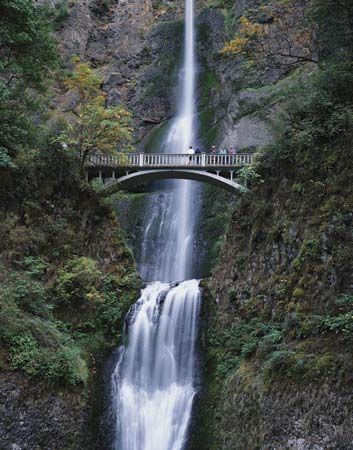
What recreational activities are popular in Mount Hood National Forest?
Mount Hood National Forest offers a wide variety of outdoor recreational activities, taking advantage of its diverse mountainous terrain, lakes, and rivers. Popular activities include:1
- Hiking and Backpacking: Visitors can explore extensive trail systems, including the Pacific Crest National Scenic Trail, which traverses the forest from north to south, and the Eagle Creek Trail, known for its numerous waterfalls.1
- Mountain Climbing: The forest is a premier destination for climbers, particularly those drawn to the challenging ascent of Mount Hood, Oregon’s highest peak.13
- Winter Sports: The region is well-known for skiing, supported by the forest’s high elevation and snow-covered slopes.1
- Sightseeing and Relaxation: Visitors frequently visit landmarks such as the historic Timberline Lodge, the scenic Multnomah Falls, and the relaxing Austin and Bagby hot springs.1
- Water Activities: The forest’s many lakes, such as Timothy Lake, and its various rivers provide opportunities for water-based recreation.1
What are the main types of ecosystems found in Mount Hood National Forest?
Mount Hood National Forest encompasses a diverse range of ecosystems shaped by its mountainous topography and varying elevations within the Cascade Range. The primary ecosystems found throughout the forest include:
- Coniferous Forests: The forest is heavily dominated by Douglas fir, which serves as the primary tree species across much of the region. These dense stands are characteristic of the western slopes of the Cascades, often featuring varied understory vegetation depending on the age of the stand.13
- Alpine Zones: At higher elevations, the forest transitions into alpine environments. These zones are characterized by hardy species such as mountain hemlock, larch, and alpine firs. These areas are also defined by the presence of snowfields and glaciers, particularly around the peak of Mount Hood, which supports twelve glaciers and extensive snowfields above the 6,890-foot level.43
- Riparian and Aquatic Ecosystems: The forest is extensively drained by major rivers, including the Columbia, Sandy, Clackamas, Hood, and White rivers. These waterways, along with numerous lakes and streams, support distinct riparian habitats that are vital for local wildlife.1
How does Mount Hood National Forest contribute to the local economy and communities?
Mount Hood National Forest serves as a vital economic and natural resource for Oregon and its surrounding communities. Its contributions are primarily driven by the following sectors:
- Tourism and Recreation: As a premier destination in the Pacific Northwest, the forest attracts large numbers of visitors who engage in activities such as hiking, mountain climbing, and skiing. This influx of tourism supports numerous small businesses in nearby communities by creating demand for food, lodging, fuel, and other essential services.178
- Natural Resource Provision: The forest is managed to provide essential resources, including timber, forage, and water. Under the Multiple-Use Sustained-Yield Act of 1960, the U.S. Forest Service balances these extractive uses with conservation and recreation to ensure long-term ecological sustainability.12
- Stewardship and Employment: The forest acts as a hub for land management and conservation efforts. Through its headquarters in Sandy, Oregon, and various ranger districts, the agency provides local employment and works with tribal, state, and local governments to steward the land and protect vital ecosystem services1.2
Sources
- Mount Hood National Forest — Encyclopædia Britannica
- U.S. Forest Service — Encyclopædia Britannica
- Mount Hood — Encyclopædia Britannica
- Oregon - Plant and animal life — Encyclopædia Britannica
- Oregon - Relief and drainage — Encyclopædia Britannica
- Oregon - Climate of Oregon — Encyclopædia Britannica
- Oregon - Services and taxation — Encyclopædia Britannica
- Pacific mountain system - Recreation — Encyclopædia Britannica
Published on · 3 min read